



The second story in CarbonCopy’s series on non-economic loss and damage examines how survivors of climate extremes are grappling with trauma, depression, and anxiety long after the rescue teams leave







India’s Climate Disasters Are Triggering a Silent Mental Health Crisis
The second story in CarbonCopy’s series on non-economic loss and damage examines how survivors of climate extremes are grappling with trauma, depression, and anxiety long after the rescue teams leave
Pradeep Panwar’s, 32, life collapsed in a matter of seconds on August 5, last year, when a massive flood and landslide tore through Dharali village in the Uttarkashi district of Uttarakhand, killing more than 50 lives. His shop and taxi—his family’s only sources of income—were destroyed.
“Today, even six months after the disaster, I am paying not only the bank installment on my business, but also the road tax of my taxi which was buried in the debris and never found. I don’t know how to survive,” Pradeep told CarbonCopy.
Pradeep somehow endured the trauma. His 60-year-old mother Sarojini Devi, however, could not bear the shock. Within a month of the floods, she died by suicide, jumping into the river Bhagirathi.
“She was deeply shaken by the tragedy. The loss of our business and livelihood was too much for her to bear,” Pradeep said.

Pradeep’s story is not an isolated tragedy. Across India, the growing frequency of climate-driven disasters are leaving behind not only physical destruction, but deep and lasting psychological wounds. While homes, roads, and livelihoods dominate disaster assessments, the mental and emotional toll remains largely invisible, poorly documented, and rarely addressed. This hidden crisis is becoming a defining feature of life in vulnerable communities, and experts say it is only going to become worse if the issue remains unaddressed.
Surviving the Floods, Living With the Trauma
In June 2013, Uttarakhand witnessed massive floods in Kedarnath, a town located at 12,500 feet, killing thousands and devastating dozens of villages in the valley. According to official figures, more than 5,700 people died, including those missing. The disaster led to loss of property exceeding $ 3.8 billion (over ₹33,000 crore).
Over the past 15 years, Uttarakhand has experienced repeated disasters, most during the monsoon season. The scale of loss—both human and economic— has been alarming. According to a Post-Disaster Needs Assessment (PDNA) report submitted by the Uttarakhand government, the state suffered losses amounting to nearly ₹15,000 crore in 2025 alone.
As global temperatures rise due to human-driven greenhouse gas emissions, the frequency and intensity of climate-induced disasters—such as heatwaves, floods, droughts, and storms—are escalating around the world, affecting millions of lives and ecosystems. All expert reports suggest that climate change acts as a primary driver of disasters. The Dharali tragedy is a grim reminder of a shifting Himalayan climate. Geologist Dr Navin Juyal, who has extensively worked in Himalayan region, told CarbonCopy after studying the Dharali disaster that historically, heavy precipitation was confined to lower elevations, but rising temperatures are now driving intense convective activity into the high-altitude interior.
“At Dharali, where slopes are precariously steep and laden with unstable debris, this vertical shift in rainfall is catastrophic. As global warming intensifies, these high-altitude cloudbursts will likely become our new, devastating reality. We must adapt; the mountains are no longer behaving as they once did,” Juyal told Carboncopy.
Uttarakhand’s experience reflects a wider pattern. Himalayan states—including Uttarakhand, Jammu and Kashmir, Himachal Pradesh, and Sikkim—have collectively faced more than 100 disaster events, largely driven by extreme rainfall causing landslides, flash floods, and glacial lake outbursts (GLOFs). At the same time, coastal states such as Kerala, Tamil Nadu, Andhra Pradesh, Odisha, and West Bengal have suffered repeated loss from increasingly intense cyclones. But what becomes of those who lose everything, but their lives?
Individual trauma beyond statistics
During the 2013 Kedarnath floods, a shop belonging to Lekhpal Bhandari, 51, a resident of Chameli village of Rudraprayag district, was swept away by the raging Mandakini River. He was left with no means of livelihood. The shock led to severe depression, followed by a brain hemorrhage that robbed him of his memory and speech. It took him nearly six years to regain his ability to speak. Bhandari says that time was like a nightmare for him. The stroke affected his memory, and he’s in poor physical condition, leaving him unable to work.
“I lost everything I had earned. The shock was too much for me to bear,” Bhandari told CarbonCopy. He remains unemployed.

Similar cases have been reported across the Kedarnath valley and other disaster-affected parts of Uttarakhand, where prolonged stress and unresolved loss have led to depression, anxiety, and suicide.
What experts are seeing
Prashant Kumar Roy who works with the Department of Clinical Psychology,Institute of Psychiatry-A Centre of Excellence, Kolkata, has spent many years in Uttarakhand studying the impact of disasters on the residents of these vulnerable areas.
“Hypervigilance was prominent leading to disturbed sleep. We also documented cases of survivors repeatedly checking riverbanks if the water level was rising, even in the absence of any official warnings. Sadness related to loss, along with anxiety about future disasters was a common story.”
Living in areas affected by recurring disasters places a constant psychological burden on individuals and communities, say experts. People remain in a state of constant alert, always anticipating the next flood, landslide, or storm, which exhausts the mind and body, says Roy.
One of the most serious outcomes is Post-Traumatic Stress Disorder (PTSD), which is a mental health condition that can develop after experiencing or witnessing a life-threatening event. Symptoms include flashbacks, nightmares, intrusive memories, avoidance of reminders, emotional detachment, and heightened irritability or panic. In disaster-prone regions, repeated exposure prevents emotional recovery, allowing trauma to accumulate over time.
Roy says children are particularly vulnerable. “Around 30% children experienced severe emotional reactions even four months after the extreme event, characterised by intrusive disaster-related thoughts, nightmares, poor concentration, hyper arousal (increased heartbeat, sleep difficulty, startled reaction) and avoidance of places that reminds them of the disaster,” he told the CarbonCopy.
Recognition, but limited action
In 2024, at the 77th World Health Assembly, the World Health Organisation (WHO) recognised the impact of climate change-driven extreme weather events on human health. “…increasingly frequent extreme weather events and conditions are taking a rising toll on people’s well-being, livelihoods and physical and mental health,” says the WHO document.
A study conducted after the Kedarnath floods also reinforces this link. “It was observed that about 58% of survivors had PTSD and severe levels of depression and anxiety were noted in 45.3% and 57% subjects, respectively. About 44% had perceived the disaster situation as a significant stressor,” it says. Despite such evidence, experts say mental health remains marginal in disaster planning.
Dr Subhasis Bhadra, who is psychiatrist and Head of the Department of Psychosocial Support in Disaster Management with Bengaluru-based National Institute of Mental Health and Neurosciences (NIMHANS), says timely support is what makes the difference.
“Globally, diagnosable mental health conditions typically rise by about 3–5% after disasters, but in cases of severe loss—death, displacement, livelihood collapse—conditions like PTSD can affect up to 20–25% of people. Distress is often highest among the elderly and women, particularly when livelihoods are disrupted. Crucially, these impacts are not permanent. Where timely psychosocial support and recovery systems are in place, severe distress has been shown to fall from nearly 15–20% in the immediate aftermath to as low as 2% over time.”
Underestimating the pain
Dr Nikhil Jain of the Centre for Mental Health, Law & Policy, Pune. argues that disasters in India are underestimated not because their impacts are minor, but because they are framed as short-term emergencies rather than long-term psychological and social disruptions.
“Disaster response architecture… prioritises mortality counts, physical infrastructure damage, and rapid restoration of services,” he says. Mental health, he argues, is typically treated as an individual medical issue to be addressed through short-term counselling or helplines during the relief phase.
This narrow approach ignores how psychological distress is deeply shaped by prolonged displacement, loss of livelihoods, debt, social fragmentation, and ongoing uncertainty — stressors that extend well beyond the health sector’s mandate. As a result, mental health remains disconnected from housing, compensation, and livelihood recovery, even though these factors strongly determine emotional wellbeing.
For over forty years, the National Institute of Mental Health and Neurosciences (NIMHANS) has been the vanguard of Psychosocial Support and Mental Health Services (PSSMHS) in the wake of India’s most devastating disasters. From the initial shock of psychological trauma to the grueling years of long-term rehabilitation, the institute’s work spans the entire spectrum of recovery.
As the national lead for the Ministry of Health and Family Welfare and the National Disaster Management Authority (NDMA), NIMHANS mandate is to provide aid and build systems — from cyclone-prone coastal regions to disaster-weary terrain of Himalayas. Although It claims to work to restore dignity and harden emotional infrastructure against an increasingly volatile climate, the challenges still remain as the internal toll on the survivors is profound.
As Dr. Bhadra, a veteran of mental health interventions in the Himalayan region, highlights the breaking point of traditional endurance: “Communities in vulnerable regions like the Himalayas possess a resilience forged over generations. But when disasters become a relentless cycle and danger is the only constant, even the strongest souls begin to suffer in silence. They carry deep, invisible wounds that raw resilience alone can no longer heal.”
Reframing disasters as long-term psychological events, Dr Jain suggests, is essential to understanding whether recovery is truly complete — or merely declared so.
Gendered impacts and societal pressures
A lesser-known but deeply troubling dimension of climate disasters is the social pressure faced by women, particularly in rural areas where financial independence remains limited.
“In these hills, when landslides and floods take the men, young widows are left alone with children and unbearable responsibility. Social pressure tightens, money runs dry, and without skills there are no jobs. Farming no longer sustains us. Disasters don’t just destroy homes — they shatter minds and futures,” said a young woman from Rudraprayag – whose husband had died in the Kedarnath flood -, on condition of anonymity.
Mukesh Semwal, a health activist who runs The Medical Service Centre, a socio-medical non-profit voluntary organisation in Garhwal says, “This problem is clearly visible in villages where rigid social norms persist. During the Kedarnath floods, many villages lost young men, leaving behind widows with small children. Women who were able to find employment or remarry managed to rebuild their lives, but many young women experienced immense mental and emotional stress.”
Ecological loss as a lived psychological experience
In Himachal Pradesh, floods in 2023 and again in 2025 devastated large parts of the state. In Pandoh village of Mandi district, Gurudev Saini watched his shop being swept away by the Beas river. “My life has gone 30 years back,” Saini says.

Repeated exposure to ecological breakdown erodes emotional security and places sustained pressure on the mental health of communities living in vulnerable regions. Landscapes once seen as protective and nurturing are increasingly perceived as sources of danger.
Dr Subhasis Bhadra explains that as ecological systems break down, communities are pushed away from traditional ways of living into uncertain economic activities, creating deep stress and insecurity. In such conditions, exploitative practices—including trafficking and forced sex work—have been observed, disproportionately affecting women.
“These outcomes are not isolated social problems,” he said. “They are direct consequences of ecological collapse and disaster-induced displacement.”
What needs to change
If climate disasters are no longer rare shocks but recurring realities, responses to their mental and emotional fallout must fundamentally change. Experts say the first shift must be conceptual: mental health cannot remain an afterthought addressed only during the relief phase. It must be recognised as a long-term outcome of recovery itself, shaped by whether people regain stable housing, dignified livelihoods, social support, and a sense of control over their futures.
This means moving beyond short-term counselling camps and helplines towards sustained, community-based care. Mental and emotional distress in disaster-affected areas often does not present as clinical illness alone.
India coordinates mental health support through a multi-tiered framework led by the NDMA. National and State Mental Health and Psychosocial Support (MHPSS) Working Committees facilitate vertical, horizontal, and intersectoral collaboration between government bodies, ministries, and NGOs.
Strategic coordination utilises a four-level MHPSS Service Pyramid, ranging from basic psychosocial support in essential services to specialised clinical care. This is operationalised via three-year action plans and a centralised portal for mapping trained human resources and equipment.
The government says NDMA prepared its guidelines in 2009 and updated them in 2023 “with the aim to provide concrete actions and activities to be carried out through all phases of a disaster including preparedness, mitigation, response, recovery, rehabilitation, and reconstruction.”
In the Budget presented this year, the government announced plans to establish NIMHANS-2 in North India, addressing the current lack of a national mental health institute in the region. In February 2024, while replying to a question, the central government told Parliament that it is strengthening mental health support for disaster-affected populations through the National Mental Health Programme (NMHP), which is being implemented across the country. Under its District Mental Health Programme (DMHP) component, mental healthcare services have been sanctioned in 738 districts, with support provided to States and Union Territories through the National Health Mission.
The DMHP offers outpatient services, mental health assessments, counselling and psychosocial care, treatment and follow-up for severe mental disorders, essential medicines, outreach activities and ambulance services at Community Health Centres and Primary Health Centres. Each district also has provision for a 10-bed inpatient mental health facility.
In addition, over 1.6 lakh primary healthcare facilities have been upgraded into Ayushman Arogya Mandirs, where mental health services are now part of comprehensive primary healthcare under Ayushman Bharat. Mental health has also been incorporated into the National Programme for Climate Change and Human Health launched by the Ministry of Health and Family Welfare.
Despite the government’s assertion in Parliament that mental health support systems are in place for disaster victims, the effort remains largely confined to policy documents, with little evidence of impact on the ground. Survivors of recent disasters say essential mental healthcare services were conspicuously absent when they were needed most.
Panwar, whose mother died by suicide following severe psychological trauma after the Dharali disaster, said no mental health professional or support mechanism was available in the aftermath. Roy admits this gap and highlights the concept of Look, Listen, Link (LLL) approach, which is a basic form of psychological first aid (PSA) designed for use during and after crises. It focuses on early, humane support rather than clinical treatment.

Research has shown that when the LLL approach is used, there is a reduced rate of post-traumatic stress disorder (PTSD), less severe trauma reaction and people tend to bounce back more quickly. Since the mental stress and illness surfaces through exhaustion, irritability, substance use, family conflict, chronic physical complaints, and declining ability to work. Addressing this requires frontline workers — ASHAs, Anganwadi workers, teachers, panchayat representatives, self-help groups — to be trained to recognise distress early and respond with empathy, referral pathways, and social support, not stigma or dismissal, say experts.
Equally critical is integrating mental health into non-health sectors. Housing security, timely compensation, debt relief, livelihood restoration, and social protection are not just economic interventions — they are powerful mental health measures. Delays, exclusions, and bureaucratic uncertainty actively deepen psychological harm. Disaster recovery must therefore treat emotional wellbeing as a marker of successful rehabilitation, not merely the rebuilding of assets.
Long-term monitoring is essential. Mental health impacts often surface months or years after disasters, once attention has shifted elsewhere, according to experts. Routine follow-ups, community check-ins, and local data collection can help identify emerging distress and guide course correction, say experts. This requires dedicated budgets, clear institutional responsibility, and accountability that extends beyond the emergency phase.
Dr Jain says mental health must be embedded into non-health recovery actions, rather than confined to the health sector. He suggests that livelihood restoration programmes, housing rehabilitation, and compensation schemes include psychosocial vulnerability criteria, such as widowhood, single-woman households, disability, or repeated displacement.
“Policymakers should introduce simple, routine mental health monitoring as part of disaster recovery reviews. The absence of data allows chronic distress to remain invisible. A feasible step would be to integrate brief mental health and wellbeing indicators [for example, screening questions for depressive symptoms, alcohol misuse, and suicidal ideation] into post-disaster household surveys and primary care follow-ups,” He said.
Finally, communities must be placed at the centre of healing. Collective spaces for grieving, remembrance, mutual support, and rebuilding social ties are as vital as clinical services. Cultural practices, peer networks, and local leadership help restore the sense of belonging and agency that disasters violently disrupt.
As climate change intensifies floods, heatwaves, cyclones, and droughts, the psychological toll will increasingly determine whether communities recover or fracture. The challenge is not only treating trauma, but building recovery systems that reduce uncertainty, restore dignity, and rebuild trust. Without this shift, the emotional costs of climate disasters will continue to accumulate long after the headlines fade.
(Author would like to thank to Gajendra Rautela in Rudraprayag for his inputs in this article)
Lack of forecasting in operations of Pong dam resulted in the deadly flood. Photo: Pixabay
July rainfall worsened August floods in Punjab in 2023, says study
A new study found that the floods of Punjab in August 2023, that led to 50 deaths, were not caused by rainfall during the flood period, but driven by exceptionally high levels of rainfall in the month before. Mongabay reported the study by IIT-Mandi that found that lack of forecasting in operations of Pong dam resulted in the deadly flood.
Researchers compared flood events in July and August 2023 in Punjab. The August flood turned very severe despite below average levels of rainfall, inundating 11,927 villages. The Pong dam, an earth-filled storage and hydroelectric dam on the Beas River, is believed to have worsened the disaster by allowing the reservoir to fill to near maximum levels before increasing outflows too suddenly, the study found.
1.5 degree breach: Scientists propose new accountability system based on countries’ ‘carbon debt’ and carbon budget
As the planet may overshoot 1.5°C warming over pre-industrial levels, scientists have proposed an accountability mechanism based on carbon debt that would be assessed according to each nation’s fair share of the global carbon budget already consumed, according to a study published in Nature journal. Researchers from International Institute for Applied Systems Analysis (IIASA), Laxenburg in Austria; Potsdam Institute for Climate Impact Research; Grantham Institute — Climate Change and the Environment, London among others stressed the need for accountability, in view of the International Court of Justice’s advisory opinion on “obligations of States in respect of Climate Change” delivered last year which held that the 1.5°C limit is the countries’ primary agreed target under the Paris Agreement, the report said.
The newspaper added that this model of climate accountability especially aligns with India’s position at COP30 in Belem. India had said that developed countries need to reach net zero much earlier than projected to release the remaining carbon space in favour of developing countries, invest significantly more in negative emission technologies and fulfil their obligations under the convention, HT reported citing senior government officials.
Scientists have proposed that such an accountability framework can be developed by taking a carbon budget that is compatible with the 1.5°C warming limit (starting from a given year, such as 1990) and assigning fair shares of the budget. Countries that have already emitted beyond this fair share are classified as ‘carbon debtors’ and each unit of subsequent emissions results in a further unit of carbon debt. Using projections of countries’ emissions, evaluations can be made regarding how much carbon debt each might accrue in future.
It can also identify potential responsibility for exceeding 1.5°C — calculated as a debtor country’s share of the sum of debt across all debtor countries. This can be projected even before the global 1.5°C remaining carbon budget is exhausted, they said in the comment.
Scientists map rare earthquakes deep within Earth’s mantle for the first time
Researchers created the first global map of rare continental mantle earthquakes which occur deep within Earth’s mantle rather than the crust, DTE reported. The study, published in Science, shows these earthquakes occur worldwide but cluster beneath the Himalayas and the Bering Strait.
The research found that while crustal earthquakes originate at depths of 10–29 km, mantle earthquakes can originate more than 80 km below the Mohorovičić discontinuity (Moho), the boundary between crust and mantle.
To identify them, the team compared Sn waves, which travel through the upper mantle, with Lg waves, which move through the crust. Analyzing over 46,000 earthquakes recorded since 1990, they identified 459 confirmed continental mantle events.The relative strength of these waves allows scientists to determine whether an earthquake originated in the crust or the mantle.

Farmer groups have argued that reduced tariffs on imports of soybean oil could further depress domestic soybean prices. Photo: Pixabay
India opens farm imports in ‘calibrated manner’ under India-US trade deal
Farmer organisations expressed concern over India-US trade agreement’s potential impact on prices of maize, jowar, soybean and other crops used for animal feed and fodder
Farmer groups have argued that reduced tariffs on imports of soybean oil could further depress domestic soybean prices. Since last year, soybean farmers — especially in Madhya Pradesh, Maharashtra, Telangana and Rajasthan — have been facing a prolonged price crisis, DTE reported.
“The all-India weighted average market price of soybean in October 2025 stood at Rs 3,942, nearly 26% below the MSP of ₹5,328. Similarly, maize prices in October and November 2025 averaged ₹1,821, about 24% lower than the MSP of ₹2,400. Despite the Government of India’s assurances on soybean procurement, the actual procurement has been abysmal, pushing farmers into heavy losses. The India-US trade deal will worsen the situation. We question how the government plans to uphold its commitment to Minimum Support Price for Indian farmers,” said the Alliance for Sustainable & Holistic Agriculture (ASHA-Kisan Swaraj) according to the DTE report.
Businesses both depend on, and harm, nature: IPBES report
The “undervaluing” of nature by business companies is fuelling its decline and putting the global economy at risk, according to a major new report. The world spends $33 on destroying nature for every $1 spent saving it, says the new global assessment
Carboncopy reported the findings that said that large subsidies that drive losses of biodiversity are directed to business activities with the support of lobbying by businesses and trade associations. In 2023, global public and private finance flows with directly negative impacts on nature were estimated at $7.3 trillion, of which private finance accounted for $4.9 trillion, with public spending on environmentally harmful subsidies of about $2.4 trillion.
In contrast to this, $220 billion in public and private finance flows were directed in 2023 to activities contributing to the conservation and restoration of biodiversity, representing just 3% of the public funds and incentives that encourage harmful business behaviour or prevent behaviour beneficial to biodiversity.
Carbon Brief reported that theIntergovernmental Science-Policy Platform on Biodiversity and Ecosystem Services (IPBES) outlined over 100 actions for measuring and reducing impacts on nature across business, government, financial institutions and civil society.
A co-chair of the assessment says that nature loss is one of the most “serious threats” to businesses, but the “twisted reality is that it often seems more profitable to businesses to degrade biodiversity than to protect it”.
The “business and biodiversity” report said global “finance flows” of more than $7tn (£5.1tn) had “direct negative impacts on nature” in 2023. Written by 79 experts from around the world over the course of three years, this is the “first report of its kind” to provide guidance on how businesses can contribute to 2030 nature goals, says IPBES executive secretary Dr Luthando Dziba in a statement.
The report said these businesses do not address their impacts and dependencies on nature, “in part due to their lack of awareness”. They also often do not have the data or knowledge to “quantify their impacts on dependencies on biodiversity and much of the relevant scientific literature is not written for a business audience”, the report claims. “Lack of transparency across value chains, including of the risks and opportunities related to the sustainability of resource extraction, use, reuse and waste management, is a further barrier to action.”
India’s agroforestry starved of finance despite ambitious 50 mln ha target by 2050
The sector of agroforestry (integration of trees with crops and livestock) in India is facing difficulty accessing finance, experts gathered for the first South Asian Agroforestry & Trees Outside Forests (AF-TOF) Congress, noted. Of the nearly Rs 20 lakh crore in institutional agricultural credit available annually, less than 5% is directed towards agroforestry, largely due to tenure complexities, collateral limitations, and long gestation periods that can range from five to 30 years, DTE reported.
Experts said limited awareness among farmers about India’s National Agroforestry Policy 2014, particularly regarding harvesting rights and regulatory clearances — continued to restrict wider adoption and income generation, the outlet reported. India has nearly 28 million hectares of land under agroforestry and aims to expand to 50 million hectares by 2050.
Despite India’s tree systems holding nearly 20% of national carbon stocks, the country continues to import over $7 billion worth of wood annually, exposing a major missed opportunity for farmers and the green economy, Manoj Dabas of Centre for International Forestry Research and World Agroforestry (CIFOR-ICRAF) said to DTE.
China’s Emissions Fell Last Year in First Decline Since 2022
A new analysis published by Carbon Brief and reported by BBC showed that China’s CO2 emissions fell in 2025, the first full year to show such a decline. The analysis suggested the reduction is modest – just 0.3%, but campaigners said it raises hopes that emissions from the world’s biggest polluter might be peaking ahead of schedule.” Agence France-Presse reported that in 2025 emissions fell in almost all major sectors, including power generation as China’s massive renewable expansion meets growing demand, according to the analysis by the Centre for Research on Energy and Clean Air (CREA) for climate website Carbon Brief. According to Bloomberg the decline is “important” because it is a “reduction that’s happened even as energy demand growth remains strong”.
Donald Trump scraps legal basis underpinning US climate regulation
The Trump administration formally withdrew a landmark scientific finding that has been the central basis for US action to regulate emissions and tackle climate change for around two decades. Trump announced the repeal of the “endangerment finding” – originally made in 2009 during Barack Obama’s administration – describing it as the “legal foundation for the green new scam”. Lee Zeldin, administrator of the US Environmental Protection Agency (EPA) celebrated the “elimination” of the finding, describing the move [again] as the “single largest act of deregulation” in US history, according to CNN. The Associated Press reported that it was “the most aggressive move by the Republican president to roll back climate regulations” as the finding provided the legal underpinning for the EPA to regulate emissions from vehicles, power plants and other emissions sources under the Clean Air Act.
Reuters said the finding’s repeal removes the regulatory requirements to measure, report, certify and comply with federal greenhouse gas emission standards for cars, but “may not initially apply” to power plants.
Green Credit Programme: Eco-restoration begins on 4,258 ha, Centre tells Lok Sabha
Eco-restoration has begun on 4,258 hectares under the Green Credit Programme, with 17 entities participating, the Centre informed the Lok Sabha, HT reported.
The newspaper said the government informed the house that the scheme degraded land parcels are identified and restored with financial support from various public and private entities. The land parcels proposed to be taken up under the Green Credit Programme are selected and registered by the State Forest Department after due verification on the ground
The government said the Green Credits can be claimed only after a minimum five years of restoration work have been completed and a minimum canopy density of 40% has been achieved. A five-year establishment period is prescribed to allow the planted seedlings and natural regenerations to mature and develop adequate canopy cover, so as to achieve the prescribed 40% canopy density, corresponding to a moderately dense forest.”
The “designated agency” under the Green Credit Programme shall conduct verification of the claim for the Green Credits and submit a report to the Administrator as regard to the verification of the activities undertaken by an applicant for issuance of green credit, Singh said, adding that transparency and accountability of the Green Credit Programme is enabled through methodologies, guidelines and digital processes.

Urban local bodies spent ₹7,094.39 crore on road dust control under the National Clean Air Programme. Photo: Pixabay
Urban local bodies used over ₹7,000 crore to fight road dust, Lok Sabha told
Urban local bodies spent ₹7,094.39 crore on road dust control under the National Clean Air Programme, with significant reductions in PM10 levels reported, HT reported citing government’s written response in the House. Out of 130 cities, 48 million-plus cities/ urban agglomerations are funded under the XVth Finance Commission Million-Plus City Challenge Fund as an air quality performance grant, and the remaining 82 cities are funded under the Control of Pollution Scheme of MoEFCC. Till date, ₹13,852.22 crore has been released to 130 cities under the National Clean Air Programme (NCAP) as critical gap funding to implement air pollution mitigation measures. Funds under NCAP are released to each cities for implementing the City Action Plan, which includes measures to control road dust as one of the components
The Centre said so far, ₹13,852.22 crore has been released to 130 cities under the National Clean Air Programme (NCAP) as critical gap funding. Funds under NCAP are released to each cities for implementing the City Action Plan, which includes measures to control road dust as one of the components, but it has been the primary focus of the National Clean Air Programme (NCAP) since its launch in 2019, with much lower funding for combustion sources that emit pollutants, a Centre for Science and Environment (CSE) assessment had found, the newspaper report said.
Air pollution can both fuel and suppress lightning in India: study
A new study covered by Mongabay found that air pollution intensifies lightning when it increases moderately and it declines under very high pollution levels. The research shows regional differences, with northeast India responding to pollution at much lower thresholds than west-central India due to contrasting moisture conditions, the article noted, adding that aerosol particle size plays a crucial role in lightning formation, with dust, fine industrial particles, and sea salt affecting cloud electrification differently. The study authors recommend that integrating air-pollution data into weather models could improve lightning prediction and help reduce fatalities in India. “Tiny pollution particles, or aerosols, act like seeds, creating many small cloud droplets that get lofted high into the atmosphere. There, they freeze into ice crystals and graupel (soft hail), and collisions between these ice particles generate electrical charge; lightning occurs,” the outlet explained, quoting one of the authors.
Lightning is among India’s deadliest natural hazards, accounting for nearly 40% of all natural disaster-related deaths each year, according to the National Crime Records Bureau. While rising temperatures and stronger convection linked to climate change are known to influence lightning activity, a new study pointed to air pollution as another key factor shaping how lightning forms inside clouds.
Green court starts probe into illegal brick kilns operating in MP tiger reserve .
Illegal brick kilns operating in the Ratapani Tiger Reserve, extending from Bhopal to Raisen in Madhya Pradesh, have caused serious damage to the biodiversity of the wildlife sanctuary leading to the loss of habitat of the wild animals. The National Green Tribunal (NGT) has constituted a panel to probe the issue, the Deccan Chronicle reported.
The sarpanch of the Bamnai gram panchayat lodged a complaint with NGT citing mushrooming of illegal brick kilns in the buffer zone of the tiger reserve, leading to air and water pollution, caused by the smoke, billowing from these units, and ashes, generated from them.
Meanwhile, wildlife activist Ajey Dubey said kiln owners have felled lakhs of trees illegally in the RTR for decades, causing immense damage to the biodiversity of the reserve and subsequently the habitat of the wild animals.
Green court questions Uttar Pradesh move to treat Assi river as drain, over 30 drains discharge sewage in Ganga
The National Green Tribunal (NGT) questioned the Uttar Pradesh government’s plan treating the Assi river in Varanasi as a drain. The green court said permanently tapping stormwater drains to divert sewage is neither legally nor environmentally sound. Over 30 partially or untapped drains continue to discharge untreated sewage into the Ganga and Varuna, DTE reported, adding that over 60% of Varanasi households remain outside the sewer network, with the NGT seeking a clear timeline for full connectivity. The green court has raised serious concerns about the Centre and Uttar Pradesh government’s approach to cleaning the Ganga, citing the continued discharge of untreated sewage and industrial waste into the Ganga and its tributaries in Varanasi.
State data showed a total of 76 drains in Varanasi and Chandauli flow into the Ganga and Varuna rivers. Of these, 33 drains flow into the Ganga, further 43 drains flow into the Varuna.
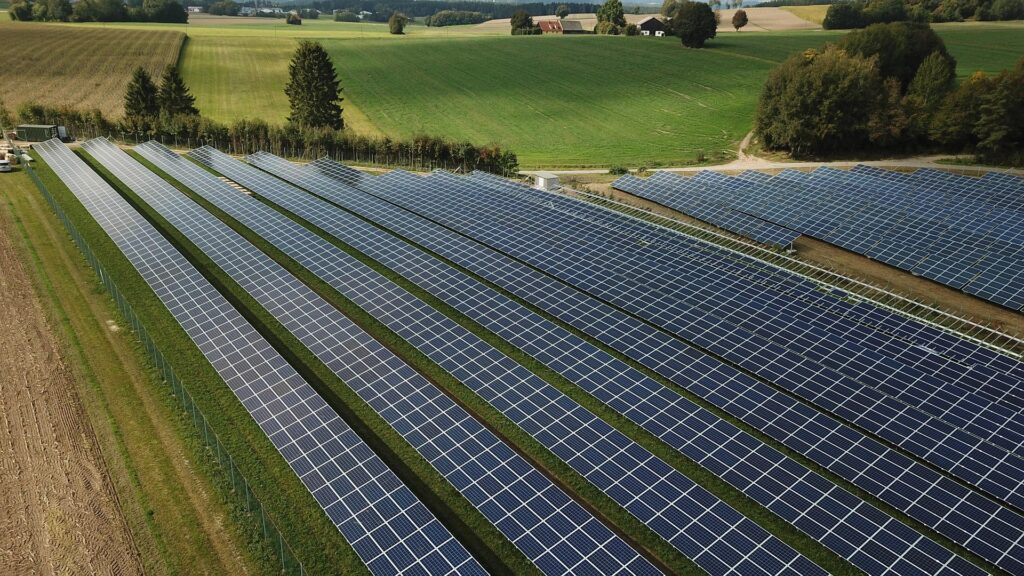
Large-scale solar projects, including open access (off-site commercial and industrial) installations, accounted for nearly 81% of total additions, while rooftop solar contributed 19%. Photo: Pixabay
India installs record 36.6 GW solar in 2025, 81% of the total solar capacity additions from Large projects
India’s annual solar installations crossed the 30 GW mark, highest ever, with 36.6 GW added in 2025. Installations in 2025 rose nearly 43% year over year from 25.6 GW in 2024, according to Mercom India’s newly released Q4 and Annual 2025 India Solar Market Update.
PV Magazine covering the Mercom report said large-scale solar projects, including open access (off-site commercial and industrial) installations, accounted for nearly 81% of total additions, while rooftop solar contributed 19%.
In 2025, 29.5 GW of large-scale solar capacity was installed, a 31% increase from 22.5 GW in 2024. Open access projects represented 26% of large-scale additions.
Rajasthan, Gujarat, and Maharashtra led large-scale solar installations in 2025, accounting for around 34%, 28%, and 15% of the capacity additions, respectively.
World’s first 628 Ah grid-scale battery enters operation
China’s EVE Energy began operations at the world’s first 100 MWh-class battery energy storage facility using 628 Ah ultra-large battery cells, PV Magazine reported. The 200 MW/400 MWh Ruite New Energy Lingshou project features 80 Mr. Giant energy storage systems and 40 integrated converter cabins. Its cell design incorporates an innovative stacking process and high-toughness separators, enhancing safety while optimizing the levelized cost of storage (LCOS).
Mass production of these large-capacity cells began in December 2024, making EVE Energy the first manufacturer to make LFP battery cells exceeding 600 Ah for stationary storage. Cumulative production has now surpassed one million cells, the report said.
India adds 3GW of solar cell capacity to ALMM List-II, reaching 26GW
Centre has released the fourth revision of its Approved List of Models and Manufacturers (ALMM) II for solar cells, increasing the total enlisted manufacturing capacity to 26GW, PV Tech reported.
The new increase has added just over 3GW of new eligible cell manufacturing capacity. The policy aims to incentivise domestic manufacturing across all segments of solar production. The updated list features domestic manufacturers such as Premier Energies and Adani Group, both of which have secured approvals for additional cell models. Evervolt Solar Technology marks a fresh entry in the latest revision, expanding the roster of India-based cell producers under the programme.
Bengaluru headquartered Evervolt, a subsidiary of Evervolt Green Energy, has been included in the updated list with 1,074MW of cell manufacturing capacity. The company operates a facility in Tirupati district, Andhra Pradesh, producing bifacial monocrystalline passivated emitter rear contact (PERC) cells in a 182.2mm × 182.2mm format with a 10-busbar configuration.
The approved model, EVT-M10-BR-PERC, delivers an average conversion efficiency of 23.10% and a nominal power output of 7.66W per cell. Efficiency spans 22% to 23.50%, with output ranging between 7.26W and 7.75W
Global electricity demand set to surge through 2030 as data centres, EVs and cooling drive new ‘Age of Electricity’: IEA
Global electricity demand is expected to grow at its fastest sustained pace in decades through 2030, driven by accelerating electrification of industry and transport, rapid expansion of data centres, and rising demand for cooling, according to the International Energy Agency (IEA)’s latest outlook.
DTE reported that the IEA forecasts global power demand to rise at an average annual rate of 3.6% between 2026 and 2030, adding roughly 1,100 terawatt-hours (TWh) every year, about 50% more than the average annual additions recorded over the past decade. Global electricity consumption is expected to reach 33,600 TWh by 2030, up from 28,200 TWh in 2025.
The report said that developing economies are expected to account for nearly 80% of additional electricity demand through 2030, with China remaining the single largest contributor. China alone is forecast to add about 2,600 TWh of electricity demand by 2030, roughly equivalent to the European Union’s current total consumption. In India cooling demand and peak loads reshape power needs, the report pointed out.
India’s electricity demand is projected to grow at an average 6.4 per cent per year through 2030, among the fastest rates globally, driven by cooling, industry and the continued electrification of agriculture and transport, the IEA said.
China to add 180-240GW of new solar PV capacity in 2026, down from 315GW in 2025
China expects to add 180-240GW of new solar PV capacity in 2026, around one-third of the 500-667GW of capacity that is forecast to be added globally this year, PV tech reported adding that it is the main takeaway from the latest report published by the China Photovoltaic Industry Association (CPIA), released last week to cover the next five years of the Chinese solar sector, which will coincide with the 15th Five-Year Plan period of the Chinese government, from 2026 to 2030. Over this period, the CPIA expects China to add an average of 238-287GW of new capacity each year, the outlet wrote.
US government withdraws defense of solar tariff pause
The Trump administration has pulled its support for the executive order that enabled solar components from Cambodia, Malaysia, Thailand, and Vietnam to enter the United States duty-free. PV Magazine reported that total duty exposure for the industry is estimated to be between $50 billion and $70 billion for the approximately 88 GW of solar capacity imported during the moratorium period, according to the Coalition for a Prosperous America. The outlet said the government is effectively stepping away from the “bridge” policy it created to keep the solar market moving during a period of extreme supply chain volatility.
The move follows a court decision that the administration lacked the authority to waive these trade penalties, a ruling that has now left the industry exposed to significant financial risk. With the government no longer defending the policy, the legal and financial burden has shifted entirely to the private sector, the report said.

With around ₹2,000 crore earmarked for chargers, the 72,000 chargers will cater to all vehicle categories. Photo: Pixabay
India to expand EV infrastructure by adding 72,000 fast chargers nationwide
India is focused on expanding its fast charging network by rolling out 72,000 fast chargers across the nation, reported ET Energy World. Speaking at the SIAM 5th Global Electric Mobility Summit, Hanif Qureshi, the additional secretary of the Ministry of Heavy Ministries, said that the government is receiving proposals from public sector units, oil marketing companies and several states for chargers.
With around ₹2,000 crore earmarked for chargers, the 72,000 chargers will cater to all vehicle categories — buses, trucks, cars, two and three-wheelers. States like Uttar Pradesh, Rajasthan, Kerala, Telangana, Bihar and Odisha have already submitted proposals.
China focuses on recycling batteries to boost critical minerals supply
As the demand for EVs shoot up globally, critical minerals are becoming dearer. In a bid to shore up critical mineral supplies, China is focused on maximising battery recycling capacity, according to Climate Change News. In 2025, China generated nearly 400,000 tonnes of old or damaged power batteries. This can rise to one million tonnes per year in 2030. To tackle this, the Chinese government has launched a series of new policies for battery recycling and repurposing.
aimed at regulating the country’s battery recycling industry, which though well-established is marked by a high degree of informality – especially in the lucrative repurposing sector where discarded EV batteries are given a new lease of life in less energy-intensive uses, such as power storage.
EV rollback leads to $55 billion writedown for global auto manufacturers
A variety of factors have led to global carmakers booking $55 billion in writedowns in 2025. According to Reuters, this is primarily due to having to roll back on the manufacturing of electric vehicles. Factors include stiff price competition by Chinese auto makers, demand for a complex mix of vehicles in Europe and a tough auto market in the US.
Stellantis, the owner of Jeep-to-Fiat, is the latest to join the list. It revealed charges of $26.5 billion in the latter half of last year. Ford Motors said it would face a $19.5 billion writedown and withdraw several EV models. General Motors is looking at a $6 billion charge, while Volkswagen will take a $6 billion writedown.
Chinese carmaker BYD to longer enjoy tariff break in Brazil
Chinese carmakers like BYD enjoyed a tariff break in Brazil which made its products more lucrative for buyers due to reduced costs. But that halted on January 31, when the exemption expired and was not renewed, according to a report by the South China Morning Post. Once again, Chinese companies will have to pay import taxes on vehicle kits brought from abroad for assembly in Brazil.
According to SCMP, the exemption for Chinese companies faced significant opposition from other international car manufacturers. Now, Chinese automaker BYD aims to “produce and source 50% of its vehicle components locally at its new Brazilian factory” by the end of this year.
Chinese open-source AI models better suited for developing countries
China’s open-source artificial intelligence models are better suited for customising models to local conditions, thereby being lucrative for middle powers like Indonesia, according to an Indonesian telco chief.
Speaking at a conference, Vikram Sinha, president director and CEO at Indosat Ooredoo Hutchison, one of Indonesia’s largest telecoms firms, said that “digital colonisation, or digital monopoly, is the biggest threat for any country. I see more openness from companies from China who want to be open-source, who want to respect [local] guard rails, which respect sovereignty,” reported South China Morning Post.
According to Sinha, the cost competitiveness of Chinese AI services offered better services to a developing country compared to services offered by US companies which are more expensive.
Taiwan pushes back against US wish to move 40% of its chipmaking capacity
The island nation of Taiwan, a semiconductor manufacturing powerhouse, revealed that it would be impossible to move 40% of its chipmaking capacity to the US, according to officials. This comes after US Commerce Secretary Howard Lutnick said that the US’ goal was to negotiate a major production shift after a trade deal was struck between the US and Taiwan in January, reported the South China Morning Post.
A production shift would cause production costs to increase massively, and lead to fragmentation of the supply chain. Also, there could be potential lower utilisation rates for expensive advanced manufacturing equipment due to the lack of mid- to high-level skilled workers in the US, cited the article.

Dynamite explosion that took place in a mine in Meghalaya has resurfaced the concerns about banned rat hole mining. Photo: Pixabay
Dynamite Explosion in Meghalaya Resurfaces Banned Rat Hole Mining Concerns
Dynamite explosion, one of the worst mining disasters, that took place in a mine in Meghalaya has resurfaced the concerns about banned rat hole mining. The disaster led to the death of 30 people so far, leaving nine people injured, reported Mongabay.
Rat hole mining is an illegal method of coal extraction in which miners crawl through very narrow tunnels and remove coal seams. The National Green Tribunal (NGT) had imposed a ban on rat hole mining in Meghalaya in 2014, citing environmental damage and safety risks, also restricting illegal transportation of coal.
MP’s Power Discoms Accumulate ₹71,395 crore in Losses
Madhya Pradesh’s three electricity discoms posted the loss of ₹71,395 crore and has emerged as the country’s largest financial sinkholes. High AT&C losses, wide ACS-ARR gaps, delayed tariff revisions, and mounting government dues have been attributed to the financial loss by the discoms, reported ET EnergyWorld.
The report noted that MP alone accumulated 11% India’s total discom losses. At the national level, power distribution companies have accumulated a loss of ₹6.47 lakh crore. This also underscored the depth of financial stress over multiple regions, despite years of reform-linked support and bailout packages.
Buying Oil from US in India’s Interests as Country Moves to Diversify Energy Resources
Union Minister Piyush Goyal said that buying crude from the United States (US) will be in India’s strategic interests as the country sets to diversify its energy resources. Goyal further added that the decision rests firmly with corporations and commercial buyers, and not with trade negotiators, reported ET EnergyWorld.
Goyal sought to draw the clear distinction between India’s energy strategy and the scope of the India-US Bilateral trade arrangement.
Oil Prices Up 1% as Middle East Tensions Offset US Crude Stock
Oil prices were up 1% due to the escalating tensions between Iran and the US and a weekly report showing a large build in US crude inventories limited gains, reported Reuters.
While President Donald Trump said that there’s nothing definitive decided on Iran, the negotiations with the country will likely continue. Additionally, US and Iranian diplomats held indirect talks last week in Oman, amid a regional naval buildup by the U.S. threatening Iran. The date and venue of the next round of U.S.-Iran talks have yet to be announced.
China to Record Slowest Growth for Coal Output in 2026 Despite Lower Imports
China’s coal output will rise 35 million metric tonnes to 4.86 billion tonnes in 2026, the slowest place this decade despite projections of a second fall in annual imports due to Indonesia, their top supplier, halting spot exports, reported Reuters.
Production of coal in China is set to rise 0.7% this year, imports are expected to fall 5.1% to 465 million tonnes, according to the China Coal Transportation and Distribution department.