

As the Iran war disrupts global supplies, registered consumers remain protected while migrant workers and poorer households pay some of the highest rates anywhere in the world for LPG




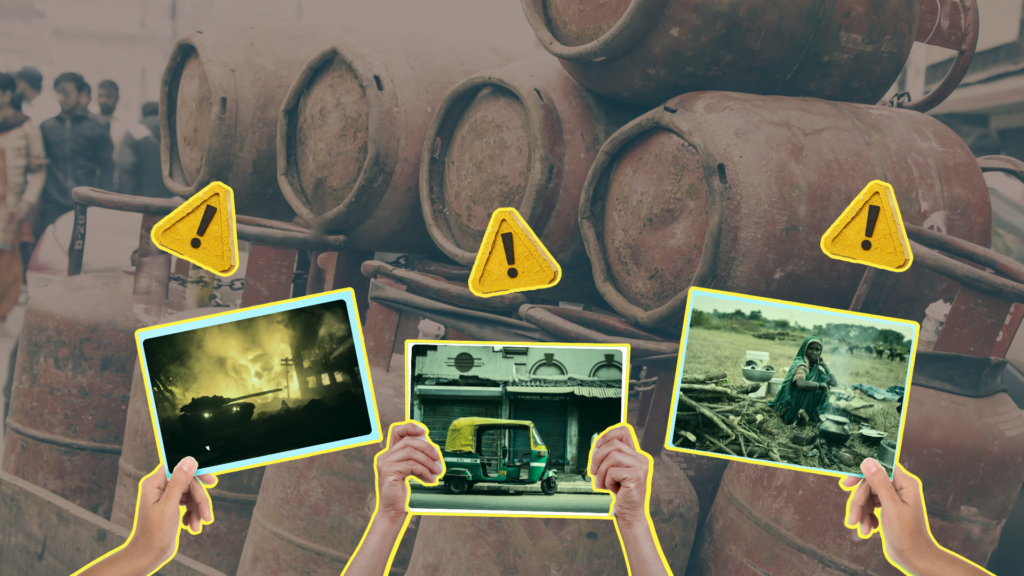
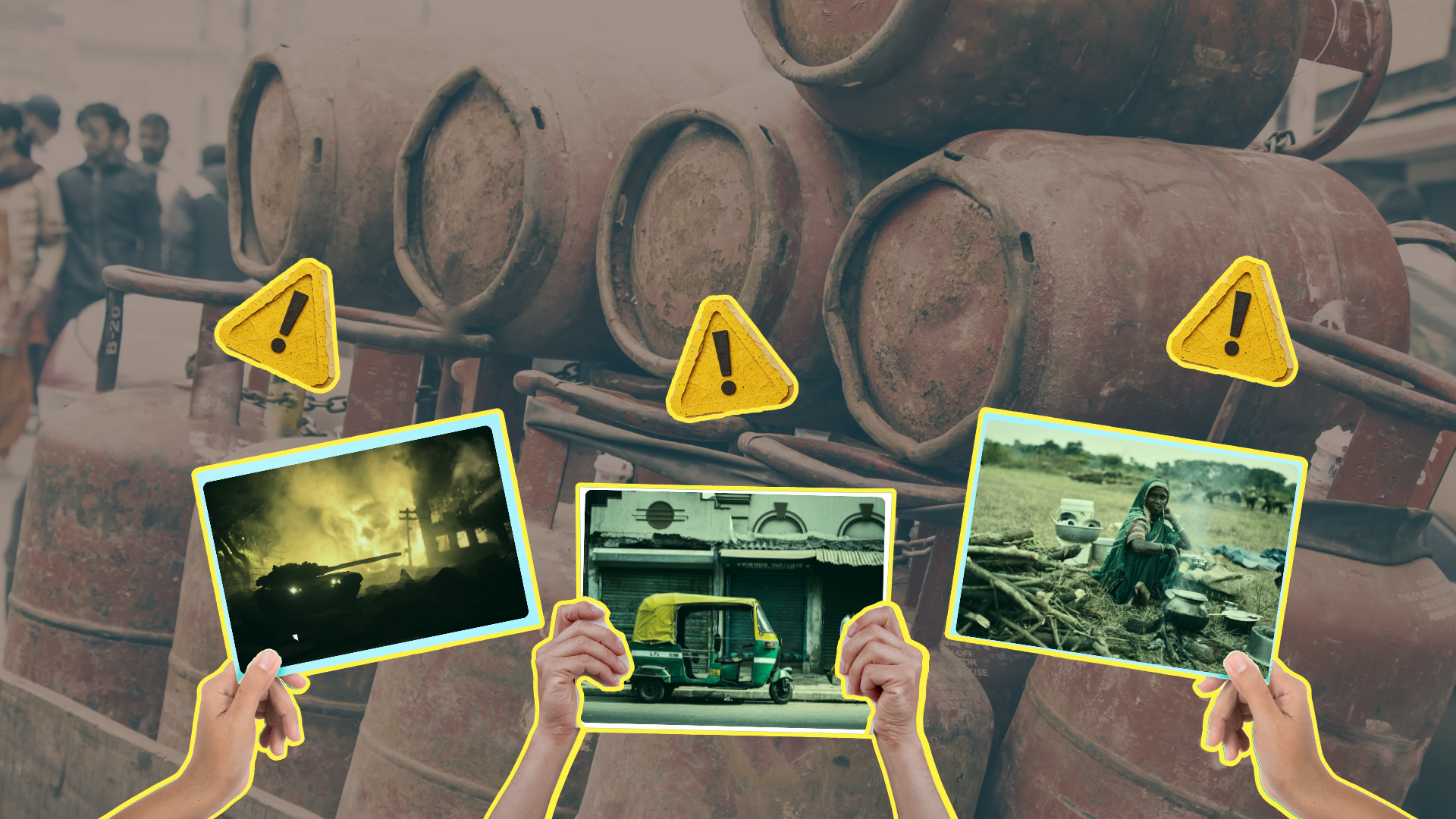
In LPG, the result is a fragmented cooking fuel system where access to cheap cylinders is now determined by income, domicile and acceptability by formal supply chains. Photo: Riddhi Tandon
The Great LPG Divide: India’s Gas Cylinder Market Splits in Two
As the Iran war disrupts global supplies, registered consumers remain protected while migrant workers and poorer households pay some of the highest rates anywhere in the world for LPG
Two-and-a-half months into the Iran war, India’s LPG market is splitting into parallel economies.In parts of the country, gas cylinders are available as before. At the most, deliveries are taking longer than earlier but there isn’t much fear of a stockout. Elsewhere, LPG prices have soared so high that families are falling back on firewood. Migrant workers are abandoning cities and returning home.
These two realities coexist in close proximity. In Delhi, gas distributors in and around Greater Kailash, East of Kailash and Chirag Delhi say they are getting sufficient LPG from HP’s Loni Plant in Ghaziabad, and from Indane’s Madanpur Khadar plant. And yet, visit Madanpur Khadar itself, as CarbonCopy did a month ago, and you will find locals failing to find affordable LPG, and consequently falling back on firewood or travelling back home.
This contradiction shows up again and again. In Bangalore, residential colonies are getting LPG cylinders. In Hyderabad, working men’s hostels aren’t. In Goa’s Madgaon, as a gas dealer told CarbonCopy, there is no delay in LPG delivery. In Uttar Pradesh’s Deoria, Gorakhpur and Basti, queues are long and laced with apprehension.
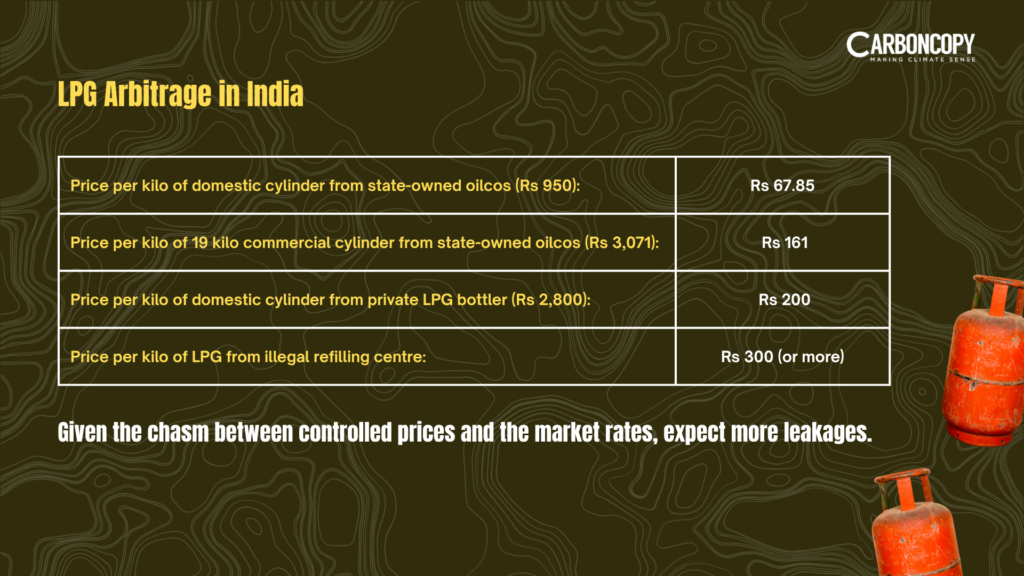
The divide is not merely about availability. It is also about price. Today, the price of an LPG cylinder is a function of who you buy it from. In Bangalore, registered buyers get a 14 kg cylinder at ₹915 or thereabouts. Those buying a similar cylinder from shopkeepers supplied by private LPG firms pay anywhere between ₹ 2,800 and ₹3,300. In tandem, illegal gas refilling centres are now selling gas at anywhere between ₹100 to ₹300 or even ₹ 500 per kilo — ₹1,400 to ₹ 4,200 to ₹ 7,000 per cylinder.
How does one understand these disparities? One part of the answer lies, as CarbonCopy wrote last month, in the Indian government’s response to the energy shock. It has taken a tack where some parts of India are carrying on as ever while others are left to cope the best they can. Not only has it fallen back on its gas allocation hierarchy where household consumption (PNG) and transport (CNG) prevail over fertiliser production, industry and power plants, it is also directing most supplies to registered LPG users.
“This is what we saw with demonetisation as well,” said Rohit Chandra, a professor at IIT Delhi. “The unregulated end of the market was the worst affected.”
The result is a fragmented cooking fuel system in which access to cheap LPG is determined by income, domicile and acceptability by formal supply chains. In other words, as shortages deepen, India’s LPG market is beginning to shed the poorest people in India — those left untouched by subsidised LPG or piped natural gas. They are the ones paying some of the highest rates anywhere in the world for LPG).
A tale of three supply chains
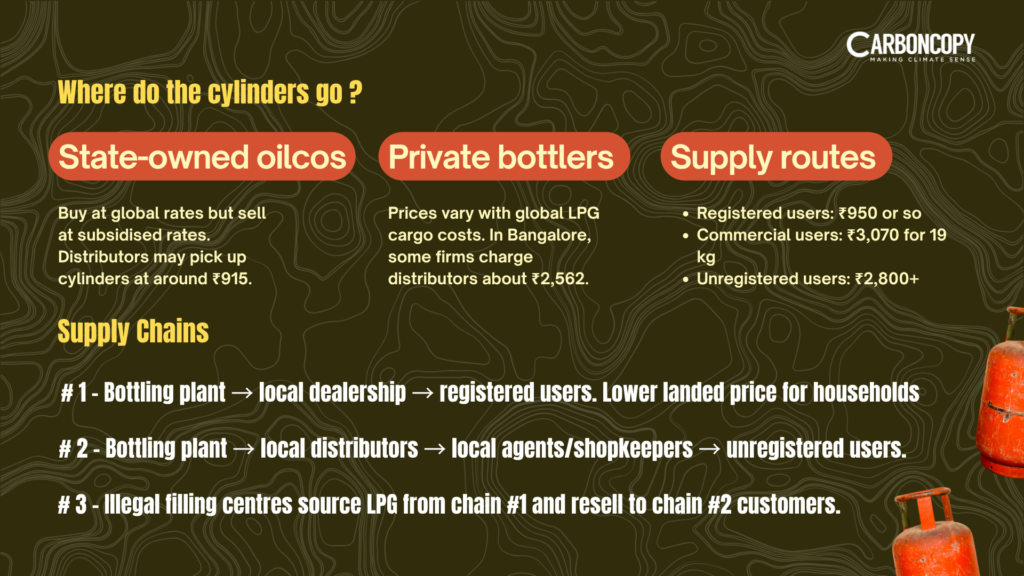
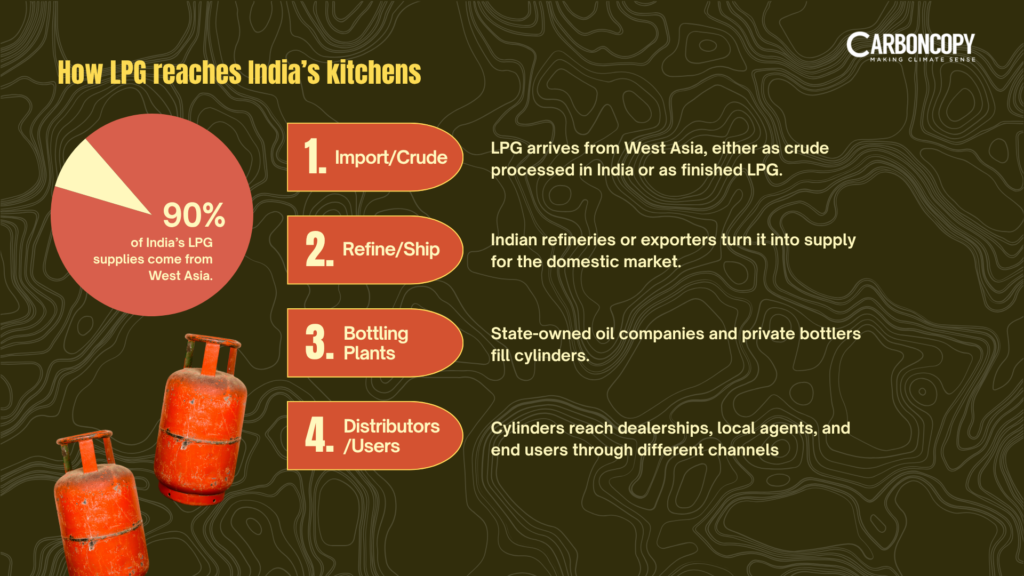
To understand why these disparities are emerging, one must first look at how LPG reaches India’s kitchens.
Large ships carry crude to Indian ports. From there, two supply chains kick into action.
The first is that of state-owned oilcos. Their refineries distil this crude into finished fuels like petrol, diesel and LPG. This LPG then flows to regional bottling plants and from there to local dealerships. Each of these, as Janardhan Singh, general secretary (UP Chapter) of the All India Bharat Gas Distributors Association told CarbonCopy, caters to anywhere between 10,000-30,000 customers.
There is a wrinkle here. These 10,000-30,000 customers are registered LPG consumers — about 33 crore in total. They are the ones who leave missed calls to order a new cylinder and thereafter, confirm receipt through OTPs. Apart from them, India also has a large transient population of workers and students who lack the paperwork to get an LPG connection. They get their cylinders from the informal economy — from neighbourhood stores and the like.
These stores get cylinders from smaller LPG bottling firms. Some of these, like Green Gas, are owned by state-run oilcos like GAIL and Indian Oil. Most of the rest, though, are private firms like Jyothi Gas, Surya Gas, Super Gas, and Go Gas. These buy LPG from international sellers (or Indian firms that buy from global sellers) and run their own bottling plants.
“Before this war, we got gas cylinders from the company for ₹ 1,000, added eighty rupees as our margin and sold them to the shopkeepers,” a Karnataka-based distributor for Green Gas told CarbonCopy on the condition of anonymity. “Shopkeepers then added another ₹ 100 as their margin and sold it to customers.” It’s in this subset of the market that, as in Bangalore, LPG cylinders now cost ₹ 2,800.
In addition, there is India’s black market. This is where illegal LPG cylinder refilling centres operate — and LPG now gets sold per kilo for ₹ 300 or more. As markets go, this one is a black box, mainly because neither India’s informal economy nor such illegal subsets get much attention. For this reason, definitive studies on how this black market for LPG worked, even in the pre-Iran war days, are hard to come by.
Working on this report, though, CarbonCopy came across a range of explanations on how the black economy used to procure LPG in the past. Some sold cheaper domestic LPG to commercial units. Others bought domestic cylinders from dealers and sold them to unregistered users. Yet others filled 5 kg cylinders from 14 kg cylinders and sold the smaller ones at a premium. Registered users, as a member of the All India LPG Distributors Federation (AILDF) told CarbonCopy, might also be selling surplus cylinders. “Even if a person books using Aadhaar, there is no way to see if they are selling it to chaiwallahs,” he said. “Whatever happens once the cylinder goes out of the godown is hard to trace for the company.”
In a nutshell, India had three supply chains for LPG. The first catered to registered users. The second, working through small shopkeepers, catered to transient populations. The third, working clandestinely, mopped up any unmet demand. Then came the war on Iran.
How these supply chains are changing
India imports nearly 60% of its LPG requirements, much of it from the Gulf. With the West Asia crisis, India began getting less LPG than before.
Qatar, the biggest supplier of LPG to India, had shipped 626,000 tonnes of LPG to us this February. Once the war began, it managed to send just 163,000 tonnes over the next 55 days. Supplies from other countries in the Gulf, which meets 90% of India’s LPG demand, fell as well. Global LPG prices rose as well, eating into what India could purchase. On the whole, as a Mumbai-based LPG analyst told CarbonCopy on the condition of anonymity, “Availability is down 25-30% since the 27th of February — perhaps even 35-40% down.”
But the costs of this shortage have not been distributed evenly across the three supply chains described above. The one feeding registered users remains insulated. At the most, it has extended the time between bookings — and is taking longer to deliver cylinders. Its cylinder price remains the same.
The second supply chain has been affected more. Working on this report, CarbonCopy spoke to a steel-welder from Assam who now works in Bangalore. “I buy my gas from Sumer Singh,” he told CarbonCopy. “Before the war, I paid ₹1,050 for a cylinder. I used to call him and he would do home delivery. These cylinders now cost ₹ 2,800. Ten days ago, they were even costlier — ₹ 3,300.”
CarbonCopy met Sumer Singh. The owner of a small shop selling (and repairing) household utensils, he also distributes LPG cylinders bottled by Green Gas. “We used to get the 14 kg cylinder for ₹ 950,” he said. “We would then sell that for ₹ 1,050. We are now getting it for ₹2,700 and I sell that for ₹ 2,800.”
To understand why the cost of these cylinders has spiked from ₹ 950 to ₹ 2,700, CarbonCopy spoke to Sumer Singh’s supplier — the distributor of Green Gas quoted above. The firm, he said, is selling cylinders to distributors like him for ₹2,520. “That is the plant-filling rate,” he said. “That is what we pay. And then, we sell to sellers at ₹ 2,600. And they then sell at ₹2,700 or ₹2,800. That depends on local demand.” The pre-war plant-filling rate, in contrast, was below ₹ 1,000.
On being asked about this jump to ₹2,520, he said: “All these companies — Agni, Green, Surya, etc — buy LPG from global markets.” For instance, Confidence Petroleum, which sells Go Gas, bought LPG from the US in March. It bought another shipment from Iran in April, again after paying a large premium.
To understand these trades in more detail, CarbonCopy went to the Bangalore offices of two private LPG cylinder sellers in Bangalore — Jyothi Gas and Confidence Petroleum. At both, employees said their managers were travelling and unavailable for comment. A third company, Sree Surya Petroleum, had shifted its office.
In the meantime, though, a large observation can be made. The second supply chain is transmitting global prices to Indian buyers. That leaves the illegal refilling centres. In Bangalore, locals say the government has cracked down on these — forcing several units to close. Elsewhere in India, the picture is less clear. These centres continue to operate in Delhi, Bangalore, Bhubaneswar, Surat and elsewhere.
How are they getting LPG? One possibility, as a Bharat Gas distributor in Uttar Pradesh told CarbonCopy on the condition of anonymity, is that cylinders are flowing from dealerships to the black market. This report on an LPG dealership in Delhi called Guruji Indane Gas Service, raided this March, is an instance. Media reports also suggest that fake orders are being placed in the name of registered users — with the help of OTP spoofing — and then diverted into the informal economy. In addition, the distributor claimed, some registered customers continue to sell. “People who changed a cylinder every 45 days are now booking every 25 days,” he said.
LPG is also being siphoned from domestic gas cylinders. “A 14 kg cylinder will run for 40 days in my house,” the Assamese migrant worker had told CarbonCopy. “Now, the cylinders we get last no more than 25-28 days. Which is why I say they are filling 12 kg or so in these cylinders.”
At this end of the market, the driver of business is the inflated price of LPG in the second supply chain. It has pushed prices to a level where vendors can even sell commercial LPG cylinders — 19 kilos at ₹3,071 in Delhi or ₹161 a kilo — in the domestic market and make a nifty profit.
This is an inversion from the past where they diverted domestic cylinders to commercial users.
Along the way, as two of India’s three supply chains for LPG align to global prices, India is seeing some striking consequences. Prime amongst them, a rising number of Indians who can no longer afford LPG.
How the LPG market is shedding customers
Talking to CarbonCopy, Sumer Singh had made an interesting observation. “Rates have fallen,” he said. “Ten days ago, we were getting cylinders for ₹3,100. That is now down to ₹2,700.”
He is not the only one seeing this dip in prices. Another LPG seller down Bangalore’s Varthur Road echoed his observation. “Before all this started, we sold LPG cylinders at ₹1,200,” said Nirmal. “That was the rate on March 1. By April 1, that rate stood at ₹3,300-3,500. Now, on May 4, it came down to ₹3,200.”
According to gas dealers in Kolkata, too, cylinder prices rose the most after the first week of the war, hit a ceiling, and are now coming down. “The current rate of LPG cylinders is ₹2,800,” a Kolkata-based gas dealer told CarbonCopy on the condition of anonymity. “Two weeks after the war, it had hit ₹ 4,500.”
Across Bangalore and Kolkata, the two cities CarbonCopy surveyed, LPG supplies are still below what sellers want. “Before the war, I used to sell 15-20 cylinders a day,” said the Kolkata dealer mentioned above. “Now, I hardly get five cylinders.” Nirmal’s shop, too, was getting 10-15 cylinders a day as recently as this January. “That is now down to two or three cylinders a day,” he said.
Despite demand still outrunning supply, as the LPG analyst quoted above said, why are prices falling?
One part of the answer lies in industry dynamics. Any LPG bottler who bags a cheaper tender can undercut rivals – and grab marketshare. In Bangalore, for instance, Sumer Singh gets LPG cylinders for ₹2,700 while Nirmal, about hundred metres away, pays ₹3,200. Another part of the answer, said the distributor of Green Gas, lies in pressure from the supply chain. “We are telling companies they have to bring these rates down,” he said. “The people who buy cylinders from us cannot afford these rates.”
A second — and much bigger — reason, though, lies in poorer customers’ inability to pay high rates. “As of now, anyone willing to pay a premium will get as much LPG as they need,” said the Mumbai-based LPG analyst. “What is happening is that a bunch of buyers are choosing to not pay that premium. They are shutting down instead.”
In Surat, workers began to return home when LPG became too expensive. In Madanpur Khadar, too, when the price of LPG touched ₹ 300/kilo, users began to drop out. As one buyer, Anju Devi, told CarbonCopy in March. “We earn about ₹400-450 a day.” With one kilo of LPG lasting two days, cooking costs now account for a third of the household budget for families such as hers. In response, they are cutting back on LPG consumption. In extreme cases, they are discarding LPG entirely and falling back on firewood, coal and kerosene.
In Bangalore too, high LPG prices are turning away buyers. “We have 15-20 people asking for LPG cylinders every day,” said Nirmal. “Of these, given the capacity to buy, half will buy.” The rest, as Sumer Singh said, are falling back on induction stoves or wood. With this, demand is falling.
Endgame
On the whole, India’s informal market for LPG is splintering into micro-markets. When Malvika Chakravarthy, who has recently moved from Gurgaon to Bangalore, contacted her gas agency for a new cylinder, she was told they could “give me a new connection without documentation for ₹ 6,000+ for a cylinder.” Her house-help, however, gets a gas cylinder for ₹ 3,000. “I am waiting for her to help me get that cylinder,” Chakravarthy told CarbonCopy.
Such arrangements might, however, be short-lived. If shortages persist, the entire LPG supply chain — be it LPG exporters, Indian LPG bottlers, their distributors or local sellers — will first cater to the highest paying customers. With that, the poorest customers will be priced out of the market.
This extends beyond families. A private LPG bottler’s capacity to pay for imported LPG is a function of its customers’ capacity to pay. For this reason, while Confidence Petroleum (which supplies to commercial and domestic buyers) is able to buy US cargoes, smaller firms catering predominantly to migrant workers will struggle.
In a nutshell, India’s private LPG market is about to shed customers. Both poorer customers — and the firms supplying them — will face the axe. If the Indian government follows in their footsteps and starts passing global LPG prices onto registered customers, even the first supply chain will see an unknown percentage of customers drop out.
People like Anju Devi, who are part of the third supply chain, are already dropping out. With one kilo of LPG costing Rs 300 – and lasting two days – cooking costs now consumed a third of her household income. Even a month ago, when CarbonCopy met her, she was already cutting back – buying less, cooking less, stretching the cylinder just that bit longer. Since then, prices have softened somewhat but the new floor is yet unknown. What we do know is that it will be set, not by local purchasing power or distributors’ demands for lower prices, but by the global LPG market. This is how markets shed unviable customers.
With that, millions of families like hers are likely to fall back on induction stoves or firewood, putting pressure on either the grid or India’s trees and forests.
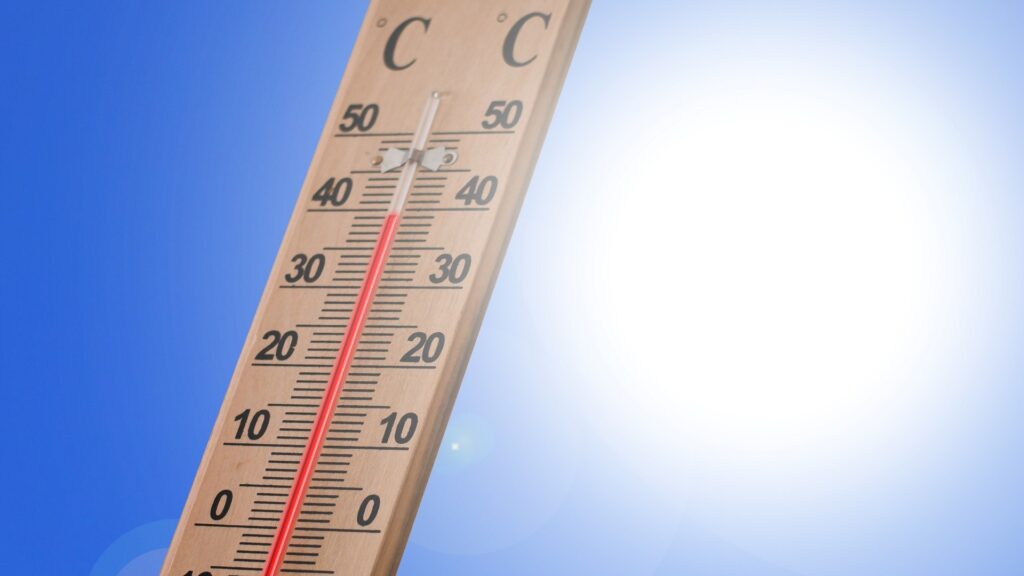
Photo: Pixabay
All 50 hottest cities in the world were in India in April: Report
Everyone of the world’s 50 hottest cities was located inside India at the end of April – “a global weather-tracking anomaly,” was the finding by the company AQI, reported Inside Climate News.
Another report by Harvard university found just 8% of households have access to air conditioning. Others rely on passive cooling (shade, reflective roofs). Around three-fourths of the country’s workforce is engaged in agriculture and construction. Informal and gig workers constitute as much as 90% of the labour force, leaving many without contracts and protections, according to the paper from the Salata Institute’s Climate Adaptation in South Asia research cluster.
Violent Storm Leaves at Least 100 Dead in UP
A storm bringing rain and hail battered Uttar Pradesh, killing more than 100 people, Reuters reported, citing rescue officials.
The news wire said that storms are common in the northern state during the hot season from March to June before monsoon rains bring respite, but Wednesday’s storm injured 59 people, damaged 87 homes, and killed 114 livestock, authorities said.
At least 104 people died in about a dozen districts, the worst hit being the area around Prayagraj, the office of the state’s relief commissioner, Hrishikesh Bhaskar Yashod, told Reuters.
“The entire area where we live in turned black for around half an hour,” said Ashok Rai, who lives in the coal-rich industrial town of Obra in the state’s Sonbhadra district.
Relief from heat: IMD predicts cooler May, excess rainfall in many parts
Most of India will witness milder than usual weather in May with day temperatures likely to be normal to below normal over most parts of the country, HT reported citing the India Meteorological Department. The newspaper said IMD officials said they have been observing an increase in WDs since March, with moisture incursion from the Arabian Sea strengthening them. “We are expecting more WDs and more thunderstorm activity in May. This is not necessarily linked to the evolving El Niño”, the outlet quoted the IMD chief as saying.
Half the Ganges will Experience Year-Round Heatwaves by End of Century: Study
Modeling studies revealed that by the end of the century, more than 50% of the Ganges will experience year-round heatwaves, causing one of the biggest population exposures worldwide, Mongabay India reported.
The researchers said when river temperatures are higher than 90% of its past recorded observations for that location and time of the year, it constitutes a heatwave.
Not only will this cause widespread damage to the ecosystem itself, the population exposure to heatwaves in the Ganges (impacts on drinking water, agriculture, and fisheries) will also be the highest in the world, the outlet said, adding that the heat stress to the riverine floral and faunal species can affect reproduction rates, reduce migration, and alter food webs. As different organisms respond to thermal stress differently, existing research shows that these implications vary vastly.
The study also pointed out the contribution of dams in exacerbating such heatwaves. Research on the impacts of small hydropower projects (SHPs) on some of the river systems in Karnataka’s Western Ghats indicates that such projects could contribute to riverine heatwaves, the outlet said citing the study.
Indoor Temperature in Chennai Remains Above 34°C for Hours After Sunset: Report
A new study by Climate Trends, tracking indoor temperatures inside 50 low-and middle-income homes in Chennai, found that temperatures rarely dropped below 3°C and often remained above 34°C for hours after sunset, even in winter.
The research, conducted between October 2025 and April 2026, was drawn from seven months of high-resolution sensor data. It revealed a growing but ignored climate threat: chronic indoor heat exposure driven by climate change, urbanisation and heat-retaining construction materials, DTE reported, citing the study.
Most alarming was the persistence of night-time heat. Temperatures peaked around 8 and 9 PM, reaching nearly 34.7°C, a delayed surge caused by concrete walls and floors releasing the heat they had been storing since morning. Even in the early morning hours, homes saw little relief, with temperatures hovering around 33.8°C to 34°C.
Scientists Warn El Niño Could Intensify Climate Extremes in 2026
In 2026 El Niño (natural phenomenon of unusual warming of sea surface temperature in Pacific Ocean) may amplify climate extremes such as wildfire risk, heatwaves and flooding, scientists warned, Climate Home reported.
There is 82% chance of a “very strong” El Niño forming in 2026, according to the average of four weather forecasters, including the European Union’s Copernicus Climate Change Service, Times reported, adding that EL Nino could push summer temperatures in the UK above 40°C in 2027 and trigger global droughts that would push up food prices. Gabi Hegerl, professor of climate system science at the University of Edinburgh told the Independent that the phenomenon is expected to be “supercharged” by the emergence of another weather pattern – a positive Indian Ocean Dipole – raising fire and drought risks, alongside broader global extreme weather impacts.
Study Says Trees Counter Half the World’s Urban Heating
Trees are fighting nearly half (50%) the urban heating from pavement and buildings in the world’s cities, but they’re not doing enough cooling in hotter, poorer cities where it’s needed the most, AP reported, citing a new study.
The study said trees in all the world’s cities cools an average of 0.27 degrees Fahrenheit (0.15 degrees Celsius). Without those trees, the world’s cities would warm on average by 0.56 degrees Fahrenheit (0.31 degrees Celsius) which is 50% more, due to the urban heat island effect, where dark roofs and pavement absorb heat.
Researchers built their analysis of nearly 9,000 large cities by measuring temperatures for segments of about 150 city blocks each. They found that poorer and hotter large urban centres that need it the most aren’t getting as much relief from higher heat, which can kill by confusing the brain, shutting down organs and overworking the heart. In four cities — Dakar, Senegal; Jeddah, Saudi Arabia; Kuwait City and Amman, Jordan — there’s such minimal tree cover that the more than 15 million people who live there get essentially no cooling from trees.
Cities where tree cover cools at least 0.45 degrees Fahrenheit (0.25 degrees Celsius), nearly 40% of cities in wealthy nations get that much cooling, but just under 9% in the poorest countries have that amount of tree relief, the study said. The list of places that cool the most is topped by Berlin and includes Atlanta, Moscow, Washington, Seattle and Sydney. Wealthy areas with individual ownership and residents with more political clout, contribute to more trees growing, the study found.
Microplastics in the Air are Making Earth Hotter, Study Finds
Microplastics in the atmosphere are heating the planet and “magnifying climate change impacts”, Bloomberg reported citing new research. The newspaper said the research, published by Nature Climate Change, revealed that scientists in China and the US have found that “tiny, coloured plastic particles absorb sunlight as winds blow them around the world, trapping heat and contributing to temperature rise”. The outlet quoted Hongbo Fu, an author of the study, saying that “climate models need to be updated” to account for the role of plastic in global warming.
Extreme Weather is Emerging as a “Major Trigger for Strokes”
Researchers have found that weather extremes are linked to higher stroke risk and death, with heat, cold, smoke, dust, and pressure shifts acting together, a new study said. The study reframes daily weather as a direct driver of brain emergencies rather than a distant environmental backdrop. Intense heat strains the body by drawing water from the bloodstream, which can make blood thicker and easier to clot.
Dehydration can help trigger an ischemic stroke – a blocked brain artery – when blood flow narrows or slows. “Temperature extremes and rapid swings in temperature, humidity and air pressure have a physiological effect on the human body,”Human-driven global warming has already raised Earth’s average temperature by about 2°F, but winter cold still plays a role in stroke risk.Cold air can tighten blood vessels, raise blood pressure, and stir clotting chemicals that increase strain inside the brain…warming does not erase winter danger; it makes planning more complicated.
Alaska’s 2025 Mega Tsunami Highlights Risk to Cruise Lines as Glaciers Retreat
The “mega tsunami” recorded in Alaska in August 2025 was triggered by a “massive rockslide around the toe of a glacier”, serving as a “stark warning of the risks of coastal rockslides and glacier retreat fueled by the climate crisis”, the Guardian reported. The newspaper said the event was the world’s second-tallest tsunami, reaching 481 metres in height. Reuters also covered the study and quoted the researchers saying the landslide was driven by climate change. The glacier buttressing the mountain had retreated amid warming temperatures, eventually leaving the rock unsupported.” The New York Times said: “As glaciers retreat and thawing permafrost lubricates slopes, these giant landslides may become more frequent.”
Climate change has impacted the nitrogen cycle in global grasslands over 1980-2020, with implications for “human health and ecosystem integrity”
A study published in Science used data from 150 countries and found climate warming as the primary driver of increased nitrogen harvest, biological nitrogen fixation, and nitrogen surplus in global managed and undisturbed grasslands. For the year 2050, nitrogen input, harvest, and surplus in global grasslands are projected to increase annually by 22.3, 7.2, and 15.1 million tonnes, respectively, compared to baseline scenarios. These climate-induced alterations in nitrogen budgets could incur additional costs up to $69 billion because of associated impacts on human health and ecosystem integrity.

Photo: Pixabay
BRICS Consensus on West Asia Uncertain as Iran, UAE Spar at Meeting
At the BRICS Foreign Ministers’ Meeting in New Delhi, Iranian Foreign Minister Abbas Araghchi accused the United Arab Emirates (UAE) of direct involvement in the US-Israeli military campaign against Iran, the Wire reported. The blunt talk exposed the contradictions within the expanded bloc on reaching a consensus over the West Asia conflict.
“The West’s false sense of superiority and immunity must be shattered by all of us,” Araghchi said. Telegraph reported Iran called on BRICS to condemn the violations of international law by the United States and Israel, He added that the battle Iran has fought is “in defence of all of us – of the new world that we are building together.” BRICS nations include Brazil, Russia, India, China, South Africa, Egypt, Ethiopia, Iran, the United Arab Emirates, and Indonesia.
External affairs minister S. Jaishankar said: “Ongoing conflicts, economic uncertainties and challenges in trade, technology and climate are shaping the global landscape.” He said the BRICS discussion should consider “practical ways to strengthen our cooperation.” Many countries continue to face challenges on energy, food, fertiliser and health security, as also access to finance, he said.
Referring to US sanctions on Iran, Jaishankar said, “We must also address the increasing resort to unilateral coercive measures and sanctions inconsistent with international law and the UN Charter.”
Indian Express reported that India tried to diplomatically balance Iran and UAE, flagging energy disruptions as well as “unilateral coercive measures and sanctions”. India, the host of the meeting, is battling severe energy supply disruptions caused by the ongoing war.
‘It’s not like a lockdown…’, Minister Dismisses Fears After PM Modi Appeals to Cut Oil Use
India’s Prime Minister Narendra Modi’s austerity appeal to citizens urging them to use less cooking oil, petrol, and diesel and work from home to counter US-Iran war induced shortages triggered rumours of a lockdown.
India’s oil-and-gas minister Hardeep Singh Puri dismissed concerns of any imminent lockdown-like restrictions, reported the ET.
Meanwhile, the RBI governor warned that fuel prices may rise if the war imposed on Iran continues, reported TOI. As crude oil prices stayed elevated, the rupee weakened and slipped to 95 mark against the dollar.
Oil and Fertiliser Price Shock: India Races to Shield Economy
Energy prices spiked by the war on Iran has clouded India’s macroeconomic outlook, spurring crisis-era measures from the government, Reuters reported.
“The most severe disruption of global energy” has made imports more expensive. India imports about 90% of its oil needs and about 50% of its gas requirements.
Chief Economic Advisor V. Anantha Nageswaran said managing the current account credibly, financing it, and preventing further currency depreciation are big imperatives.
Foreign investors have pulled out more than $20 billion from Indian equities since the war began, the report said.
The rupee has already fallen more than 5% since the Iran war broke out to hit a record low this week, and is the worst-performing Asian currency so far in 2026 This has made India to appeal to citizens to cut down on consumption that uses up foreign exchange.
India’s retail inflation rose to 3.48% in April, as food prices have risen and are expected to rise higher with a “fertiliser price shock” and “less-than-normal rainfall due to El Niño conditions”, Reuters reported.
India’s Heat Exposes a Fragile Grid as Energy Crunch Deepens
As temperatures in India “surged beyond 40°C” in April to “punishing levels”, the “demand for round-the-clock power is testing the ability of India’s electricity system to provide uninterrupted supply” and “triggering blackouts as infrastructure and generation struggle to cope,” reported Bloomberg.
The news outlet said extreme nocturnal heat forces around-the-clock cooling, straining infrastructure and causing localized blackouts. Over 21 gigawatts of coal and nuclear capacity are currently under maintenance or forced shutdowns, exacerbating the crisis, the report said.
India’s Delivery Economy Runs On Worker Heat Stress, Gig Workers Lobby Seeks “Enforceable Protection”
India’s 7.7 million gig workers have no shade, no drinking water, and no choice but to deliver through the afternoon heat, reported India Spend. The extreme heat has had a “devastating effect” on the country’s gig workers “at the mercy of algorithms”, with little or no access to shade, water or toilets.The Indian Federation of App-Based Transport Workers has written to the Ministry of Labour and Employment, seeking enforceable protections.
The association demanded paid cooling breaks during severe heat alerts, access to drinking water and shelters, and in-app emergency systems for heat distress, arguing that voluntary measures by platforms are not enough. The ministry itself has issued a nationwide advisory, urging states and Union Territories to direct employers, especially those working in outdoor and labour-intensive sectors, to implement immediate heat-safety measures. A few delivery workers who Business Standard spoke to said there have been modest improvements on the ground. A delivery partner said that at least two qcom platforms have increased per-order payouts during peak afternoon hours,
Bengal Express-way to Impact Protected Forest Land, Elephant Corridor
The Union environment ministry’s expert appraisal committee (EAC) has cleared a 235-km greenfield expressway connecting Varanasi to Kolkata under the Bharatmala Pariyojana Phase-II programme, with the project requiring the diversion of over 103 hectares of reserved and protected forest land in West Bengal — territory the committee noted falls partially within a tiger landscape, HT reported.
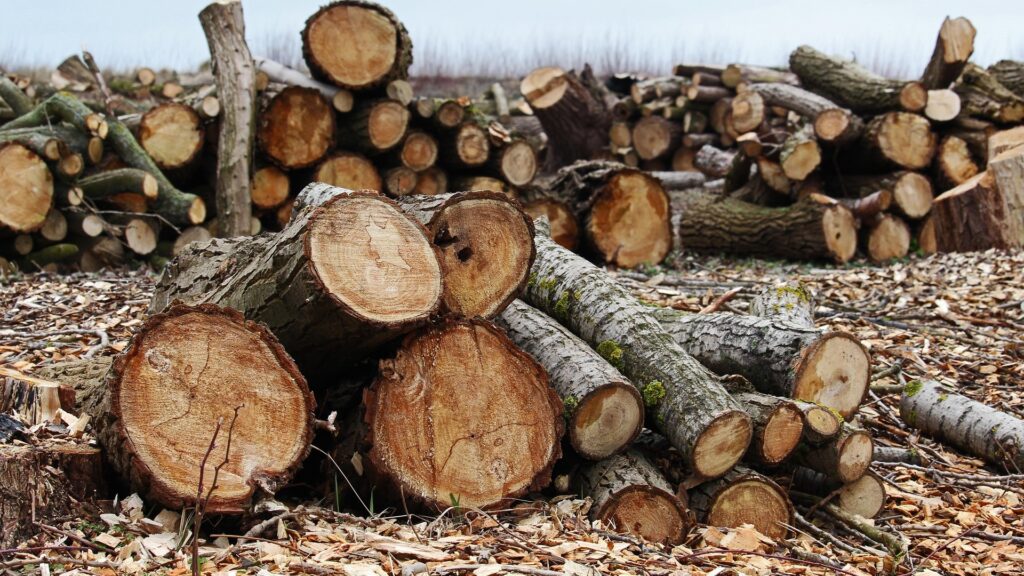
In a “landmark move” India’s National Green Tribunal (NGT) directed the Principal Chief Conservator of Forests & Head of Forest Force (PCCF & HoFF), Delhi to obtain information from all the tree officers in Delhi regarding illegal tree felling complaints made during the past five years, DTE reported.
This includes informing the court about the compliance status of compensatory plantation based on those orders, and the compiled information must be uploaded to the website of the Forest and Wildlife Department or the Government of NCT of Delhi website within three months.
The Court also ordered that PCCF (HoFF) within three months ask all the tree officers to take prompt action and dispose of complaints regarding illegal felling of trees in accordance with the provisions of the Delhi Preservation of Trees Act, 1994 within reasonable time, which may also be specified.
Compensatory plantation must be ensured according to norms during the upcoming monsoon / one year from the date of the order, as the case may be, the order passed by Justice Arun Kumar Tyagi said.
Violations by Textile Industry: Rajasthan Gives Compliance Report to Green Court
The NGT heard the submissions of the Rajasthan government about the status and compliance measures taken in the case of violation of environmental norms by industries engaged in the textile printing business in Jaipur district of Rajasthan.
The counsel for Rajasthan submitted that in compliance with the previous order, the common effluent treatment plant was made functional and around 907 units have been connected to it. It was further reported that the matter was still pending before the Supreme Court. The tribunal directed that the latest status of the matter pending before the SC be put up.
Jaipur reported high incidents of cancer cases in women in the districts. The highly contaminated water is used extensively for growing green vegetables in the Sanganer area. Experts said that the contaminating carcinogens in Sanganer were selectively making an influence on the female population in the region.
EU Floats Making it Easy for Oil Companies to Break Methane Rules
The European Commission is “considering giving fossil-fuel companies leeway to avoid penalties under new rules governing the emissions of methane”, due to the ongoing energy crisis since U.S.-Israel joint war on Iran: “According to draft guidelines for governments, national authorities would be able to grant exemptions to companies on energy security grounds, without any clear time limit or explicit oversight from the Commission,” Politico reported.
Financial Times said the Commission has come under “ intense pressure from US and the fossil-fuel industry” to dilute the rules on “monitoring, reporting and verification for methane leaks and flaring tied to fossil fuel imports”, the newspaper added: “In the latest draft guidance to national bodies, which will enforce the rules from January 2027, the Commission says that applying penalties during a crisis could ‘worsen the security of supply situation, endangering continuity’”
Reuters explained : “The EU methane law requires that, from January 2027, imported gas must comply with monitoring and verification rules equivalent to Europe’s. Penalties for breaching the law include fines up to 20% of a company’s annual turnover.”
‘An epidemic of Flies, Rats, Waste and Foul Odours’: Health Fears in Cuba as US Oil Blockade Halts Rubbish Collection
Cuba has been forced to cut garbage collection in trucks to save oil, as the US oil blockade on Cuba enters its fourth month, choking off most of the island’s fuel supplies, growing mounds of waste lie on street corners across Havana, the Guardian reported
Cubans are forced to throw their household waste into the street as they wait for collection. The government has allowed rubbish to be burned in crowded urban areas, with authorities designating 122 temporary waste collection points in Havana, at 24 of which there is “controlled incineration”, the newspaper said.
The report pointed out that substances from waste can persist in the environment for years and in the human body for a decade quoting Cuban Neuroscience Center
Fall in Air Pollution Post China’s Adoption of Electric Vehicles up to 2023 Prevented Hundreds of Thousands of Deaths: Study
Electric vehicles in China till 2023, led to reductions of 23.80% in particles with a diameter of 2.5 μm or less (8.97 µg m−3) and 30.67% in carbon monoxide (0.26 mg m−3), resulting in the prevention of approximately 262,000 non-accidental deaths and 75,000 all-cause deaths, respectively, Nature reported. According to the study. benefits were concentrated in economically developed cities, and reductions in coarse particles and nitrogen dioxide (1.81 µg m−3) were low.
These findings highlight pollutant-specific disparities and socio-economic inequalities in electric vehicle-related benefits, suggesting a need to accelerate heavy-duty diesel vehicle electrification and enhance NEV deployment in less-developed regions. Using satellite data and AI, researchers quantified the impact of EVs on atmospheric pollution, specifically particulate matter particles of 2.5 μm or less (PM2.5) size, nitrogen dioxide, carbon monoxide and particles with an aerodynamic diameter of 10 μm or less, and evaluates the corresponding health benefits.
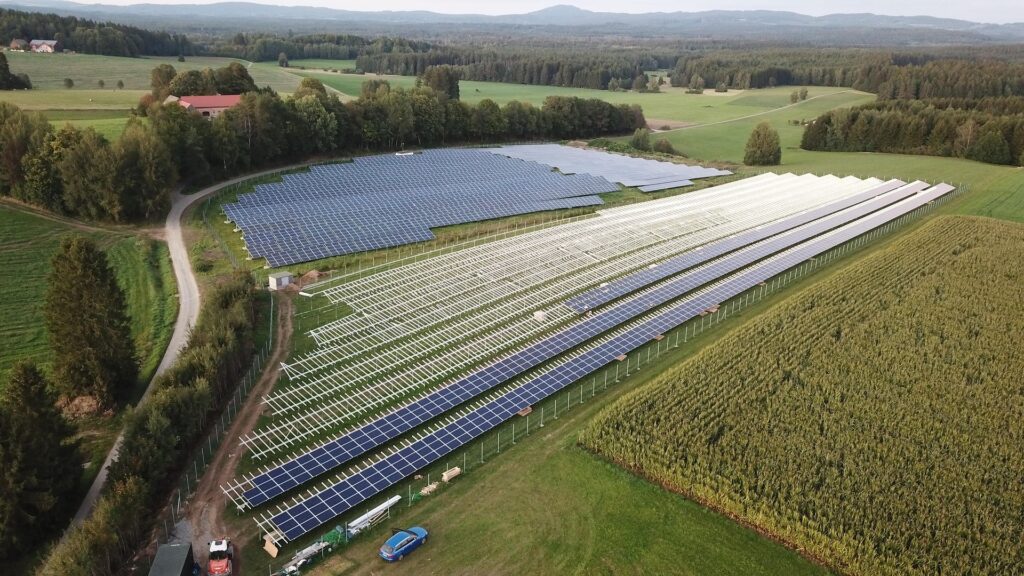
India added a record 15.3 GW of solar capacity in the first quarter of 2026, marking the country’s highest-ever quarterly solar installations, according to Mercom India.
Solar installations increased 143 per cent year-on-year, from 6.3 GW in Q1 2025 and rose 49 per cent quarter-on-quarter compared with 10.3 GW installed in Q4 2025.
Large-scale solar projects accounted for 12.6 GW or 82 per cent of total solar additions during the quarter, with open access projects contributing 21 per cent of large-scale installations. The report highlighted that large-scale installations increased 147 per cent year-on-year and 55 per cent quarter-on-quarter. Accelerated project commissioning ahead of the implementation of ALMM List-II fr .. from June 2026 was one of the key drivers behind the record installations.
Modhera in Gujarat Get India’s First Battery Integrated Solar Plant
Gujarat launched India’s first Battery Energy Storage System (BESS) integrated with a solar power plant at Modhera village, reported the Hindu.
Gujarat has initiated battery storage systems at five locations with a total capacity of 870 MW, the report said, adding that the state has also registered 13 projects across Ahmedabad, Gandhinagar, Banaskantha, Patan and Kutch to set up additional battery storage systems. These efforts will also contribute to India’s target of achieving 500 GW of non-fossil fuel capacity by 2030. Recently, a battery storage system was commissioned at Charal in Sanand taluka of Ahmedabad. Additionally, four systems are operational at Modhera in Mehsana and Lakhpat in Kutch. The state government has also included advanced energy storage systems as a key component in the Gujarat Integrated Renewable Energy Policy, 2025.
India’s Grid Bottleneck Forces ReNew to Scale back power, Limit Losses
ReNew Energy is cutting back solar generation in India by up to 15% on certain days due to critical grid transmission bottlenecks, which are unable to handle peak daytime solar output, threatening profitability, ET reported. To mitigate these losses and combat high grid congestion in states like Rajasthan, the firm is investing in 4 GWh of battery storage, the newspaper said citing sources. The report said the company is investing in battery storage to balance supply and demand.
IRENA: Round-the-clock Renewable Power Frequently Cheaper Than Fossil Fuels
Solar and wind power backed with battery storage systems are delivering round-the-clock at a lower cost than fossil fuel-dominated energy systems in a growing number of regions” found a new report from the International Renewable Energy Agency (IRENA), Businessgreen reported. The outlet quoted the research saying: “In regions with high levels of solar and wind generation, hybrid systems that combine intermittent renewable power generation with energy storage capacity are proving capable of delivering cost-effective electricity 24/7”.
The report calculated that firm levelised costs of electricity for solar plus storage projects range from around $54 to $82 per megawatt hour (MWh) in regions with high levels of solar generation potential. The costs compare favourably with levelised costs of $70 to $85/MWh for new coal-fired power generation providing round-the-clock power in China or more than $100/MWh for new gas-fired generation globally, the report explained.

Photo: Pixabay
Google’s Data Centre in India, Largest Outside US, ‘Failed to Disclose’ Water Consumption Plans ?
Andhra Pradesh has launched a proposed ₹1.35 lakh crore Google Cloud AI Hub in Visakhapatnam, positioning it as one of India’s largest AI and digital infrastructure projects, ET reported. Spread over 600 acres, the 1-gigawatt facility aims to transform Vizag into AI hub, says the newspaper.
Adani group has also committed $100 billion to build Adani-Google-Airtel data centre project, ET report said.
Mongabay said Google has “failed to disclose” details about its water consumption plans while experts question how much of the “1GW AI hub” would be powered by renewable energy.
Activists and lawyers assert that data centres should be classified as separate infrastructure projects with massive resource needs, for obtaining environment clearance. Experts call for a clear, defined national data centre policy. After a draft policy was launched by the Ministry of Electronics and Information Technology of India (MeitY) in 2020, there have been no updates or a final policy yet, the report said.
Meanwhile, Reliance Industries Ltd. is also planning to build a 1.5 gigawatt (GW) data centre cluster, also in Vizag. AP aims to create 6.5 GW of compute capacity in the coming years.
The report explained that :”Data centres use water, primarily for cooling the systems. Google alone consumed approximately 31 billion litres of water across all its data centres in 2024. While the company reports that a majority of its freshwater withdrawals came from sources at low risk of water depletion, further information on said sources was not provided. It also states that it’s planning integrated watershed management to address existing hydrological stress. However, Visakhapatnam district has the lowest levels of groundwater available for domestic, agricultural or industrial use in the state (2.12 TMC), as on April 1, 2026.”.
The environmental clearance (EC) issued to M/s. Vizag Mega Data Centre Park Limited for the 1000 megawatt (1 GW) data centre park in Tarluvada, accessed by Mongabay-India, does not disclose information about the water usage during the operation phase. Emails to Google with questions about their water consumption plans in AP were unanswered at the time of publishing this story.
The environmental clearance (EC) issued to M/s. Vizag Mega Data Centre Park Limited for the 1000 megawatt (1 GW) data centre park in Tarluvada, accessed by Mongabay-India, does not disclose information about the water usage during the operation phase. Emails to Google with questions about their water consumption plans in AP were unanswered at the time of publishing this story.
India’s Markets Regulator Sets up Task Force to Tackle AI-Driven Cyber Threats
Market watchdog the Securities and Exchange Board of India (SEBI) has warned about the threat of AI fraud posed to financial products and systems from the very AI tools they use to detect weaknesses, tools similar to “Mythos” reported Moneycontrol.
Sebi will soon release advisory for regulated financial entities about dangers linked to AI models and AI-led risk detection systems, as a part of the regulator’s growing focus on technology-driven threats in financial markets.
The news outlet said “while innovation like digital onboarding, faster settlement, direct payout, online bond platforms, REITs, INVITs, AIFs, municipal bonds, green bonds, commodity derivatives show how products and processes can deepen markets, widen access, and improve risk management, innovation also brings risks.”
Australia Regulator Calls for Urgent Cybersecurity Action to Counter Mythos
Australia’s corporate regulator has urged the country’s financial sector to take urgent action on tackling potential cyber risks from frontier AI systems such as Mythos, Reuters reported.
The news wire said that risks posed by Mythos, which has high-level coding capabilities, have given it a potentially unprecedented ability to identify cybersecurity vulnerabilities, experts have warned.
Anthropic, which developed Mythos, did not immediately respond to a request for comment on ASIC’s letter, the outlet pointed out.
The ASIC warning follows Australia’s banking regulator last month saying the domestic financial services industry’s information security practices were struggling to match the rate of change in AI.
Anthropic has launched Claude Mythos Preview under Project Glasswing, a tightly restricted access programme that includes major technology firms such as Amazon, Microsoft, Nvidia and Apple.
$1bn Ocean Data Centre Start-up Powered by Waves
Palantir is investing in a US start-up Panthalassa. The company received a $1.4bn investment and it plans to use wave energy to fuel “giant fleets of floating data centres”, FT reported. Panthalassa has spent a decade developing ocean energy technology, which uses the motion of the waves to force water through a turbine to produce electricity.
Peter Thiel, co-founder Palantir and PayPal invested in Panthalassa. Palantir has been in news for its controversial AI driven weapons technology that powers Trump’s anti-immigrants ICE force and used in the war against Gaza. Its investment in floating data centres would allow the company to scale up a pilot manufacturing facility, ahead of starting commercial deployments next year.
EU Countries, Lawmakers Clinch Provisional Deal on Watered-down AI Rules
EU countries agreed to watered-down landmark artificial intelligence rules and delay their implementation, “caving in to Big Tech”, Reuters reported.
Today, the AI Act significantly supports companies by “reducing recurring administrative costs,” Marilena Raouna, Cyprus’s deputy minister for European affairs, said in a statement.
The changes to the AI Act, are part of a simplification drive that came after businesses complained about overlapping regulations and red tape hampering their ability to compete with U.S. and Asian rivals.
The EU agreed to delay rules on high-risk AI systems such as those involving biometrics or related to critical infrastructure and law enforcement from this year to December 2, 2027.
However, mandatory watermarking of AI-generated output will apply from December 2. There was agreement too on a ban on AI practices that create unauthorised sexually explicit images, a move responding to such content generated by Elon Musk’s xAI chatbot Grok on X and sexually intimate deepfakes produced by Grok. The ban will apply from December 2.
China Exports More EVs Than Traditional Cars for First Time in April
China exported more new energy vehicles (NEVs) than internal combustion engine vehicles for the first time in April, as car makers expanded overseas to “offset subdued domestic demand”, the Wall Street Journal reported citing data from the China Passenger Car Association, saying that NEVs accounted for 52.7% of China’s total auto exports in April, doubling to 406,000 units. Bloomberg reported that China’s auto sales fell 21.5% to 1.4m, the lowest figure since 2022, as NEV sales were not “strong enough to counter the slump” in traditional vehicles. The outlet adds that NEV sales fell 6.8%, indicating that a “potential boost” from rising oil prices could not “reverse domestic softness” due to the “rollback of trade-in subsidies and the return of a purchasing tax on EVs”.Reuters reported that the US auto industry are calling on Donald Trump (scheduled to visit China this week) not to offer China “any access” to the US auto market
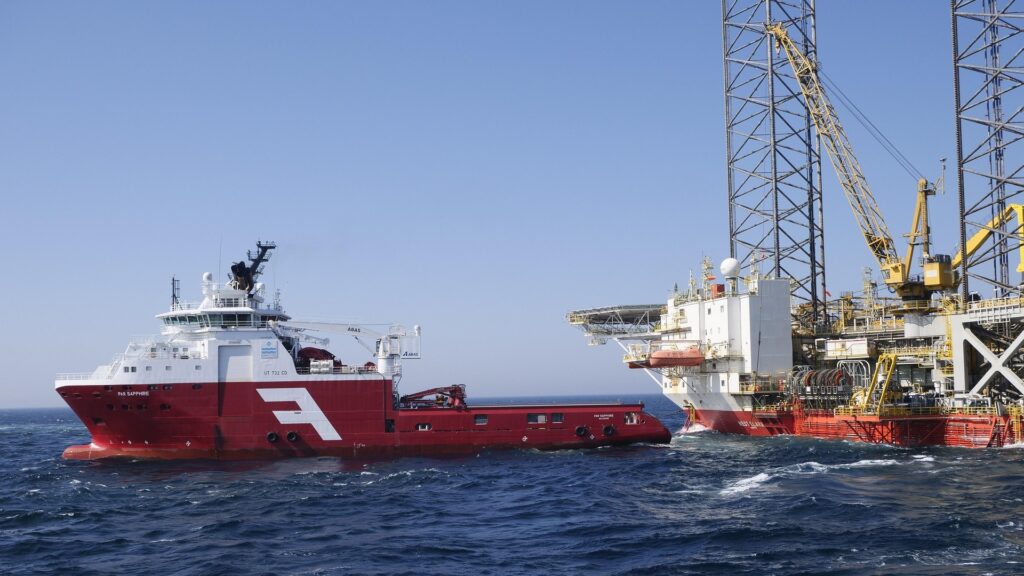
The International Energy Agency (IEA) warned that global oil supply will not be able to meet the total demand this year, upending its previous projection of a surplus, reported Reuters. In its update for April, the organisation reportedly said the world is “drawing oil inventories at a record pace as importing countries confront unprecedented disruptions to Middle Eastern supply”. Reuters said the IEA has replaced a previous projection of a 410,000 barrels per day (bpd) oil surplus in 2026 in last month’s report with a forecast that supply will come in 1.78m bpd below demand. It continues that the IEA “sees demand falling by 420,000 bpd this year, compared with a previous forecast of an 80,000 bpd drop”.
Govt Offers ₹37,500 Crore Subsidy for Coal Gasification, to Convert Coal into Gas
The Centre approved ₹37,500 crore coal/lignite gasification scheme to meet target of gasifying 100 million tonnes (MT) of coal by 2030 and cut imports of key products such as LNG [liquefied natural gas[ (more than 50% imported), urea (~20% imported), ammonia (~100% imported), and methanol (~80–90% imported), HT, the Hindu and other media outlets reported.
Government in a note laid out India’s import bill for LNG, urea, ammonium nitrate, ammonia, coking coal, methanol and others which stood at approximately ₹2.77 lakh crore in financial year 2025, a vulnerability further exposed by the ongoing geopolitical situation in West Asia, the note said.
Coal gasification is a thermo-chemical process that converts coal into synthesis gas, consisting of carbon monoxide and hydrogen, HT explained.
The scheme subsidises new surface coal/lignite gasification projects for production of syngas and its downstream products, targeting gasification of approximately 75MT of coal/lignite
The plan includes incentive of 20% of the cost of plant and machinery, offered through a competitive bidding process, with an evaluation framework benchmarking project cost, coal input, and syngas output.
The financial incentive for any single project will be capped at ₹5,000 crore; for any single product (except synthetic natural gas and urea) capped at ₹9,000 crore; and any single entity group capped at ₹12,000 crore across all projects, the report said citing government note.
Saudi Aramco Warns Fuel Stocks Heading for ‘Critically Low Levels’
Oil and gas company Saudi Aramco warned that the world’s stocks of petrol and jet fuel could reach “critically low levels” in peak summer time, reported FT, quoting Amin Nasser, Saudi Aramco’s chief executive who was concerned over “rapidly accelerating” decline of “onshore inventories” amid the ongoing strait of Hormuz closures triggered by attack by U.S. and Israel on Iran.
Quoting Nasser, Bloomberg reported that global oil markets are losing 100m barrels every week due to the closure. The Wall Street Journal added that if the reopening of the strait is delayed by several more weeks, oil markets might not normalise until 2027.
Gasoline Costs 52% More in the US Than it Did Before the Iran War
The price of gasoline in the US is now 51% higher than before the war in Iran started, the Independent reported. The main reason drivers are paying more at the pump is because the war has stranded oil tankers near the Strait of Hormuz, a narrow passage through which a fifth of the world’s crude oil normally passes. Thr newspaper said that the price of crude oil, which is the main ingredient in gasoline, climbed for most of the past two months because Iran has effectively shut the waterway located off its coast. According to the NYT, “the higher prices are “hitting lower-income Americans the hardest”.
Oil Market One Month From ‘Tipping Point’ as Global Stockpiles Dwindle
Oil traders warned that the market is four weeks away from a “tipping point” that will lead to significantly higher prices, as the blockade of the strait of Hormuz reduces global stockpiles, reported FT. The newspaper added: “Traders and analysts warned that global stocks of crude, gasoline, diesel and jet fuel will hit critically low levels by the end of May, at which point prices will escalate rapidly.”
According to Bloomberg every day the waterway remains shut, the world is using up commercial stockpiles, strategic reserves and crude that was stored in vessels before the US and Israel launched the Iran war”, according to America’s biggest oil companies
Lufthansa is Considering Adding Refuelling Stops to Direct Flights, as a Result of Fuel Shortages.
Lufthansa airline is planning to add stops to flights that currently are nonstop because the German airline is expecting the fuel to run out by July due to the blockade of the Strait of Hormuz, Bloomberg reported.According to the Telegraph, the airline warned that “some major airports have already begun to run out of jet fuel”, Airports are already running out of fuel, says Lufthansa German airline cuts 20,000 short-haul journeys as flights forced to make detours.