
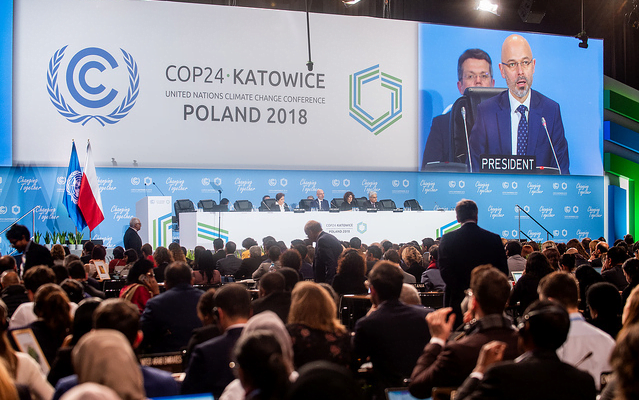
The negotiations at COP24 are progressing at a snail’s pace, albeit they are progressing. The Polish Presidency text (Guidelines) are finally out. Guidelines of how the Paris Agreement will be implemented, adequate flow of climate finance from developed to developing countries, and crucial traditional items like the retaining the basic distinction between developed and developing nations, are some of the key issues to be finalised for the outcome package. With the trust deficit between the country blocs, the last 24 hours to go until the COP is supposed to close, are crucial moments. Outside of Katowice, the loosening of French President Macron’s hold on leadership amid French protests on rising carbon taxes made this COP a perilous climate moment.
Last week’s dilution of the IPCC’s 1.5C report by USA, Kuwait, Russia and Saudi Arabia also came as setback to the negotiations. Their fight to replace the term “welcome” with “noting” the latest science report in the final text was seen by countries as a push for fossil fuels, while taking away the focus off the vital issues of climate finance and differentiation. Saudi Arabia – as OPEC’s de-facto commander – denied it was jeopardizing climate action, and instead offloaded the responsibility to US, Europe, Canada, Australia and Japan – which it argued had long histories of emitting carbon. Saudi Arabia’s Ayman Shasly told Carbon Brief that IPCC report denies his country climate justice as a developing country because it says “let’s all do it together” – without accounting for either equity or history.
About The Author

You may also like
India’s Climate Disasters Are Triggering a Silent Mental Health Crisis
Beyond compensation: What coastal communities lose to a rising sea
Climate action in a fractured world: Trends for 2026
US Strike on Venezuela Reshapes Energy Politics, Raises Strategic Dilemmas for India
Trump Approves Bill Proposing 500% Tariffs on Brazil, China, and India Over Russian Oil Trade