
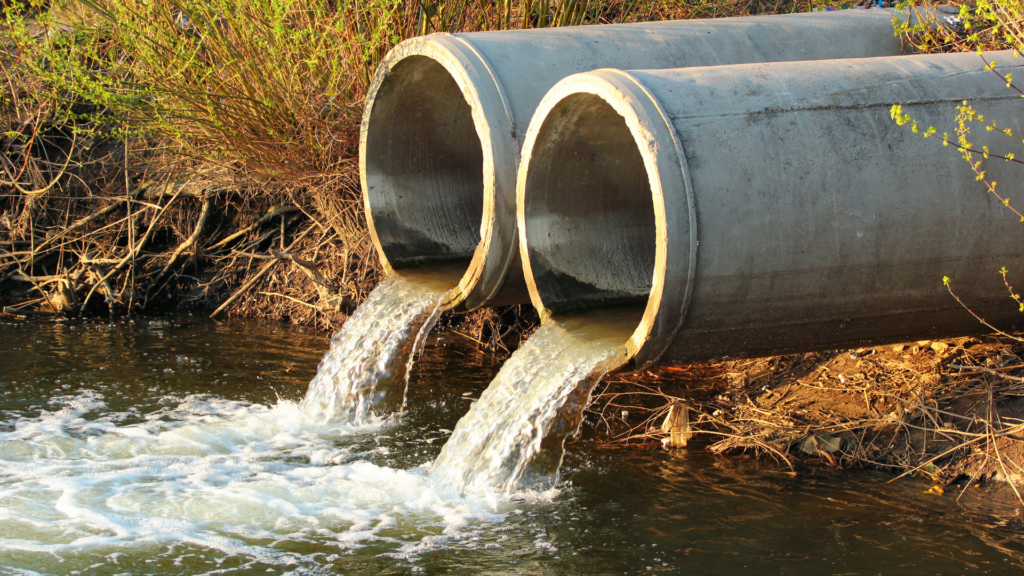
The Haryana government ordered Gurugram civic bodies to plug illegal sewage discharge points in the city’s Leg One, Leg Two and Leg Three stormwater drains by June-end in a phased manner to curb pollution in the Yamuna River, HT reported, citing officials.
As per government estimates, around 150 million litres per day (MLD) of untreated sewage currently flowing into these drains will be diverted to sewage treatment plants (STPs) once the discharge points are plugged, reducing pollution levels in the Yamuna.
The Haryana State Pollution Control Board (HSPCB) also said that while granting a change of land use (CLU), project proponents may be required to install CETPs alongside the construction and commissioning of their projects.
Factory-made Precast Stormwater Drains to Tackle Waterlogging, Reduce Pollution in Delhi
To stop waterlogging and flooding in New Delhil, the Public Works Department (PWD) is set to mark a departure from “cast in-situ” drainage lines in several parts of the city. The department has decided to remodel and construct all stormwater drains using “precast” technology on straight roads, officials said. This will also help reduce pollution, officials added, as the cast in-situ method involves building drains by digging up roads, often causing traffic congestion and contributing to pollution, IE reported.
“Precast drains (which are factory-made) take less time to install and work is also completed early and it also has a 50-year guarantee,” the news report quoted PWD Minister Parvesh Sahib Singh as saying.
How the AI boom Derailed Clean‑air Efforts in One of America’s Most Polluted Cities
The AI boom is reshaping energy policy in ways that are weakening public health protections. A Reuters report stated the Trump administration rolled back clean-air rules as rising electricity demand from AI and data centres puts pressure on the power grid. In the St. Louis region, one of America’s most polluted areas, the move could allow ageing coal plants to keep operating for longer. Under stricter soot standards adopted in 2024 during the Biden administration, rules due to take effect in 2027 would have required major emitters to sharply cut pollution or shut down.
That included Ameren’s Labadie Energy Center, one of the region’s biggest polluters, which would have needed to halve its soot emissions to remain open. Activists, researchers and community groups say the rollback will deepen health burdens in a region already struggling with poor air quality, with Black communities expected to bear the heaviest impact.
Musk’s Firm xAI That Powers Grok Sued Over Illegal Use of Polluting Methane Turbines
One of America’s largest civil rights organizations, National Association for the Advancement of Colored People (NAACP), filed a lawsuit against Elon Musk’s AI venture xAI and its subsidiary MZX Tech, accusing them of illegally operating methane gas turbines to power a major data centre in South Memphis. The organisation has moved federal court in Mississippi saying that the company violated the Clean Air Act, and its use of the turbines should be halted and fine be imposed, TOI reported.
The xAI’s Colossus 2 data centre, part of the company’s growing infrastructure to train its AI assistant, Grok, has been running 27 gas turbines at the site without securing the required air permits. Under US environmental law, any major source of pollution must be approved before it is built or operated.
The NAACP argued that the turbines emit hazardous pollutants, including fine particulate matter and chemicals linked to serious health conditions such as respiratory illnesses, heart disease and certain cancers. The issue is particularly sensitive given the facility’s proximity to residential areas, where locals have already raised concerns about air quality and long-term health risks.
China’s Air Pollution Control Enters ‘Deep Water’ Phase: Electrify Industry and Transport and Cut Coal Use
China’s air pollution control is now entering what policymakers describe as the “deep water” stage, further progress will depend less on rapid, large-scale conventional reductions and more on structural changes: electrifying heavy industry and the transport sector, supported by a growth in clean power generation and a reduction in coal consumption, Dialogue Earth reported.
China recently set new national air quality standards requiring annual fine particulate matter (PM2.5) limits to fall from 35 to 30 micrograms per cubic metre (μg/m³) by 2030, and further to 25 μg/m3 after 2030.
Average PM2.5 concentration stood at 28 µg/m³in 2025, within the current national standard of 35 µg/m³, but still six times higher than the World Health Organisation’s guideline.
The main emerging challenges are volatile organic compound (VOC) emissions, mainly from cars and industry, as well as increased coal use in the chemicals industry and widening regional disparities.
About The Author

You may also like
NGT Orders Report on Illegal Tree Felling in Delhi
NGT Issues Notice to Centre and UP over Yamuna Pollution in Mathura, Vrindavan
Pollution Penalties to Fund New Environment Protection Fund: MoS
India Recorded Largest Emissions Drop in 2025 as Power Sector Pollution Declined: Report
NGT orders Suav to be restored as a river in official records, warns of penalties for non-compliance