
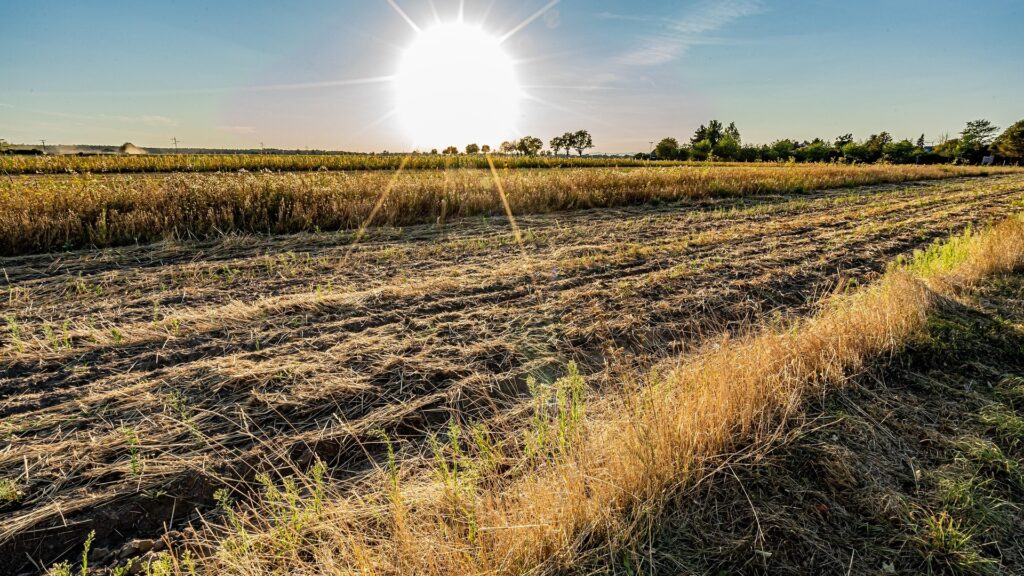
A heatwave is sweeping across parts of western and central India, with temperatures already crossing 40°C in Vidarbha, prompting warnings from the India Meteorological Department (IMD) about severe heat conditions in several regions over the coming days, India Today reported.
According to the IMD, heatwave to severe heatwave conditions are very likely over the Gujarat region on March 11, while Saurashtra and Kutch could experience heatwave conditions on March 11 and 12. Isolated heatwave conditions are also expected to persist in parts of Gujarat through March
March will provide a short relief from heat before above-normal temperatures grip most of the country till May, the India Meteorological Department (IMD) said. HT reported that the weather office said: ““During the March to May season 2026, above-normal number of heatwave days are likely over most parts of east and east central India, many parts of southeast Peninsula and some parts of the northwest and west central India during March to May 2026. The normal number of heatwave days is likely over the remaining parts of the country. During March 2026, above-normal heatwave days are likely over isolated regions of Gujarat & Andhra Pradesh. The remaining parts of the country are likely to experience normal heatwave days,” the IMD said in a statement.”
“During the March–April–May (MAM) season, the increased likelihood of heatwave conditions may pose significant risks to public health, water resources, power demand, and essential services, particularly affecting vulnerable populations such as the elderly, children, outdoor workers, and individuals with pre-existing medical conditions. Elevated temperatures can lead to heat-related illnesses and additional stress on infrastructure and resource management systems,” IMD said.
Climate crisis accelerated in past 10 years: Study
Global warming has rapidly accelerated over the past 10 years, scientists have concluded with 98% certainty and statistical confidence, reported HT.
Natural warming events such as El Niño, volcanic eruptions and solar variations accounted for, scientists found a statistically significant acceleration of the warming trend. Since 2015, the estimated warming rate has been around 0.35 degrees Celsius per decade, depending on the dataset, compared with an average of just under 0.2 degrees Celsius per decade from 1970 to 2015, the Potsdam Institute for Climate Impact Research (PIK) said. This rate is higher than in any previous decade since the beginning of instrumental records in 1880, the authors stated.
Earlier, the Copernicus Climate Change Service (C3S) had reported that global temperatures over the past three years (2023-2025) averaged more than 1.5 degrees Celsius above pre-industrial levels, marking the first three-year period to exceed the threshold. Berkeley Earth, which focuses on land temperature data analysis, warned that the warming spike from 2023 to 2025 appears to have deviated significantly compared to a largely linear warming trend during the 50-year period from 1970 to 2019. The 2023 to 2025 excursion would be by far the largest deviation from that trend, Berkeley Earth said.
The study concluded that if the warming rate of the past 10 years continues, the Paris Agreement 1.5 degrees Celsius warming limit will be breached by 2030.
Chamoli avalanche, Wayanad landslide, other disasters were avoidable: NDMA report
The deaths in the 2012 Chamoli avalanche (77 dead, 127 missing), 2024 Wayanad landslides (225 dead, 138 missing) and other such disasters could have been averted but weren’t because of flawed project assessment and planning methodologies, National Disaster Management Authority said.
In Chamoli the methodologies to assess the Himalayan region didn’t work, and Wayanad showed gaps in long-term risk reduction planning and community preparedness, HT reported citing NDMA report that highlighted the need for improved infrastructure strategies in vulnerable regions.
The compilation of 10 preventable disaster cases include the Silkyara tunnel’s troubled construction history provided numerous warning signals that were inadequately addressed before the 2023 collapse, the report said.
Decades of warming and shifting rains reducing forest cover in central India: study
A new study found that Panchmarhi Biosphere Reserve (PBR) in Madhya Pradesh lost about 13% of its forest cover between 1972 and 2020, driven by both climate shifts and human pressures. The researchers analysed 50 years of climate data and examined its relationship with the PBR, which is also facing pressures from encroachments and extraction, reported Mongabay. Between 1972 and 2020, the PBR lost approximately 13% of its forest cover, amounting to 391 sq km.
Rising temperatures and shifting rainfall have increased forest fire risk with dry teak forests seeing the steepest canopy loss, the research said. Among the most notable findings attributed to climate change is an increase in forest fires.
Central India’s forests stretch over an area of over 40,837 square kilometres across Madhya Pradesh, Maharashtra, and Chhattisgarh. Researchers said they couldn’t find areas that had been recorded as forest patches in 1972, because by 2020, they had either turned into scrub forests or been converted into other types of land use.
Aravallis lost 13% soil over the past 7 years, rapid urbanisation blamed
The Aravalli Mountain System has seen 13.8% increase in soil loss between 2017 and 2024 because of rapid urbanisation, mining and increased rainfall, a new research has found.
HT reported that the study concluded that steep slopes, susceptible soils and mining areas are strongly associated with erosion hotspots. It warned that local conservation efforts, despite a significant increase in afforestation, cannot compensate for massive land conversion.
The newspaper noted that Aravallis are long held as the only natural barrier between Delhi and its surrounding regions and the deserts of Rajasthan to the west, with the mountain range having lost 31 of its hills since 1967-68, according to a 2018 report by the Supreme Court-appointed Central Empowered Committee.
India’s report to CBD: Field trials of several GM crops underway
India is conducting confined field trials for several genetically modified (GM) crops
India is carrying out restricted field trials for several genetically modified (GM) crops such as vitamin A and iron-fortified bananas, insect-resistant pigeon peas, and stress-tolerant rubber, HT reported. The trials were disclosed in India’s seventh national report to the Convention on Biological Diversity (CBD), which outlines the country’s implementation of the Global Biodiversity Framework.
Nairobi floods: At least 66 dead after heavy rains
66 people have been killed in Kenya (33 in Capital Nairobi) after heavy rain overnight caused severe flooding, BBC News reported, adding: More than 100 people have been killed in neighbouring Ethiopia following floods and landslides in the south of the country. The outlet explained that many factors contribute to flooding, but a warming atmosphere caused by climate change makes extreme rainfall more likely. Reuters said: “Scientists say global warming is worsening floods and droughts across east Africa by concentrating rainfall into shorter, more intense bursts. A 2024 World Weather Attribution study found climate change had made devastating rains in the region twice as likely as before.”
About The Author

You may also like
Cities may heat up disproportionately faster than rural neighbours, even at 2°C warming
July rainfall worsened August floods in Punjab in 2023, says study
Fuel vs food? Economic Survey flags early warning signs of ethanol reshaping crop priorities, causing decline in crops of pulses
Forecast warns of chances of El Nino onset this year
Fog grips North India as cold wave spreads across central and southern states