



Part 1 of CarbonCopy’s series on non-economic loss and damage examines how climate impacts along Odisha’s coast are eroding identity, culture and belonging beyond what compensation frameworks recognise



These losses happen along with losses of property, assets, infrastructure, or agricultural production and revenue that can result from climate change. Visual: Riddhi Tandon
Beyond compensation: What coastal communities lose to a rising sea
Part 1 of CarbonCopy’s series on non-economic loss and damage examines how climate impacts along Odisha’s coast are eroding identity, culture and belonging beyond what compensation frameworks recognise
The pristine, yellow sand beach of Tandahar village in Odisha is a nesting site for the endangered Olive Ridley turtle. Roughly 20 km south from the mouth of the Devi river in Puri district, the beach does not host fishing boats and endless tangles of nylon nets. Instead, groves of the native jhau (Casuarina) dot the beach in a protective fence.
However, this alluring landscape hides the tragedy of a village swallowed by the sea. In 1999, when super cyclone Paradip — the most intense storm to hit Odisha last century — battered the coasts, the sea ingressed about five kilometers and swept away the village. Only a few broken stones remain as evidence. The sand and grass have devoured the rest.
The village was rebuilt about a kilometre away from the sea, but not everything. It lost its centuries-old temple, the beach took over the playground, and the crematorium was washed away. The temple was rebuilt, the playground forgotten, while the dead are now bid farewell on the beach itself.
Similarly, landslides, floods in the mountains, erosion of beaches, and wildfires in forests lead to the loss of local geographical areas and ecology, to which the inhabiting communities are attached.
Now, how does one quantify such losses? Where communities are deprived of intangible assets like forests, sacred groves, beaches, burial places, playgrounds, or places of worship due to climate change? These losses are incommensurable, i.e. they cannot be priced.
Such non-economic loss and damage (NELD) is defined as “a broad range of losses that are not easily quantifiable in financial terms or commonly traded in markets”, according to the United Nations Framework Convention on Climate Change (UNFCCC), a global climate treaty. These losses happen along with losses of property, assets, infrastructure, or agricultural production and revenue that can result from climate change. They lead to alteration of lives and livelihoods, even driving migration, loss of education, and degrading mental health, say experts.
Unseen and uncounted
As the effects of climate change intensify each year, the NELD also compounds. In Tandahar, for example, the danger of the rehabilitated village’s submergence lurks with every cyclonic event, which is now an almost annual occurrence.
According to multiple villagers, the sea ingressed towards the village during every major cyclone like Phailin (2013), Titli (2018) and Fani (2019). “During every cyclone, everything gets damaged, and the entire village has to be evacuated to the nearby flood shelter,” said 47-year-old Bichitrananda Kalia, a milk trader and paddy farmer from Tandahar.
Fani, especially, was significantly damaging. It brought knee-deep water into Kalia’s home, and the salt water inundation spoiled his agricultural fields, leading to no crops growing for an entire year.
The effects of these losses are felt differently across generations, gender, age-groups and social classes.
“Losing geography leads to other losses. The first loss is the right to land and right to resources. There arise psychological challenges. For example, catching a crab in a particular way is a skill set that is linked to a creek or a beach, which is not available elsewhere,” says Ranjan Panda, an Odisha-based climate crusader and sociologist.
“If one has lost a beach stretch where a particular crab exists, a part of their livelihood is gone. That leads to trauma that their skill set has become irrelevant, and they have to look for other livelihoods. This erodes the confidence of the people, that they don’t continue to have the same skill, traditional knowledge or livelihood,” he says.
According to him, this is happening in multiple communities across the Global South — from India to Indonesia, Thailand and the Philippines — wherever there is an intricate link of people’s lives and livelihoods with local, geo-ecological factors.
“Even a small change in geographical conditions affect the indigenous communities, as their lives, livelihoods, culture and knowledge systems are linked to local ecosystems,” says Panda — also known as the Water Man of Odisha for his pioneering work in water management and campaigns like ‘Healthy Rivers, Happy Cities’.
“Temples can be rebuilt, but for the burial grounds, there is a sense of cultural inheritance about a space. When that space is lost, society falls into disarray. The belongingness to a certain geography is lost. Communities will find another place, but for at least one generation which is going through it, that loss is going to stay. For the next generation, things might be different,” he explains.
The Fund for Responding to Loss and Damage is the only international instrument that offers some hope in this regard. At COP28 held in Dubai, 198 countries reached a historic decision to create a fund for providing financial support to vulnerable countries hardest hit by climate impact. This fund aims to help such countries adapt and “respond to both economic and non-economic loss and damage associated with the adverse effects of climate change, including extreme weather events and slow onset events.”
According to FRLD’s website, $817 million has been pledged as of November 25, 2025, while total contributions come up to $584 million. However, none of the funds has been yet disbursed to vulnerable countries. Even though NELD is considered a priority within loss and damage, there isn’t a specific percentage that is dedicated to it.
A matter of survival
For the residents at Tandahar, climate change forced an immediate reaction, and they had no choice but to fend for themselves. Around 100 km south from Tandahar, at the mouth of the enormous Chilika Lake, there is a slower but debilitating onset of change. The traditional fishing communities are gradually losing their identity as climate change and commercial fishing gradually choke their livelihoods.
Sikethro Mongo, 73, of Sanpatna village observed both fish catch dwindling and the amount of water in the lake reducing in the past 10 years. “The water has receded. If there is no water, there is no fish for us to catch,” said Mongo, who has been fishing for 60 years.
There are roughly 150 boats from the village of 340 families that go out for fishing now. The rest, mostly young men, have migrated for search of better earning prospects. In fact, all eight men that CarbonCopy spoke to at the village said their sons had migrated.
This results in the breakdown of traditional skill and knowledge that has been passed down from father to son over centuries. It also leads to an erosion of a communal and individual identity.
This can already be evidenced in the village of Podampetta in Odisha’s Ganjam district, close to Andhra Pradesh. “There, the sea has taken over their land. They are fisherfolk, now they don’t have that identity. Many youth go away, being construction workers or work in cotton mills or tea estates. They don’t want to fish. Among the older folks, some still go back to the broken areas and spaces in their old habitat that have still not been engulfed by the sea,” says Panda.
He further expands that beyond the immediate damages, there can be other losses of space. Some geographical locations which fisherfolk consider sacred — certain points where they start their fishing expeditions or stretches where they offer prayers, can change or be lost due to extreme weather events.
“When that is lost, one generation suffers and the knowledge transmission to the next generation does not happen properly. How communities look at their identity – their belongingness to an area – is lost. Many communities feel very strongly about this, many people do not want to leave their place as they are culturally linked to their local gods and natural shrines with sacred importance, whose abodes are in the local areas,” says Panda.
He adds that psychologically, that grief continues. “A structure can be rebuilt, but the connection being rebuilt is challenging, as they won’t feel a new place is their home.”
Fragmentation and evolution
While it does not cancel loss, grief and suffering, migration may not necessarily lead to the breakdown of culture. According to sociologist Amita Baviskar, people carry their intangible heritage with them as they migrate, including their gods, language and music.
“If you look at adivasis in most of peninsular India, they have been migrating for work for decades. There has long been a dynamic of communities being split with older people staying behind, the younger ones going away. If local livelihoods can’t sustain them, they build a life in new places. Climate-induced changes only exacerbate this ongoing process by which communities are being made and remade,” says Baviskar, Professor of Environmental Studies, Sociology and Anthropology at Ashoka University.
She further points out that the threat of climate-induced disasters may bring communities together, as they did to defend their forests through the Chipko movement in Uttarakhand in the 1970s. However, in today’s political climate, she feels that collective action for ecological security is harder to organise.
Baviskar says these cultural transformations are different for men and women, and the sense of loss is more pronounced for older people, especially women, according to Baviskar, who has authored the book ‘In the Belly of the River’. It is an account of Bhilala adivasis in the Narmada valley who are fighting against displacement by the Sardar Sarovar dam.
“Younger men are better placed to adapt to new circumstances. But what are the possibilities for women? How are older women holding on to the things they value?” she says.
“Women lose more than men when they are displaced because monetary compensation for land-based resources tends to go to men. Women’s rights are often violated. However, despite being discriminated against, women can often be more psychologically resilient than men. Women explained that, upon being married, they have to leave their natal home to go to their husband’s village and household and start anew. Having to adapt to new conditions is part of what a woman must do throughout her life,” says Baviskar.
She also believes that rural communities may be better able to handle the psychological stress of climate uncertainty than more privileged urban populations. “Farmers live with chronic uncertainty: drought, untimely rain, floods, pests, prices, are all elements they have little control over. It requires enormous courage and resilience to deal with the ups and downs without being defeated. These qualities are going to be critical in the future,” says Baviskar.
This sort of survivalist pragmatism can be evidenced in the Satpada region of Chilika Lake. As the fish started declining, fisherfolk started indulging in tourism to even out their dwindling incomes.
The fishing village of Alupatna at Satpada is now dependent on both fishing and tourism. According to 49-year-old Prashant Jena, 60% of their income comes from tourism, while the rest is provided by fishing.
However, even here, the villagers managed to compensate for their economic loss, but not the loss of their fisherfolk identity.
“The value of important things in life cannot be captured in monetary terms, nor can they be compensated for with money,” says Baviskar, when asked whether there is a possibility of constructing qualitative frameworks to help policymakers ‘value’ intangible assets.
Impassive policy
A fundamental challenge in adequately addressing NELD in India is the limited range of institutional mechanisms currently in place. At present, the primary formal processes available are relief and mitigation funds embedded within the broader disaster governance framework, explains Nihal Ranjit, a senior associate at the Indian Institute of Human Settlements (IIHS).
Addressing any sort of climatic disaster or an extreme weather event like a cyclone falls under the ambit of the State Disaster Management Authority (SDMA). In Odisha, the Odisha State Disaster Management Authority (OSDMA) undertakes tactical measures of blanket and targeted evacuation of people before an impending cyclone. In the immediate aftermath of the event, response activities include search and rescue and providing first aid and relief, explains Dr. Kamal Lochan Mishra, IAS, the executive director of OSDMA.
Post-disaster, officials conduct a damage assessment of tangible assets such as public and private property, loss of domestic animals, etc by tehsildars and government officers like BDOs. Loss of human life is also assessed. The ex gratia amount for loss of human life and compensation for damage is directly credited to the beneficiaries’ account.
The State Disaster Response Fund (SDRF) provides money for providing immediate relief in the aftermath of the disaster. The National Disaster Response Fund (NDRF) is tapped for additional financial resources.
Non-economic loss and damage, however, are not accounted for in this compensatory process.
“First tell me how to measure the immeasurable, then I will tell you what the compensation is. Emotional losses cannot be compensated materially,” says Mishra.
But the SDRF does not compensate for the repair and restoration of public property like playgrounds. In cases of extensive damage, they may be covered under the repair grant of SDRF, but it is primarily used for repairing damage to physical infrastructure. Temples, which are generally private property, are outside the ambit of the fund.
The system, though, recognises that NELD exists, and is taking steps to help communities cope with such losses in the long term. Mental health, by far, is affected the most when such disasters strike.
“When it comes to NELD, the community has to be prepared to deal with the psychological trauma. When the community is stronger, it serves as the first line of defence. Training people in the community is important as they can act as caregivers and offer intangible support,” says Mishra.
To offer better psychological care in areas vulnerable to the worst impacts of climate change, OSDMA is piloting a training programme of aid volunteers with the help of the National Institute of Mental Health and Neurosciences in Bengaluru. This is financially supported by the capacity building segment of the SDRF.
While this is a much needed and necessary policy action being undertaken, currently, there aren’t enough trained professionals to deal with mental health problems, especially as the number and scale of climate disasters are increasing every year. More importantly, NELD stretches far beyond just addressing mental health, but there are no policy instruments in place to address or even determine them.
“NELD cannot be easily measured or quantified, nor is it homogeneous in nature, making it difficult to design a uniform policy response or compensatory mechanism. For instance, planned relocation may lead to feelings of sadness or grief, arising from the loss of landscape or a way of life. Such losses raise difficult questions about compensation, which is central to conversations about NELD, but there are no easy answers,” says Ranjit.
“In such cases, one possible way forward may be to broaden resettlement packages beyond housing alone, by including support for rebuilding social and cultural spaces such as places of worship, community centres, and other shared institutions,” he expands.
A key step is to listen closely to affected communities so that relocation processes are more participatory and responsive to their needs and sensitivities, according to Ranjit. “Many communities are unwilling to relocate unless their village deity is moved with them. Planned relocation efforts need to be mindful of such concerns,” he says.
Satwiki Adla, a researcher and external consultant at IIHS, talks about using existing policy structures, and building on those to create a more robust system of providing relief during disaster. “Since women are more affected by climate change, tapping into Self Help Groups and innovating on ways to give support will help.
Ranjit also shares the example of coastal communities in Odisha and their dependence on mangroves. “Villagers did jatras (plays) and cultural activities at the mangroves site. Now, the mangroves have eroded, and are only a fragment of their memory now. They have no recording or photographic evidence of how their village looked like earlier. The way to address it is by keeping those memories alive through the people, rather than only relying on engineering solutions. Set up more funds to record oral histories — it can be in the forms of art like street plays, so that there is the retention and preservation of memories,” he says.
This way, the cultural memory will live on and be passed down to a generation which may be born in the resettled village, and has no physical memory of how and where their ancestors lived.
It is clear that there needs to be definitive changes in how loss and damage, including the non-economic aspect, is addressed. Increased accountability and wider recognition of this issue will not only help affected communities in the long run, but is critical if proper adaptation is to be achieved.

India's ethanol blending program is reshaping crop priorities, with farmers favoring maize over pulses and oilseeds. Photo: Pixabay
Fuel vs food? Economic Survey flags early warning signs of ethanol reshaping crop priorities, causing decline in crops of pulses
The Economic Survey 2025-26 said India’s ethanol blending program is reshaping crop priorities, with farmers favoring maize over pulses and oilseeds, risking food security. Calling the current trends “early warning signals” the latest survey warns of increased dependence on edible oil imports and food price volatility, highlighting a conflict between energy and food self-reliance, DTE reported.
Maize has rapidly emerged as a primary, yet controversial, feedstock for India’s ethanol program, DTE report said. Between (FY) 2022 and FY2025, maize production grew at a compound annual growth rate (CAGR) of 8.77 per cent, while the area under the crop expanded by 6.68 per cent, the report said citing the survey.
The outlet added that over the same period, pulses saw a decline in both output and acreage, while oilseeds recorded only marginal acreage growth of 1.7 per cent annually. Cereals, excluding maize, grew at 2.9 per cent. Both are central to India’s consumption basket and nutritional outcomes, yet they are shifting lower down the priority order for the nation’s cultivators, the Survey highlighted. It warned that over time, this imbalance could risk entrenching India’s dependence on edible oil imports and exposing domestic food prices to greater volatility during supply shocks.
Budget 2026-27 shifts focus to high-value crops but vegetables, fruits sidelined
The Union Budget 2026-27 backed high-value crops like coconut, cocoa, cashew and sandalwood allocating ₹350 crore to support this shift, DTE reported, adding that the focus aims to boost farmer incomes, diversify outputs and create jobs. The outlet said the budget notably excludes fruits, vegetables and spices, which are significant contributors to agricultural growth.
Himalaya-Karakoram glacial flood risks poorly assessed, badly monitored study warns
Warming-driven expansion of glacial lakes is outpacing risk assessment and adaptation, leaving nearly a million people exposed to GLOFs, reported DTE.
The growing numbers, size, and volume of glacial lakes driven by global warming across the Himalaya-Karakoram ranges have not been correctly assessed for risk despite likelihood of catastrophic flooding events, according to a new study. A paper published in the journalnpj Natural Hazards this month warned that lack of enough research is making it harder for nearly one million people living within 10 kilometres of glacial lakes to prepare for sudden and potentially devastating floods. Researchers warn gaps in data, field studies and early-warning systems are hindering adaptation
AC demand to spike up in global south, as Earth heats up
Poorer nations such as India, Nigeria, Indonesia, Bangladesh, Pakistan and the Philippines will witness a rise in cooling demand before reaching the 1.5°C threshold, which will require significant adaptation measures to be implemented early on, says the new study published in Nature Sustainability. The lead author of the study said many homes may need air conditioning to be installed in the next five years, but temperatures will continue to rise long after that if we hit 2.0 of global warming, reported the HT.
Citing the study the outlet added that by 2050, nearly 3.8 billion people — almost half the world’s population — will live with extreme heat if global temperatures rise 2°C above pre-industrial levels.
The newspaper pointed out that in India alone, cooling degree days are projected to increase 13.4% as warming shifts from 1°C to 2°C above pre-industrial levels. Cooling degree days measure the difference between mean temperature and the base cooling temperature of 18.3°C, serving as a proxy for air conditioning needs.
Wealthier northern nations such as Canada, Russia, Norway and Sweden will save on energy bills while developing countries face massive infrastructure costs for cooling systems, electricity grid expansion and the energy expenses of running air conditioners inp regions where many lack reliable power, the newspaper said.
There is “limited evidence” that the Paris Agreement significantly altered business strategies in auto sector: study
New study says the Paris Agreement did not shift corporate strategy in industries, mainly the automotive sector, reported Science Direct. The analysis covers twelve global automakers, responsible for almost 80% of worldwide vehicle production, using six categories of primary evidence to assess strategic change. The researchers found only limited evidence of decarbonization strategies tied to the Paris Agreement, suggesting that firm responses were at best incremental rather than transformative. The findings challenge optimistic accounts of the Paris Agreement’s influence and call for continued efforts to understand the limits of international agreements in driving firm behavior to address climate change.
Almost 4,000 climate-related policies from 43 OECD countries and “major emerging economies” drove down CO2 emissions by 3.1bn tonnes over 2000-22: Study
Countries’ climate policy portfolios specializing in instrument types and sectors result in faster reductions in fossil CO2 emission intensity, latest study has found. The study used data on 3,917 policy instruments across 43 OECD countries and major emerging economies from 2000-2022. The research showed quantitative evidence that the effectiveness of climate policy is amplified by long-term emission reduction targets and the presence of dedicated governmental bodies including ministries and intergovernmental organisations. The cumulative effect of all climate policy portfolios over our study period amounts to 3.1 GtCO2 fewer emissions in 2022 relative to a no-policy counterfactual – substantially less than what’s needed to stay on track for the Paris Agreement goals.
Including carbon emissions from permafrost thaw and fires reduces the remaining carbon budget for limiting warming to 1.5C by 25%
New research has found that if events of permafrost thaw and fire-related carbon emissions are included in global-scale climate models they reduce the remaining allowable carbon budgets from 2025 onward by 25 % (± 12 %) for avoiding 1.5 °C and 17 % (± 7 %) for avoiding 2.0 °C, relative to simulations without these processes. Accounting for these additional emissions is critical for setting emissions reduction targets aligned with the Paris Agreement, the study said. Rapid Arctic warming is thawing carbon-rich permafrost, releasing greenhouse gases that accelerate climate change. Despite the importance of this feedback, permafrost-enabled global-scale models simulate only gradual, top-down thickening of the seasonally-thawed soil. The scientists said this ignores abrupt permafrost thaw and intensifying fire regimes that combust soil carbon and further accelerate thaw.

US will slash the existing tariffs on Indian goods from 50% to 18%. Photo: Wikimedia Commons
India-US Trade Deal: Trump Announces Tariff Cuts on India, India to End Russian Oil Purchase
US President Donald Trump announced the new US-India trade deal on social media, stating that the US will slash the existing tariffs on Indian goods from 50% to 18% following a call with Indian Prime Minister Narendra Modi in exchange for India halting its oil trade with Russia and potentially buying oil from the US and Venezuela, reported Reuters.
India has also agreed to buy defense goods and aircraft from the U.S., while partly opening up its agriculture sector under a trade deal. According to Reuters, India has also agreed to lower tariffs on imported cars to address U.S. demands to conclude the first tranche of the deal.
Budget 2026-27: Centre plans dedicated rare earth corridors, duty on RE, N-energy materials and critical minerals exempted
Union budget 2026 announced dedicated rare earth corridors in Odisha, Kerala, Andhra Pradesh and Tamil Nadu to overcome global supply chain restrictions. This first-of-its-kind initiative has a financial outlay of ₹7,280 crore aiming to establish 6,000 metric tonnes per annum of integrated rare earth permanent magnet manufacturing, HT reported.
Centre provided customs duty exemptions aimed at strengthening India’s critical minerals and clean energy infrastructure. The mineral-rich states will receive support to promote mining, processing, research and manufacturing of rare earths, HT reported, adding that the government will exempt customs duties on capital goods required for processing critical minerals and various renewable and nuclear energy materials.
“Mother of all deals” India-EU Free Trade Agreement locks in market access, but climate compliance looms large
India and the European Union (EU) have concluded talks for a long-anticipated free trade agreement (FTA) expected to double bilateral trade—currently at €124 billion ($136 billion)—within five years, reported Carboncopy.
The deal, dubbed as the “mother of all deals”, will give preferential entry for 99 percent of Indian goods exported to the EU apart from allowing opportunities for skilled & semi-skilled Indians. It also unlocks €4 billion ($4.4 billion) in annual tariff savings and will slash tariffs up to 10 percent on India’s goods worth $33 billion, according to the government. This offers India strategic insulation against a renewed wave of US tariffs under a second Trump administration, while for the EU, it secures long-term access to a growing consumer and industrial market at the center of the Indo-Pacific, the report said.
The DTE reported that the EU’s Carbon Border Adjustment Mechanism (CBAM), the world’s first carbon tariff on imports also surfaced during the negotiations.
CBAM, currently in a transitional phase, is expected to become fully operational in 2026 and could impose additional compliance costs of $2-4 billion annually on Indian exporters, particularly in carbon-intensive sectors such as steel, aluminium and cement.
India made CBAM a key issue during negotiations, and the agreement reflects partial safeguards. According to a statement by the Centre, CBAM-related provisions include a forward-looking most-favoured nation assurance, ensuring that any flexibilities extended to third countries will also apply to India.
Great Nicobar tribes’ elected body allege they are being pressured to ‘give up’ villages for mega project
Members of the elected Tribal Council of Great Nicobar rejected the Andaman and Nicobar administration’s proposal to give up claims to some of the villages in which they used to live before the 2004 tsunami –– because the old villages are an integral part of their culture and heritage, reported the HT.
In a press meeting members referred to a January 7 meeting at Andaman Public Works Department Guest House in Campbell Bay with the UT’s administration, which included officials from the deputy commissioner’s office and the Andaman Adim Janjati Vikas Samiti (AAJVS), a registered society monitoring and overseeing the welfare and protection of Particularly Vulnerable Tribal Groups (PVTGs). The Tribal Council members who addressed the press include: Barnabas Manju, Chairman, Tribal Council; Titus Peter, 1st Captain, Pulo Bhabi; Hosie Phillp, 2nd Captain, Pulo Bhabi and Burnet, resident, Chingenh.
The council members said they were verbally told to issue a “surrender certificate” for some ancestral villages. The land of these villages will be utilised for the Great Nicobar Holistic Development project which has four major components: an International Container Transshipment Terminal (ICCT); an international airport; a power plant; and a township, for which an area of 166.10 sqkm is required. Of this, forest area is about 130.75 sqkm and tribal land is 84.10 sqkm. The total cost of the project is estimated at ₹81,800 crore, the newspaper reported.
India’s per capita power use to grow to 4,000kWh by 2047 says Draft policy, requiring over 10% GDP growth per year
India’s per-capita consumption of electricity will increase from 1395 units (kilo watt hour or kWh) in 2023-24 to 2000 units by 2030 and over 4000 units by 2047, when India is a $30 trillion economy, says the draft National Electricity Policy 2026, reported the HT adding that this will require the country’s GDP to grow by over 10% a year.
The newspaper said citing the policy draft that coal will continue to play a significant role in meeting base load demand, and ensure the country’s energy security. Existing coal-based plants, wherever feasible, should be retrofitted to enable flexible operation and equipped with storage systems to support integration of variable renewable energy, it said.
By 2047, over 80% of the installed capacity and nearly two thirds of total electricity generation in the country will be from non-fossil sources, according to the draft. The share of electricity in total energy consumption is also projected to double. Variable renewable energy (VRE), primarily solar and wind, now account for around 37% of the total installed generation capacity in India. However, their intermittent nature necessitates integration with firm sources and energy storage systems.
National Wildlife Board clears 17 Defence projects: Centre
The standing committee of the National Board for Wildlife cleared 17 defence-related proposals, primarily located in the Union Territory of Ladakh and the State of Sikkim, relating to strategic infrastructure in border and high-altitude areas, the union environment ministry said, reported the HT.
The outlet said the government considered 70 proposals relating to public utility services, defence requirements and infrastructure development located in and around Protected Areas, Wildlife Sanctuaries, Tiger Reserves and Eco-Sensitive Zones, in accordance with the provisions of the Wild Life (Protection) Act, 1972.
China: Nation voices concerns over EU’s discriminatory label on Chinese firms
China’s commerce ministry has expressed “grave concerns” and “firm opposition” to an EU proposal to label certain Chinese tech firms as “high-risk suppliers” and restrict them from critical sectors, including energy, reported China Daily. [The proposal, part of revisions to the EU’s cybersecurity act,may include Chinese-made solar inverters, although this has not been confirmed.]. Global Times urged the EU to “seriously consider” closer cooperation, highlighting that China and the EU played a “significant leading role in addressing global challenges, such as climate change and biodiversity conservation”.
Dutch government discriminated against Bonaire islanders over climate adaptation, court rules
A court in the Hague has ruled that the Dutch government “discriminated against people in one of its most vulnerable territories” by not helping them to adapt to climate change, reported the Guardian. The court ordered the Netherlands to “develop a proper adaptation plan for Bonaire and put in place tougher greenhouse gas targets.” The newspaper said: “The court ruled that the government was breaching articles eight and 14 of the European convention on human rights, which protect the right to respect for private and family life and prohibit discrimination.” The Associated Press said the court “ruled that the government discriminated against the island’s 20,000 inhabitants by not taking ‘timely and appropriate measures’ to protect them from climate change before it’s too late”. The newswire adds: “The court also ordered the Dutch government to set binding targets within 18 months, laid down in law, to cut greenhouse gas emissions in line with the Paris Agreement.
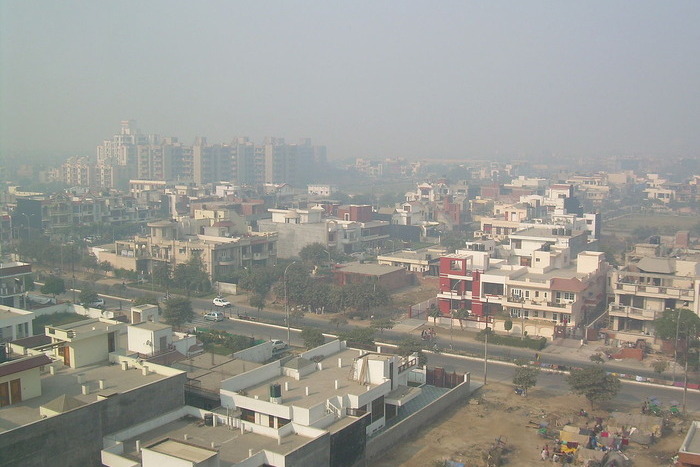
Air quality management suffered a nearly 10% dip in outlay under the Union Budget. Photo: Wikimedia Commons
Air quality management allocation dips 10%, pollution control outlay down 2% in budget 2026-27
Air quality management suffered a nearly 10% dip in outlay under the Union Budget for 2026-27. Allocation to the central pollution control authority dipped slightly by 2%, DTE reported. The ministry of Environment, Forest and Climate Change’s overall allocation stood at Rs 3,759.46 crore, up 10% from the Budget Estimates for 2025-26.
The Commission for Air Quality Management (CAQM), under the ministry, has been allocated Rs 35.26 crore for the upcoming year, down from the Rs 38.98 crore in the BE for 2025-26. The outlay is, however, a rise from the Rs 31.26 crore in the Revised Estimate (RE) for last year. The Central Pollution Control Board (CPCB) saw an outlay of Rs 123 crore, a marginal dip from Rs 123 crore in BE for 2025-26, but a rise from the RE of Rs 116 crore, the outlet said.
Budget 2026-27: ₹ 20,000 crore to accelerate carbon capture in heavy industry
Centre has approved Solid Waste Management (SWM) Rules, 2026 for processing of waste by bulk waste generators under extended bulk waste generator responsibility (EBWGR), both expanding the definition of bulk waste generators and introducing the polluter-pays concept for the first time, reported the HT.
The outlet explained that “bulk waste generators include entities with a floor area of 20,000 square metres or more, or water consumption of 40,000 litres per day or more, or solid waste generation of 100 kg per day or more.” In the older solid waste management rules 2016, the bulk waste generator definition did not specify the floor area or water consumption limits of entities. The new rules have a broader definition — which mean more entities will now be classified bulk waste generators.
The new rules include provisions for implementation of “polluter pays” principle. Now environmental compensation will be levied on entities carrying out activities without registration; providing false information or ; and submitting forged or manipulated documents. Also, now bulk waste generators will have to register themselves with the concerned local body through a centralised online porta.
The newspaper explained that the new rules, shift the burden of processing waste from overextended municipal governments to large-scale commercial and residential entities that produce it. If they can’t process it on-site, they must hire professional waste managers and obtain an EBWGR (extended bulk waste generator responsibility) certificate to demonstrate that their waste was handled safely. The new rules will come into effect from April 1 and will integrate the principles of the circular economy and extended producer responsibility.
The 4 categories everyone should sort out waste under new solid waste management rules 2026
As per new solid waste management rules 2026 everyone should sort out trash into four categories: wet waste, dry waste, sanitary waste and special care waste, reported HT. In the 2016 version of the rules, waste was divided into three streams: bio-degradable, non-biodegradable and domestic hazardous waste.
The newspaper explained, wet waste includes kitchen waste, vegetables, fruit peels, meat, flowers, which shall be composted or processed through bio-methanation at the nearest facility.
Dry waste comprises plastic, paper, metal, glass, wood and rubber, etc., and shall be transported to Material Recovery Facilities (MRFs) for sorting and recycling.
Sanitary waste includes used diapers, sanitary towels, tampons and condoms, etc., which shall be securely wrapped and stored separately.
The outlet added that special care waste includes paint cans, bulbs, mercury thermometers and medicines, etc., which shall be collected by authorised agencies or deposited at designated collection centres.
The rules also introduce graded criteria for development around solid waste processing and disposal facilities to facilitate faster land allocation
Lower GST on recyclables to boost green economy: CSE budget study
The latest study by the Centre for Science and Environment (CSE) has found that the current GST structure on recyclable waste has resulted in a “double loss”, driving a large share of transactions into informal channels while simultaneously weakening recycling, resource security and industrial competitiveness, reported DTE. the study said lowering GST on recycled materials will boost the green economy and enhance India’s transition to a circular economy, benefiting MSMEs and integrating informal waste sectors. The study said this will reduce reliance on virgin materials and protect millions of vulnerable waste workers. the authors pointed out, India’s tax system treats recycled materials in the same manner as virgin ones, effectively penalising the very sectors that can drive the country’s transition to a circular economy.
Urban sewage is carrying drug-resistant bacteria linked to hospitals: study
Sewage flowing through Indian cities is carrying pathogenic bacteria linked to hospitals which is causing resistance to commonly used antibiotics such as azithromycin, according to new research reported by DTE. Scientists say traces of antibiotics in drains and sewers are effectively “training” bacteria to evade treatment, raising the risk that widely used drugs will become ineffective. The findings suggest antibiotic resistance is no longer confined to hospitals but is spreading through urban wastewater systems and into rivers. Researchers have warned that weak regulation and poor sewage treatment are worsening the public health risk.
Tackling air pollution could deliver $220 billion economic boost for India, study finds
India could unlock up to $220 billion in economic gains by 2030 through clean air measures, says new study covered by DTE. Cutting air pollution could reduce PM2.5 levels by about 20 per cent and avert major health and productivity losses, the study said linking cleaner air to job creation, with an estimated 1.4 million job transitions and new roles. Air quality action should be treated as an economic and development priority, said the analysis, The Business Case for Clean Air: Unlocking Economic Opportunities for India, by consulting firm Dalberg Advisors and the Clean Air Fund, estimating that effective action could also avert $85 billion in business losses, cut fine particulate matter (PM2.5) pollution levels by about 20 per cent, and avoid nearly 10 million disability-adjusted life years every year.
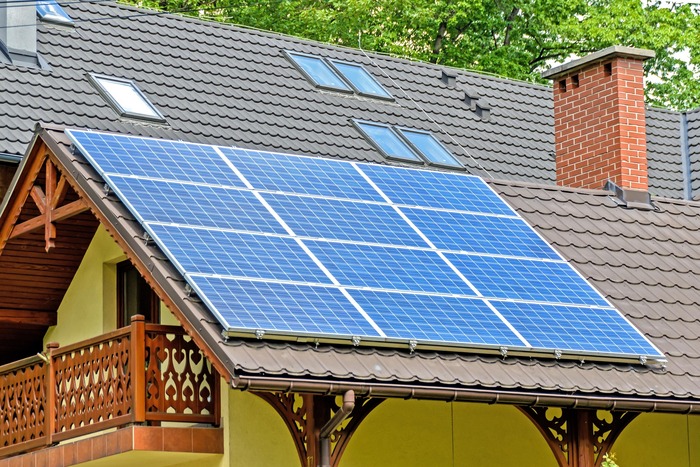
Solar supply was cut despite rapidly expanding renewable capacity, as the country’s power system. Photo: Pixabay
Solar power allocation up 32% at ₹30,539 crores
The budget allocation for the solar sector has increased from ₹24200 crores (~$2.64 billion) in 2025 to ₹30,539.36 crore (~$3.33 billion) this year. The outlay for the Pradhan Mantri Krishi Urja Suraksha Evam Utthaan Mahabhiyan (PM KUSUM) program has gone up from ₹26 billion (~$283.57 million) last year to ₹50 billion (~$545.33 million) in Budget 2026. The flagship PM Surya Ghar: Muft Bijli Yojana continues to dominate the allocations, with spending set to rise from ₹200 billion (~$2.18 billion) to ₹220 billion (~$2.39), Mercom reported. Out of ₹30,539.36 crore outlay, ₹1,775 crore was allocated for the solar power grid in 2027 against 1000 crore marking 77.5% rise, reported ET.
Grid flexibility too weak to ramp down coal plants, India switches off 2.3 TWh solar power in 2025 : Ember
India switched off around 2.3 TWh of healthy solar power last year through emergency measures because the demand was weak and the system could not ramp down coal plants fast enough during periods of low daytime demand, finds latest report by Ember, reported DTE.
Between May and December 2025, the national grid operator curtailed 2.3 TWh of solar power with nearly 40 per cent of the curtailment occurring in October alone.
Solar supply was cut despite rapidly expanding renewable capacity, as the country’s power system struggled to adapt to rising daytime solar generation and weak demand growth, according to a new report by global energy think tank Ember.
The cut equivalent to the annual electricity use of nearly 400,000 households — highlights a growing mismatch between India’s clean energy ambitions and the flexibility of its power system, the report titled Beyond Capacity: Why India’s Power System Must Get Flexible said.
Is solar surplus causing system stress? India added a record 38 GW of solar capacity in 2025, pushing non-fossil fuel capacity to 50 per cent of total installed power capacity. But instead of displacing fossil fuel generation, a portion of this clean energy was switched off to maintain grid stability.
India to tap 100 GW of hydro pumped storage to stabilise renewables surge
India plans to develop 100 GW of hydro pumped storage by 2047 to stabilise its renewable energy surge, DTE reported. Experts project cumulative investments of Rs 5-6 lakh crore to build the targeted capacity. The outlet said the strategy positions pumped storage as essential for managing peak demand and supporting the country’s Net Zero transition. Significant investments and public-private partnerships are anticipated under this ambition, it said.
India to stop setting annual clean energy tender targets, official says
India will stop setting annual targets for clean energy tenders after missing last year’s goal and building up a large backlog of projects without buyers, Reuters reported citing a senior government official.
The news wire said Indian developers are already sitting on the rights to build around 43 gigawatts of renewable power for which they have yet to find customers. State utilities have delayed buying clean power, expecting prices to fall and citing uncertainty over power delivery due to delays in transmission infrastructure, the report said.
India’s clean energy ministry has asked renewable implementation agencies to find buyers for the power from those tenders, Reuters reported in November, the outlet reported. “As per their (implementation agencies’) initial evaluation, they are still confident that they will be able to sell quite a lot of power out of that (backlog),” Santosh Kumar Sarangi, a top official at the Ministry of New and Renewable Energy, told Reuters in an interview.
UK among 10 countries to build 100GW wind power grid in North Sea
The UK and nine other European countries will join what the Guardian describes as a “landmark pact” to build an offshore wind power grid in the North Sea. The newspaper explains: “The countries will build windfarms at sea that directly connect to multiple nations through high-voltage subsea cables, under plans that are expected to provide 100GW of offshore wind power, or enough electricity capacity to power 143m homes. The commitment, which will be set out in the ‘Hamburg declaration’, is expected to be signed [today] by energy ministers from the UK, Belgium, Denmark, France, Germany, Iceland, Ireland, Luxembourg, the Netherlands and Norway
India flags potential for investments of $500 billion in energy sector
India’s energy infrastructure offers potential investment opportunities worth up $500 billion, Reuters reported quoting India’s Prime Minster Narendra Modi.
“We are moving away from energy security to energy independence … There is a $500 billion opportunity in India’s energy infrastructure,” Modi told delegates at the India Energy Week conference.
India is building energy infrastructure to meet demand, he said, looking towards affordable refining and transport options. In natural gas, Modi added, “We are aiming to make LNG transportation vessels domestically.”
India aims to become the world’s No. 1 in refining capacity, he said. India is currently the third largest energy consumer and importer of crude. It aims to boost to $100 billion the opportunities on offer in oil exploration, in the effort to lift the area under exploration to 1 million square kilometers, the report said.
Green tech investments hit a record $2.3tn last year
Investment in the energy transition grew by 8% to a record $2.3tn in 2025, reported Bloomberg. The news outlet said the new figures from BloombergNEF show growth has “def[ied] fears that the shifting political landscape and economic uncertainty would halt the world’s clean-energy progress”. However, it adds: “Yet there are signs that while investments are increasing, they’re not doing so fast enough to accelerate the energy transition at the speed needed.”
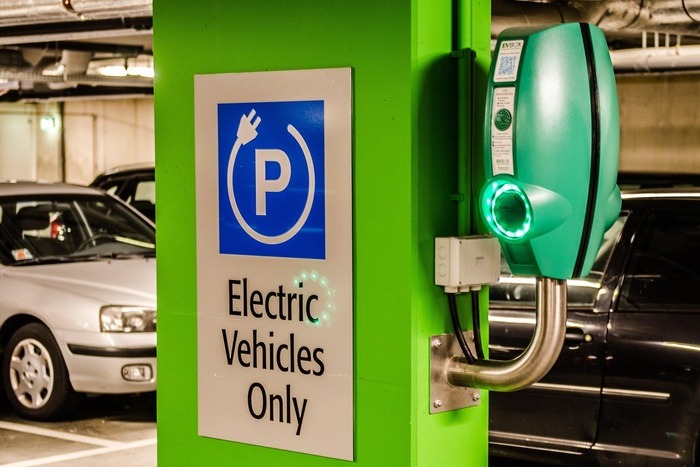
The Free Trade Agreement (FTA) between India and the European Union (EU) is a boon for buyers interested in scooping up European-made cars. Photo: Pixabay
India-EU FTA will cut tariffs on European cars, EVs to benefit by 2032
The Free Trade Agreement (FTA) between India and the European Union (EU) is a boon for buyers interested in scooping up European-made cars. According to the FTA, import tariffs on cars manufactured in Europe will reduce from as high as 110% to as low as 10%, according to reports. The number of cars which can be sold under the FTA, however, has been capped to 250,000 vehicles.
Electric vehicles (EVs), however, will not enjoy the benefits as of now. They will see tariff cuts after five years, most likely by 2032. This measure has been taken to protect the nascent EV manufacturing industry.
Battery cell manufacturing PLI scheme falls woefully short of 50 GWh target in four years
According to a new report by the Institute for Energy Economics and Financial Analysis (IEEFA) South Asia and JMK Research, India’s ambition to build batteries domestically is not seeing much progress. It has delivered just 2.8% of its targeted capacity in four years, reported Down to Earth. Launched in 2021, the Advanced Chemistry Cell (ACC) Production Linked Incentive (PLI) scheme, planned to build 50 GWh of battery cell manufacturing capacity by 2025. ₹18,100 crore was outlined for it as well. But, only 1.4 GWh of capacity has been commissioned by October 2025. That too, only by Ola Electric.
EVs overtake petrol vehicles for first time in EU in December 2025
In the EU, sales of electric cars surpassed sales of petrol-only cars for the first time in December 2025, according to data from the auto industry group ACEA. Reuters reported that EVs made up 22.6% of cars registered in the EU last month, while petrol cars were just behind at 22.5%. Gasoline-electric and plug-in hybrids commanded the sector with 44% registered vehicles. The data reveals that EVs and hybrids are gradually becoming the popular choice. This is important considering that policymakers are planning to ease emission regulations to allow more room for fossil-fuelled vehicles to be manufactured for a longer time.
Vietnamese auto manufacturer ties up with BYD to build $130 million battery facility
Vietnamese auto manufacturer Kim Long Motor is partnering with Chinese EV giant BYD to develop a $130 million plant for producing batteries for EVs in Vietnam, reported Reuters. According to the deal, Kim Long Motor will sponsor the construction of the facility, with BYD providing technical and technological support. Based in central Vietnam, the plant will be built on 4.4 hectares, with a capacity of 3 GWh. There are plans to expand up to 10 hectares and double its production capacity to 6 GWh in the second. This plant will manufacture batteries for commercial EVs like buses, trucks, and minibuses as well as electric passenger cars.
Gravita India to set up 6,000 MTPA lithium battery recycling plant in Gujarat
Rajasthan-based recycling company Gravita India has plans to enter the lithium-ion battery recycling market with the launch of a battery recycling plant in Mundra, Gujarat. According to a report, the facility has a capacity of 6,000 metric tonnes per annum (MTPA), and Gravita has pumped around ₹14 crore for the commissioning of the project. The focus will be on safe and sustainable recycling of batteries using advanced technology to minimise toxic chemicals and waste during the recycling process.
Hindalco’s ₹25,500 crore aluminium plant expansion to boost battery and storage systems manufacturing
Aditya Birla Group’s metals arm Hindalco Industries Ltd has plans to pump in ₹21,000 crore to expand its aluminium smelter in Odisha. Odisha Plus reported that the metals giant has already commissioned a ₹4,500-crore facility for flat rolled products and battery-grade aluminium foil production. These will serve as raw materials for lithium-ion batteries in EVs and energy storage systems, giving a big boost to these upcoming green industries. Interestingly, part of the power for the smelter will be met through round-the-clock renewable energy, integrating sustainability and energy transition. Also, this expansion can employ nearly 23,000 people, while the next phase is expected to generate over 15,000 additional direct and indirect jobs.

India is set to ink 10-year Uranium supply deal with Canada. Photo: Wikimedia Commons
India Set to Ink 10-year Uranium Supply Deal with Canada
India is set to ink 10-year Uranium supply deal with Canada in PM Mark Carney’s proposed trip to India. The deal can be the biggest outcome of his visit, reported ET Energyworld.
The visit may also seal deals for long term supply energies such as crude oil, LPG, and LNG, besides critical minerals.
India May Blacklist Companies that Delay Mining to Ramp Up Mining Production
India is planning to tighten rules around mining auction to remove companies that delay seeking clearances to mine at blocks they win at auction to ramp up production, reported ET Energyworld.
Since 2015, the government has auctioned 594 mining blocks, out of that only 82 blocks were operational, as per official data.
EU to Increase LNG Imports to Reduce Reliance on Russian Energy
Europe is set to import a record amount of Liquified Natural Gas (LNG) with global supply also expected to reach high, reported Reuters citing International Energy Agency (IEA). This move is attributed to the European Union decision to slash its dependence on Russian energy resources and importing LNG from other countries, particularly the United States.
Europe is expected to import 185 billion cubic meters of LNG in 2026, up from its previous record of 175 billion cubic metres in 2025.
US Lifts Some Sanctions on Venezuela to Ease Oil Sales
US President Donald Trump’s administration has lifted some sanctions on the Venezuelan oil industry to ease oil sales for US companies and said that more restrictions are expected to be lifted soon, reported Reuters.
The ease of sanctions will allow US companies to buy, sell, transport, store, and refine Venezuelan crude oil, but does not lift existing US sanctions on production.
Trump Threatens Tariffs on Any Country Supplying Oil to Cuba
US President Donald Trump threatened tariffs on any country that will supply oil to Cuba, intensifying its pressure campaign against the island state, reported Reuters.
The move was made under National emergency declaration and stopped short of specifying tariff rates or singling any country. Cuba also retaliated with the order that threatened to paralyse electricity generation, agricultural production, water supply, and health services.