



Long after Cyclone Fani, shifting coconut yields and fish patterns are driving losses insurance cannot cover




Non-economic loss and damage leads to economic losses, but financial policies have no means to measure them.Photo: Riddhi Tandon
Odisha Shows the Economic Cost of Hidden Climate Losses
Part 3 of CarbonCopy’s series on non-economic loss and damage looks at how years after Cyclone Fani, shifting coconut yields and fishing patterns are driving losses insurance cannot cover
Driving about 10 km out of the coastal town of Puri, coconut trees begin lining both sides of the highway to Odisha’s capital Bhubaneswar. Rows after rows of green canopies extend into the blurry horizon. But some groves have gaps while others are a bit scattered, as if the missing trees have been plucked out.
This is the legacy of the devastating cyclone Fani, which hit Odisha in 2019, uprooting around 14 lakh coconut trees, and driving the coconut and related coir industries into the ground overnight. All areas around Sakhigopal, Odisha’s coconut growing hub and about 20 km inland from the sea, was brought to its knees.
Over the past seven years, the coconut industry has somehow revived. The coconut sellers are back on the sides of the highway, with their green, oval shaped wares. But it is not the same anymore. The coconuts’ taste, size, and water volume have all decreased, according to five coconut sellers that CarbonCopy spoke to.
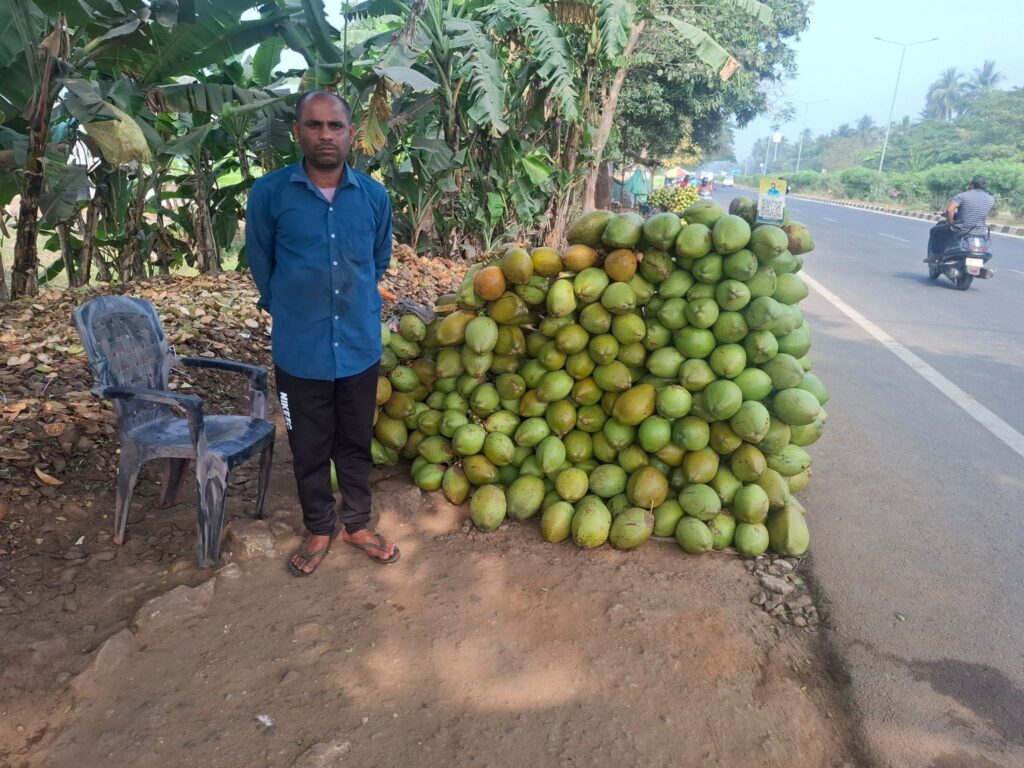
These are all non-economic loss and damages, as they affect the quality of the coconut. But this, in turn, has affected the marketability of the coconut, as its value decreased, affecting thousands of coconut farmers and sellers.
This is a prime example of how non-economic loss and damage leads to economic loss and damage.
Surviving Fani
“80% of the coconut trees were damaged by Fani. The surviving trees are shorter in size, as are the coconuts. The taste is also not as sweet,” said 34-year-old Dhananjay Sahoo, a resident of Sakhigopal, who has native coconut trees in his backyard.
According to him, the native species grew to about 50-60 feet in height earlier, but nowadays, the coconut trees grown on the farms reach a maximum of 20 feet.
Dr Sujit Kumar Sahoo, a scientist working with the department of Forest and Environment, Government of Odisha, confirmed this. “After the cyclone, the characteristics of the coconut changed. It went through a deformation process. Both its quality and value decreased, its sweetness decreased, and some infestation also happened,” he said.

This reporter evidenced this infestation firsthand — which turned the smooth green coconut exterior into white or brownish, decaying, crackled husk.
It is the coconut mite — microscopic pests which can cause severe damage to young coconuts, reducing the yield by up to 60%. It is known as Aceria guerreronis Keifer, but locals call it ‘jadoo’.
Dijia Behera, a 55-year-old coconut seller told CarbonCopy that the mite infestation started after Cyclone Fani. Coconut production from a single tree fell by around 60-70% as well as a fallout.
This was confirmed by the other coconut seller, as well as a personnel at the Sakhigopal RMC (Regulated Market Committee). With 98 licensed traders now, it is a dedicated market for coconut trading in the eastern state. Before Fani, however, there were close to 150 traders, according to Subhas Kumar Bhanja, a 50-year-old coconut trader.
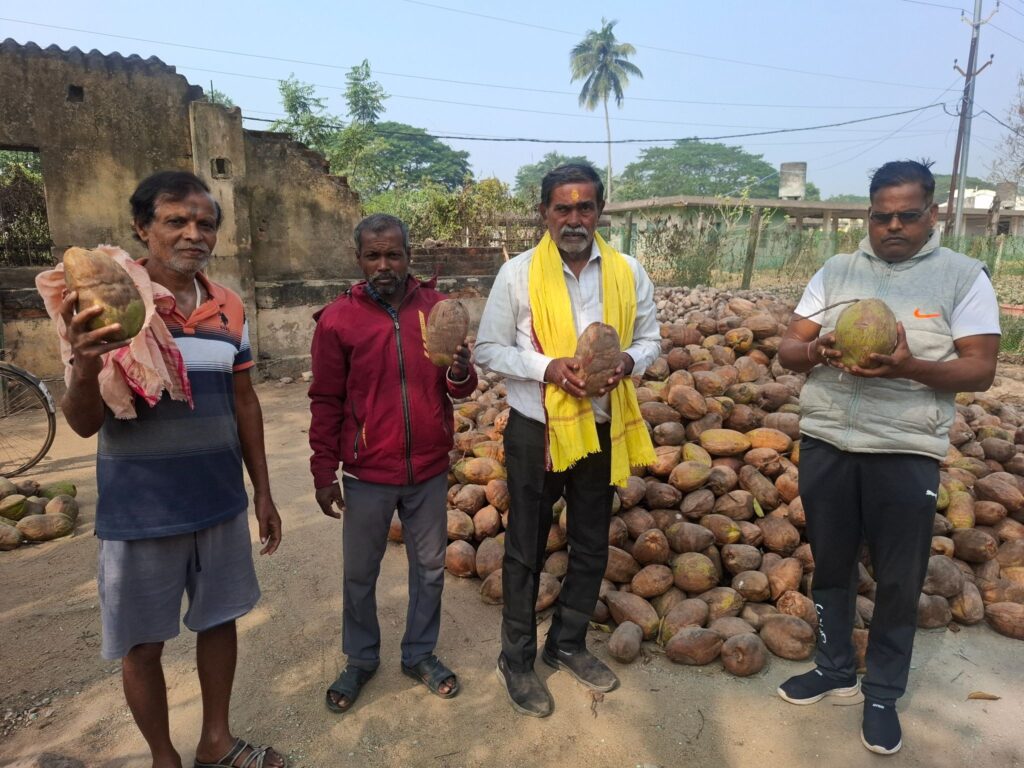
“With production decreasing, there are less coconuts to trade, and naturally, our exports have been hit. That is why a lot of traders left the business,” he said. “We used to receive 4-5 trucks a day, carrying 20 tonnes of coconuts each, in a day. Now, we receive 1-2 trucks.”
The native coconut crop — the East Coast Tall (ECT) variety — was damaged and infected. For replanting, dwarf and hybrid varieties were favoured as a strategic mitigation against recurring impact of high-velocity winds and storm surges. This impacted the coconut yield, which also influenced the changes in the fruit itself.

The cyclone created fertile grounds for the mite to wreak havoc on the coconut crop. Tall trees with their protective, towering canopies were uprooted, and winds reaching up to 230 km/hr blew across the state.
Wind is the primary vector for coconut mite, spreading it across the coconut growing areas. Groves that historically were never infested were also affected as a result. Also, the disruption of dense vegetation, destruction of protective canopies, and physical damage to surviving trees made it easier for the mites to attack the plant.
Compensation for uprooted and damaged coconut trees was pegged at ₹1,600 per tree, and up to 25 trees per farmer, in the immediate aftermath of the cyclone. But there has been no compensation for the loss in quality incurred by the farmers for the surviving trees, and the new trees which grew later.
Due to the ‘jadoo’ infestation, farmers pluck the coconuts at a younger stage before the green husk starts turning brown. In a lot of scenarios, they don’t wait for the coconuts to ripen also, according to Dhananjay Sahoo. So, the coconuts being sold on the market are smaller in size and have less water quotient, thereby being economically less valuable.
This intangible effect of the cyclone, intensified by climate change, spills over to the economic market, but does not have the usual protections like insurance or price adjustments.

Uninsurable
“Cyclone risk can be covered through both traditional indemnity insurance and parametric insurance. Traditional insurance responds to actual loss suffered, whereas parametric insurance responds when a pre-agreed trigger, such as when wind speed crosses a defined threshold,” said Pankaj Tomar, head of India and South East Asia at AXA Climate.
The key point here is that insurance payouts are applicable if a business or farmer’s revenue is due to the cyclone, he explained. Coconut farmers who lost hundreds of trees as a direct result of the cyclone would have received payouts if they were insured. But a downgrade in the quality of fruit years after the cyclone, which led to its decreased value, cannot be attributed to the cyclone. Therefore, the non-economic loss and damage is non-insurable, say experts.
A similar event unfolded towards the west of Sakhigopal, in the fishing village of Sanpatna. Situated on the banks of the mighty 1,100 sq km Chilika Lake, it is home to around 340 families.
Recurrent cyclones caused damage to the mouth of the lagoon, and brought sediment into their fishing grounds. “These silt deposits decreased the water level where we fish, and changed the route of the lagoon. Now, there is less fish,” said 73-year-old Sikethro Mongo, who has not faced such dire circumstances in his six decade career.

There are immediate fallouts. The volume of fish has declined, so more fisherfolk are competing for less fish. For people who have spent decades on these waters, the lagoon has lost its familiar rhythm. The water has become unpredictable, and the ancestral currents that once guided the local fleet have largely vanished.
The economic fallout of this cognitive loss is less immediate.
Navigating the lake now requires longer hours on the water and significantly higher fuel consumption to locate the fish that used to gather predictably near the shore. What began as a loss of environmental intuition has transformed into a high operational cost that many families can no longer sustain.
Other fishers in Sanpatna depend on marine catch. Ten years ago, fish were available around 70 km out to sea, said three fisherfolk. Now, they have to travel 200 km, while diesel consumption has jumped from 100 litres to 150 litres.
Their earnings have also dropped. Earlier, a fishing trip brought home around 2 tonnes of fish, fetching about ₹2000. Now, they hardly get half a tonne of fish, plummeting earnings to ₹500.
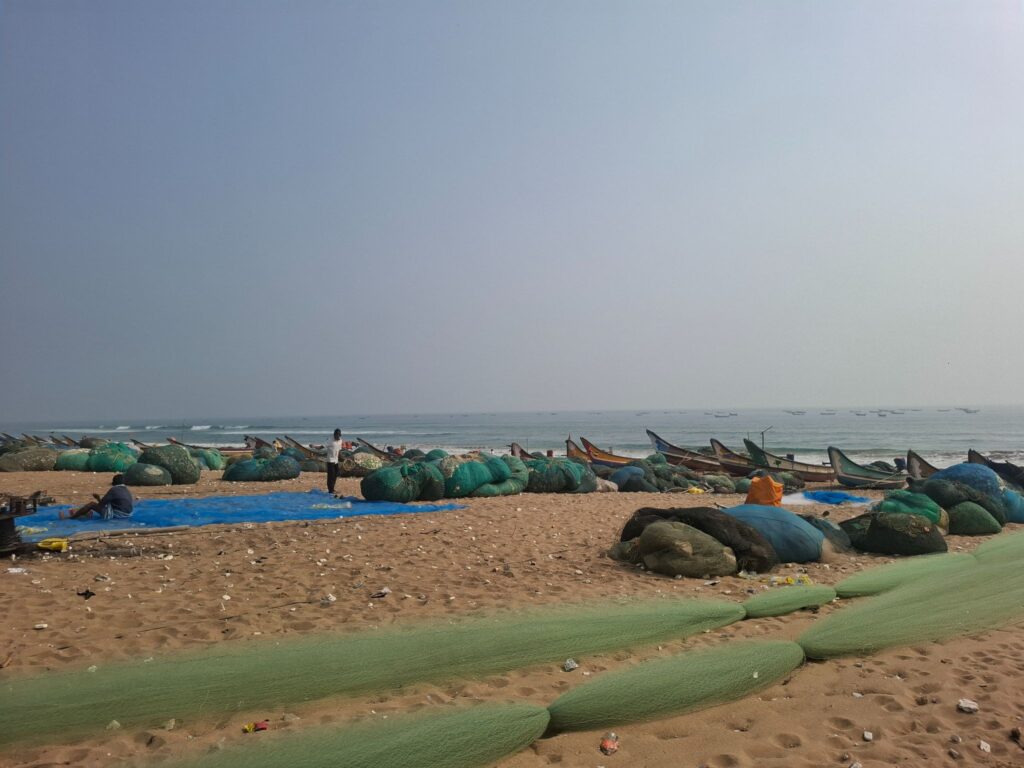
In this situation, the fishers would have been eligible for an insurance payout if a cyclone caused direct damage to their boat or equipment, which hampers their revenue.
But altered fishing conditions due to climate change hampering their revenue does not qualify. “If someone knows that they have to travel longer distances for fishing, then that becomes certainty. And that is not insurable,” explained Tomar.
“Insurance covers a situation where there is a risk, and unpredictability of something happening. Insurance companies will insure against some hazard. If it is a certainty, then it is not insurable.”
Parallely, high-value species, such as the premium mud crab and specific varieties of mullet, cannot thrive in these altered conditions. They are being replaced by smaller, less commercially viable fish. The result is a direct hit to the regional economy. High-value exports are disappearing, while the smaller fish that now dominate the nets fetch only a fraction of the price.
Also, the loss of traditional ecological knowledge is a quintessential non-economic damage. For generations, the ability to read the tides was a form of cultural capital, but as climate change shifts the lagoon’s salinity and disrupts the monsoon cycle, that inherited wisdom is becoming obsolete.
Again, this does not qualify for insurance coverage.
“If it is intangible, how will you price it?” said Tomar.
An invisible loss
What the coconut farmers and fisherfolk in Odisha are experiencing is not captured by existing systems. The international community has begun to discuss Loss and Damage funds, but these are largely designed to address the hard losses: a house leveled by a flood, a bridge washed away, or a boat smashed by a storm. These are quantifiable events that fit neatly into an insurance ledger.
There is no standardised mechanism to compensate for the loss of a coconut’s sweetness or the erosion of a fisherman’s ability to predict the tide. Nor is there accountability.
In such situations, the real challenge lies in identifying the party with a clear insurable interest in the loss, according to Tomar.
In simpler terms, who will pay the premiums?
“Insurance can respond better to sudden events than to slow-moving structural change. That is why acute risks are more insurable than chronic ones. Long term sea-level rise is a chronic and progressive risk rather than a sudden, fortuitous event. In such cases, the challenge is not only technical pricing, but also long-term affordability and identifying who will fund that protection over time,” said Tomar.
Beyond insurance, there are limited alternatives. Senior environmental journalist Joydeep Gupta points to welfare-based approaches. “There are schemes which can substitute monetary mechanisms. One example is the Kerala government’s scheme to provide free education to fishers’ children. An urgent need is for public health facilities at all levels (primary, secondary and tertiary) throughout the country to officially recognise and provide for treatment of climate change impacts on physical and mental health.”
According to him, such losses are not yet accounted for in policy, with costs borne directly by individuals.
But how can one assign a price tag to such issues? “It needs to be done through valuation techniques developed in the disciplines of environmental economics and health economics. This is desirable, because it will provide policymakers with monetary figures they can assign to projects that aim to deal with these losses,” said Gupta, India Lead at Earth Journalism Network, which has conducted training workshops on non-economic loss and damage.
This policy gap creates a hidden burden. Because these losses are not formally counted, they are absorbed by communities. Over time, they translate into declining incomes, rising costs, and increasing vulnerability.
As climate change intensifies, the boundary between the intangible and the tangible is dissolving.
The intangible losses of today—the decline in biodiversity, the shift in soil health, and the loss of traditional skills—are the primary drivers of the poverty cycles of tomorrow. Without a policy shift that recognises these invisible damages, marginal communities will continue to pay a hidden tax for a changing climate long after the wreckage of the last storm has been cleared.
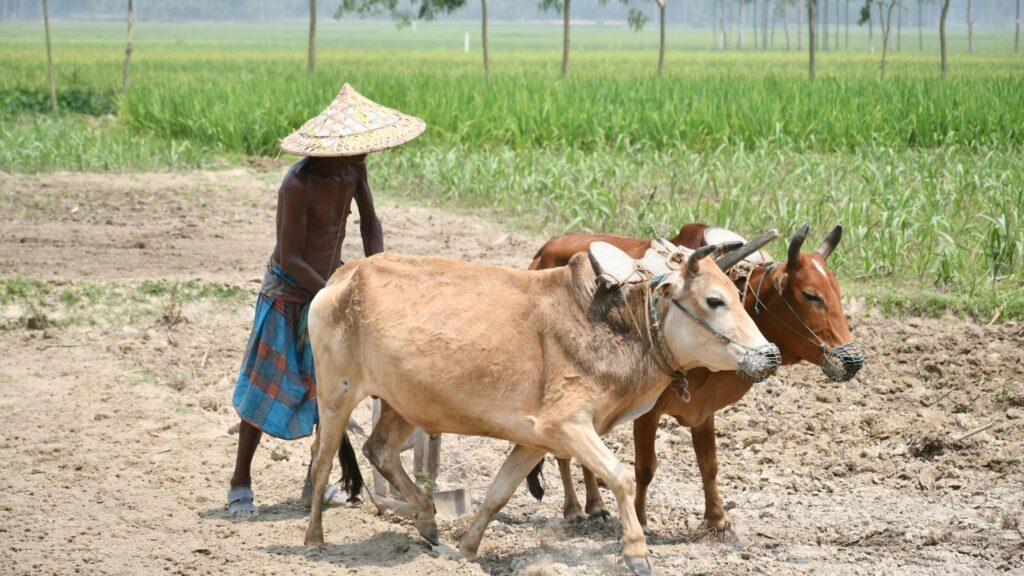
India has become “the epicentre of a global heat surge”, with 95 of the world’s 100 hottest cities located in the country. Photo: Canva
Banda Boils at 47.6°C; 95 of 100 World’s Hottest Cities in India
India has become “the epicentre of a global heat surge”, with 95 of the world’s 100 hottest cities located in the country, according to real-time global temperature rankings, India Today and several other media outlets reported.
Uttar Pradesh’s Banda emerged as the hottest place in the country on April 27, with the maximum temperature soaring to 47.6°C — 5.4 degrees above normal, the meteorological department said, reported ET.
The data from AQI.in on April 24 showed that from central India to the Indo-Gangetic plains, temperatures soared past 40°C in dozens of cities, with several locations inching closer to the 45°C mark, the India Today report said.
Among the worst hit are the app-linked couriers. App-based transport workers have sought mandatory heatwave protection, including paid breaks and access to water, under the Code on Social Security, 2020. The Indian Federation of App-Based Transport Workers (IFAT) has urged the government to implement these measures, citing similar protections in other countries. As heatwaves intensify companies could face rider shortages, reported ET.
In January 2026, Blinkit, Zepto, and Swiggy’s Instamart were forced to drop their 10-minute delivery pledges from their branding after labour union protests.
Extreme Heat Threatens India’s Rice Production, Farmers: UN Report
Indian farmers and rice crops face a major threat from heatwaves and the most intense impact from future extreme heat events is concentrated around densely populated farming regions of the Ganges and Indus Rivers basin, said a new report from the UN’s Food and Agriculture Organization (FAO) and the World Meteorological Organization, TOI reported.
Extreme heat may cut agricultural labour productivity below 40% in the regions of impact, putting India’s rice production and food security at risk, UN agencies warned.
India to See up to 40 Extra Heat and Heavy Rainfall Events Each Year for the Next 20 yrs: AI Study
India will inherit an extra 15 to 40 unusually hot days each year in the next two decades due to accelerating climate change, compared to the 1981-2010 climatic baseline, according to a new artificial intelligence-powered climate intelligence platform, The Telegraph reported.
CRAVIS (Climate Resilience Analytics and Visualisation Intelligence System) has been developed by Delhi-based climate think tank Council on Energy, Environment and Water (CEEW).
According to CRAVIS, the country could see a rise of 20 to 40 warm nights annually in several regions. The AI also predicted heavy rainfall events to rise steadily in the next two decades (10 to 30 extra heavy rainfall days annually in many districts). Maharashtra, Telangana, Andhra Pradesh, Karnataka and Tamil Nadu are expected to witness a stronger increase in both rainfall and hot days, the analysis found.
CRAVIS makes these projections by combining 40 years of historical climate data. It can provide projections extending to 2030-50 and 2051-70.
Carbon in India’s Forests Projected to Grow as Warming, Rain Increase: Study
India’s forests could nearly double carbon storage by 2100, a study by researchers from multiple Indian institutes has found, the Hindu reported. Biggest increases in vegetation carbon are projected across Rajasthan, Gujarat and Madhya Pradesh, the report said.
The findings present a granular forecast of how climate change will reshape the country’s forest carbon stocks, the outlet said. The projected increases are driven primarily by two interacting forces: rising precipitation and elevated atmospheric CO₂. Higher rainfall, projected across much of India under all emissions scenarios, translates to more moisture available for trees to grow. Simultaneously, more available carbon dioxide means enhancing photosynthesis and water-use efficiency. Rainfall effects appear with a lag of about four years under the high-emissions scenario to account for the fact that forests do not respond instantly to a single wet year, and that woody biomass accumulates slowly over time, the outlet said.
‘Dangerously high’ Temperatures as Europe Named World’s ‘Fastest-warming’ Continent: European State of the Climate Report
Almost all of Europe saw “above-average” temperatures last year, while wildfires burnt a “record” area and heatwaves struck “from north to south”, reported Sky News, citing the latest “European state of the climate report” from Copernicus Climate Change Service and the World Meteorological Organization (WMO). The report revealed that 2025 brought 46°C heat to Portugal, temperatures of 30°C within the Arctic Circle and “20 large wildfires at the same time” in Spain. Reuters reported that Europe is the “world’s fastest-warming continent” as over half of Europe was hit by drought conditions in May 2025. The findings show that “climate change is having increasingly severe consequences in Europe, at a time when some governments seek to weaken emissions-cutting policies over economic concerns, the news wire said. Politico reported that the findings come as the world is bracing for a “major El Niño” event likely to send temperatures soaring higher.
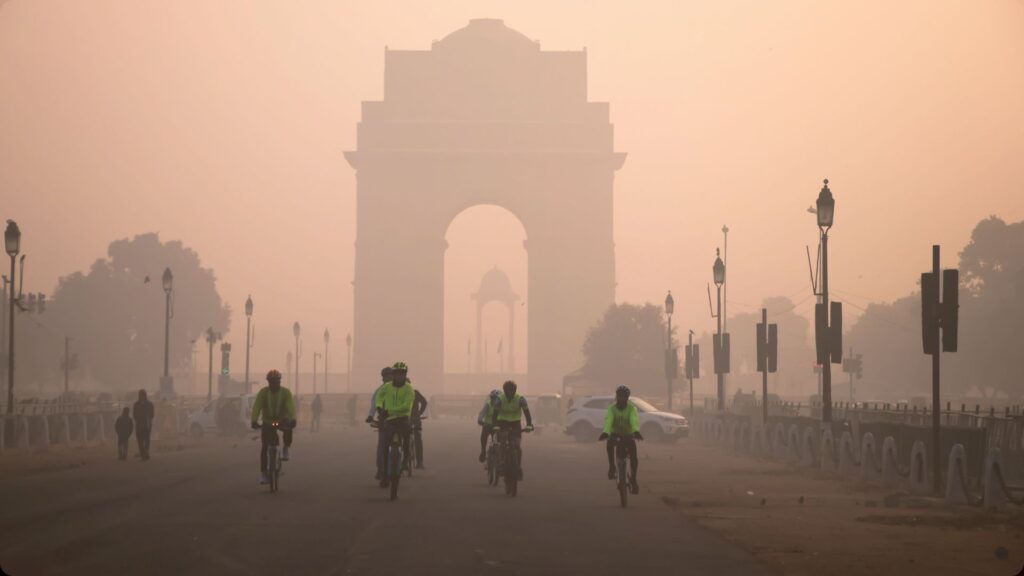
India formally submitted its new NDC to the UN for 2031-35.Photo: Canva
India Submits New Climate Action Pledges to UN Body, Flags Conditions to Fulfill Promise
India formally submitted its new nationally determined contribution (NDC) to the UN for 2031-35, stressing that the developing countries’ commitments “cannot be fulfilled” without adequate “finance” and “technology transfer”, TOI reported.
India committed to achieve about 60% cumulative electric power installed capacity from non-fossil fuel-based energy resources by 2035, with the help of the technology transfer and low-cost international finance. It pledged to reduce the intensity of its GDP emissions by 47% by 2035, from the 2005 level, and create a carbon sink of 3.5 to 4 billion tonnes of CO2 equivalent through forest and tree cover by 2035, as compared to the baseline year of 2005, HT reported, adding that India flagged the “mitigation ambition gap” by rich countries and the exacerbation of global warming due to their inadequate response. It highlighted that a significant part of the NDCs of developing countries, including India, is conditional upon the availability of adequate climate finance, technology cooperation, and capacity-building.
States Urge Centre to Amend, Clarify Grassland Ecosystems Under Afforestation Law
Several states with significant grassland cover have called for amendments to India’s forest conservation law to recognise grassland restoration under compensatory afforestation — a legal mechanism currently designed for tree-planting “that can, perversely, damage the very grassland ecosystems it might be deployed to protect,” the HT reported. It added that the demand was made by Karnataka, Rajasthan, Gujarat, Madhya Pradesh and Jammu and Kashmir.
The states said amendments under the Van (Sanrakshan Evam Samvardhan) Adhiniyam, 1980 were needed to bring grassland restoration within the compensatory afforestation framework. The grassland extent in India is consistently under-reported because large areas are misclassified in government records as wasteland or scrubland.
‘Historic Breakthrough’: Colombia Climate Talks End with Hopes Raised for Fossil Fuel Phaseout
Governments have been asked to develop national “roadmaps” setting out how they will end the production and use of fossil fuels, after a landmark climate meeting involving nearly 60 countries, the Guardian reported.
The voluntary plans will form the bedrock of a new initiative to wean the world off coal, oil and gas, the focus of two days of intensive talks in Colombia this week.
Bloomberg reported that the French government used the event to release a “national road map” detailing plans to end coal by 2030, oil by 2045 and gas by 2050.
The global conference on moving away from fossil fuels wrapped up with a clear message: the global conversation has shifted from whether to phase out oil, gas and coal to how to do it, with financing emerging as one of the biggest obstacles, AP reported.
One of the central challenges discussed was the financial constraints facing developing countries, many of which lack the resources to transition away from fossil fuels. They are in bad need of debt relief to even begin a transition, the report said , warning that those countries are “trapped in debt” and over-dependent on fossil fuels with few viable alternatives.
‘Suicidal’ Model of Capitalism Leading to War and Fascism, Climate Summit Told
The world is threatened by a “suicidal” model of capitalism that is leading to war, fascism and the potential extinction of humanity, Colombia’s president has said, as he convened 60 governments to address the climate crisis, the Guardian reported.
Gustavo Petro blamed fossil fuel interests for taking ever more desperate measures to prevent a transition to green energy.
“There is inertia in the power and the economy of this archaic form of energy – fossil fuels – that lead to death. Undoubtedly, that form of capital can commit suicide, taking with it humanity and [other] life,” he said. “The question that needs to be asked is whether capitalism can truly adapt to a non-fossil energy model.”
‘We are Facing the Biggest Energy Security Threat in History,’ IEA Chief
Fatih Birol, head of the International Energy Agency, said that the world is facing the “biggest energy security threat in history” due to the Iran war, CNBC reported. Birol said he expected nuclear power to “get a boost”, renewables to “grow very strongly” and electric cars to “benefit”. The comments come several weeks after Birol warned the crisis would result in “the largest energy crisis we have ever faced”.
US-Israeli War on Iran will Push 30 million Back into Poverty, UN Warns
The US-Israel war on Iran will drag over 30 million people back into poverty and likely increase food insecurity in the coming months, the United Nations warned, according to an Al Jazeera report.
The UN’s Food and Agriculture Organization (FAO) warned that a prolonged crisis in the strait of Hormuz could lead to a global food “catastrophe”. India, Bangladesh, Sri Lanka, Somalia, Sudan, Tanzania, Kenya, and Egypt are among the countries most at risk, according to the FAO, the news channel said.
Disruption to fuel and fertiliser supplies due to the ongoing blocking of cargo vessels through the Strait of Hormuz has already lowered agricultural productivity and will hit crop yields later this year, the UN’s development chief said.
Iran Peace Deal Impasse : China Politburo Vows Stronger Energy Security
China’s top decision-making body, the Politburo, pledged to “strengthen the country’s energy security while pursuing rapid technological development and greater self-sufficiency”, Reuters reported.
The Politburo meeting was the first such meeting to focus on the economy after the Iran war started, as China began to feel the pressure from the blockade of the strait of Hormuz, which has driven up oil prices and hurt Chinese exports, Bloomberg reported.
The meeting called for “improving the security of energy and resource supply” to address “external shocks and challenges”, according to China news wire Xinhua.
Apple, Amazon Resist Tough Emissions Reporting Rules
More than 60 companies – including US tech giants Amazon and Apple – are pushing back on the stricter emissions reporting rules set out by the Greenhouse Gas Protocol (global standard-setter),Bloomberg reported.
The GHG Protocol proposed changes to its initial 2015 Scope 2 Guidance, which standardize how companies measure emissions from purchased or acquired electricity, steam, heat and cooling.
ESG Today said one of the most significant changes proposed by GHG Protocol is the introduction of new hourly matching and local market deliverability requirements for market-based reporting on emissions from energy contracts and instruments, which the organization said would help align emissions claims more closely with the time and place electricity is consumed.
In the letter the companies said that they were “extremely concerned” that the new proposals, which would require companies reporting Scope 2 emissions to match carbon-free electricity purchases to individual company load on an hourly and physically deliverable basis, could significantly harm energy transition efforts, warning of impacts including potentially dramatically discouraging voluntary clean energy procurement, increasing electricity prices for individuals and companies, and slowing system-wide decarbonization, while offering only limited benefits to carbon accounting accuracy.
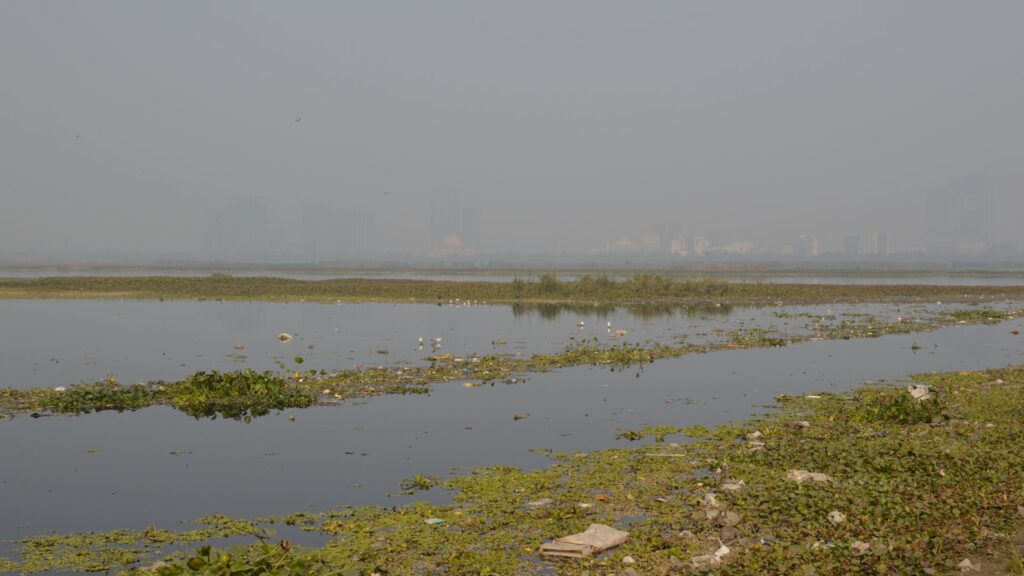
Photo: Canva
NGT Issues Notice to Centre and UP over Yamuna Pollution in Mathura, Vrindavan
National Green Tribunal issues notice to Centre and Uttar Pradesh over Yamuna pollution in Mathura and Vrindavan. The petition claimed that the river water falls under “very poor” Category D, which was unfit for bathing or drinking, reported DTE.
The petitioners alleged that untreated sewage discharge directly in the river and unchecked illegal construction was taking place on floodplains. Authorities asked to respond on compliance with earlier NGT orders on sewage treatment and encroachment removal. Next hearing in the case scheduled for August 4, 2026.
Babies Exposed to Air Pollution During Pregnancy Take Longer to Learn to Speak, Research Finds
Infants exposed to higher levels of air pollution in the early stages of pregnancy take longer to learn to speak than those exposed to lower levels in the womb, new research has found, the Guardian reported.
The researchers found exposure to nitrogen dioxide and fine and ultra-fine particulate matter during the first trimester of pregnancy delayed speech development at 18 months.
The article noted that for premature babies, the impact was worse: as well as delayed development of their ability to speak, they were also found to have impaired motor skills.
“This research should act as a wake-up call, because air pollution is not just an environmental issue, it’s a matter of justice and equality from the very start of life,” Tyrone Scott, head of campaigns at War on Want, told the newspaper.
The researchers said it is the first study to investigate pollution exposure and development in London by measuring the language and motor skills of infants whose mothers were pregnant in the capital. But the implications are global.
With many polluting industries now outsourced from the global north, people in low-and middle-income countries in the global south suffer from the highest exposures. But even within wealthier countries the burden falls disproportionately on people from poorer and racialised communities.
Two of the World’s Biggest Methane-emitting Landfill Sites in Mumbai and Secunderabad: Global Study
Satellite data shows Secunderabad and Mumbai among world’s biggest methane-emitting landfill sites in 2025, a global study has found. Study of 2,994 methane plumes from 707 waste sites worldwide include India’s mega landfills.
India is home to two of the world’s 25 largest methane-emitting landfill sites in 2025 — in Secunderabad, Telangana and Mumbai, Maharashtra — according to a new satellite-based analysis of global pollution hotspot researchers identified 25 super-emitting landfills across 18 countries. These sites represent the most acute sources of methane leaks on the planet, with emission rates so high that they are detectable from space, Carboncopy reported.
These facilities are found across the Global North and South, including Brazil, Chile, India, Saudi Arabia, Turkey, Algeria, Argentina, Greece, Hong Kong, Indonesia, Iran, Israel, Kuwait, Malaysia, Mexico, the Philippines, Thailand, and the US.
As a greenhouse gas, methane is far more aggressive than carbon dioxide in the short term, possessing over 80 times the warming potential over a 20-year period.
According to the report, a single landfill emitting 5 tonnes of methane per hour contributed as much to global warming as nearly one million SUVs on the road. Specifically, the Jawahar Nagar landfill in Hyderabad and the Kanjurmarg landfill in Mumbai were flagged for their significant contributions to global warming, ranking 4th and 12th respectively.
Noise Pollution: Gujarat HC Summons Ahmedabad Municipal Commissioner, Home Secy
The high court questioned top officials : Ahmedabad municipal commissioner and state home secretary and Gujarat Pollution Control Board chairman, about the non-implementation of its directions to control noise pollution, TOI reported. The judges said that “it is very painful” to note that Gujarat is still faced with the problem of noise pollution 20 years after the Supreme Court gave guidelines to curb it.
The authorities have taken the top court notification very lightly, the court said. While issuing orders for authorities to furnish an action taken report in the court the next hearing was set for June 18.
Dangerous Gas Emissions, Odour Affecting Lakhs in Kanjurmarg Landfill Vicinity Cannot be Accepted, Says Bombay HC
The Bombay High Court said that pollution and odour emitting from Kanjurmarg dumping site in suburban eastern Mumbai affecting lakhs of residents in Mulund, Vikhroli and Bhandup cannot be accepted at all.
The HC also directed the authorities to monitor and study emissions of gases, including methane, causing late night odour in the vicinity and take effective immediate steps to contain pollution.
“We can certainly notice the seriousness of concerns of petitioners as all these areas are developing areas with multi-storied buildings with lakhs of citizens residing in thickly populated areas. It cannot be that continuous pollution affecting a large population can at all be accepted,” the HC noted.
US Tech Firms Successfully Lobbied EU to Keep Data Centre Emissions Secret
Microsoft and other US tech companies successfully lobbied the EU to hide the environmental impact of their data centres, an investigation has found, with demands to block a database of green metrics from public view written almost word for word into EU rules, the Guardian reported.
The report said that legally questionable confidentiality clauses adopted almost word for word from demands of Microsoft and trade groups. The secrecy provision, which the European Commission added to its proposal almost verbatim after industry lobbying, hinders scrutiny of the pollution that individual datacentres emit. It leaves researchers with just national-level summaries of their energy footprints.
The groups who lobbied for the change are Microsoft; DigitalEurope, an industry organisation whose members include Microsoft, Google, Amazon and Meta; and Video Games Europe, whose members include Microsoft and Netflix, the report said.
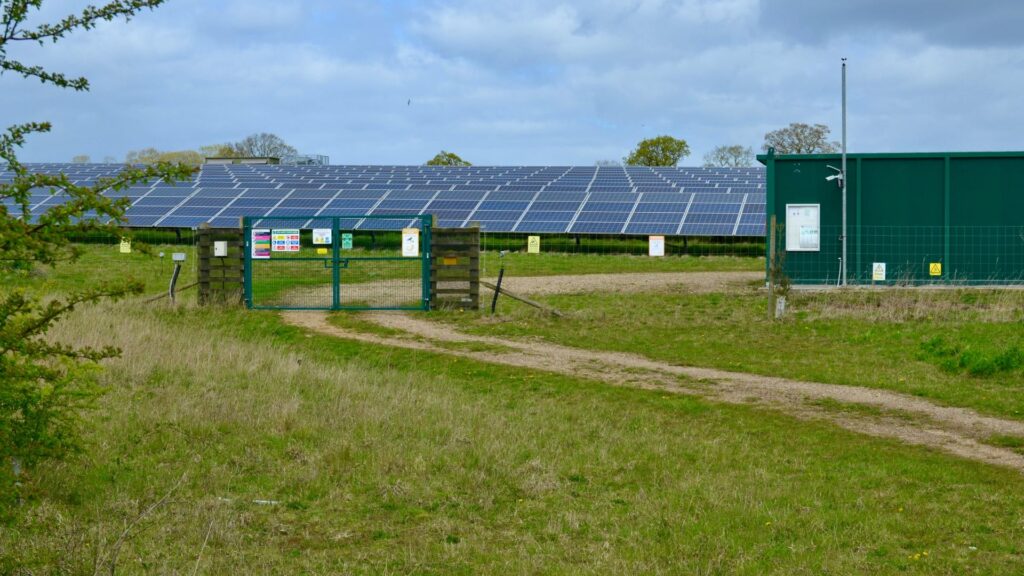
India “comfortably” met the rising peak power demand of 256 GW on Saturday, the highest-ever recorded on a single day amid the soaring temperatures because of the growing contribution of solar power to the energy mix, TOI reported.
At the time of the peak power demand of 256.1GW at 3:38 pm on April 25, solar contributed 57GW which is 22% of the total energy generation.
Data from the grid controller of India showed that at 12:30 pm on that day solar power generation from roof top systems and solar plants rose to 81GW which was one third of total energy generation of 242 GW.
Karnataka Court Pauses Stricter Power Grid Penalties for Renewable Forms
Karnataka High Court temporarily blocked new, stricter penalties for solar and wind power producers for deviating from scheduled grid supply after industry bodies challenged the rules, Reuters reported.
India, on March 31, increased penalties for wind and solar generators for deviating from their supply pledges to the power grid. Until the next hearing, renewable energy companies can continue using the older system for paying charges when their power generation differs from the schedule given to grid operators, the court order said, the news wire noted.
The case was filed by the National Solar Energy Federation of India, which argued that new rules issued by the Central Electricity Regulatory Commission (CERC) were introduced without proper public consultation. Solar and wind power output depends on weather conditions and cannot always be controlled, the petitioners said, unlike coal or gas-based power plants.
The state government and power regulator have been asked to respond by June 10. India aims to build 500 gigawatts of renewable energy capacity by 2030. Industry groups had previously said stricter regulations could lead to revenue loss and limit investor interest in India’s clean
Chinese Solar Exports Double in a Month to Hit Record High in March 2026 Amid Energy Crisis and Change in Chinese Tax Rebate
China’s solar exports reached a record 68 GW in March, double the previous month, amid high energy prices due to the US-Israel war with Iran and an additional boost from changes to Chinese tax rebates, analysis by think tank Ember showed.
The March data from the Chinese customs authority provides the first insight into the global response to the energy crisis. Analysis by Ember, with data published openly in the China Solar PV Export Explorer, reveals that the record 68 GW of solar exports is equivalent to Spain’s entire solar capacity, surpassing the previous record set in August 2025 by 49%.
The think tank noted that the latest data shows that the regions most affected by the unfolding energy crisis have seen some of the sharpest increases in demand for solar PV. Sales were also higher in anticipation of a change in export tax rebates from 1 April, which adds 9% to solar panel costs.
Fifty countries set all-time records for Chinese solar imports in March 2026, with a further 60 seeing the highest levels in six months. Exports to Africa rose by 176% compared to February 2026 to reach 10 GW in March 2026, while exports to Asia doubled to reach 39 GW – both new all time records. Combined, the two regions were responsible for three-quarters of the increase in Chinese solar exports.
Countries with particularly rapid growth in Asia include India (+141%, +6.6 GW compared to February 2026), Malaysia (+384%, +1.8 GW) and Lao PDR (+108%, +2.3 GW). In Africa, Nigeria (+519%, +1.2 GW compared to February 2026), Kenya (+207%, +1.4 GW) and Ethiopia (+391%, +1.1 GW) all imported over 1 GW of solar PV technology for the first time ever in a single month, predominantly in the form of solar cells, the report said.
China and India Lead Global Wind Surge as 165 GW of Wind Capacity was Added in 2025: Report
World wind capacity reached 1,299 GW by the end of 2025, according to the Global Wind Report 2026, released by the Global Wind Energy Council (GWEC). China installed nearly 120 GW in 2025 — almost matching the entire world’s total additions from the previous year, reported Carboncopy, adding that China accounts for 73% of all global onshore installations and has surpassed 640 GW in cumulative capacity. Wind now competes directly with coal power prices in China. Under its latest commitments, China aims for 3.6 TW of combined wind and solar by 2035, making annual wind installations of over 100 GW the new norm, the report said.
Currently, 138 countries power their economies with wind. Asia commissioned 80% of the global total of new wind capacity — 131 GW. India doubled its annual installations to build 6.3 GW of wind capacity last year, found the report. In India, new onshore wind capacity installed in 2025 led to an 85% increase over the previous year. This surge was driven by the government’s ambitious target of 500 GW of non-fossil fuel capacity by 2030, of which 100 GW is earmarked for wind.
The report anticipated that India will add over 40 GW of new onshore capacity through 2030, bolstered by hybrid projects and the repowering of older wind farms in coastal states like Tamil Nadu and Gujarat
China’s Renewable Energy Capacity Reaches 2,400 GW by March End
During a press conference on Monday, the National Energy Administration (NEA) said China’s installed renewable energy capacity reached 2,400 gigawatts (GW) by the end of March, accounting for more than 60% of the national total, reports state broadcaster CGTN. Wind and solar capacity reached 1,900 GW, accounting for half of total installed capacity, adds the outlet.
Israel Destroys Solar Panels in South Lebanon
Israeli soldiers used bulldozers to destroy solar panels in Debel, south Lebanon, Al Jazeera reported. According to the Lebanese National News Agency, these panels supply the town with electricity, which is needed for its water supply, and Israel destroyed homes, roads and olive trees as well, the news outlet said.

The booming growth of artificial intelligence is driving a massive energy boom that threatens global climate goals. A report by Wired revealed that natural gas projects linked to major tech firms, including OpenAI, Meta, Microsoft, and xAI, could emit over 129 million tons of greenhouse gases annually. This figure surpasses the yearly emissions of entire nations like Morocco or Norway.
To bypass sluggish electrical grids and public opposition, developers are building dedicated gas-fired power plants directly on-site. For example, xAI’s Colossus clusters in the US and Microsoft’s Texas-based projects represent emissions equivalent to dozens of traditional gas plants.
While tech giants argue that these permits reflect worst-case scenarios, and gas is a necessary bridge to carbon-free energy, there will be a massive acceleration in emissions. As a result, there’s a risk of creating a new, long-term dependency on fossil fuels.
Sodium Batteries Break Through Lithium’s Monopoly
As lithium prices face extreme volatility, a more abundant and affordable rival — sodium batteries — is taking off. Developed by Chinese battery giant CATL, the first mass production sodium-ion EV batteries will begin commercial sales in mid-2026, according to a report by Bloomberg.
While sodium ions are larger and heavier than lithium, leading to roughly 30% lower energy density, the technology offers critical advantages for the mass market. Sodium batteries are significantly cheaper to produce, more fire-resistant, and maintain nearly 90% of their capacity in sub-zero temperatures—conditions where lithium-ion performance often plummets.
Though high-performance SUVs will likely stick with lithium for maximum range, sodium is emerging as the ideal power source for budget city cars, delivery vans, and large-scale grid storage. By 2026, analysts expect a pivot toward dual-chemistry strategies, where sodium acts as a strategic hedge against supply chain shocks, potentially transforming seawater into the next great fuel source for the energy transition.
Japanese Automakers Tighten Grip on India’s EV Transition
Japanese auto giants Toyota and Suzuki are deepening their dominance in India with a heavy bet on hybrid technology as a practical bridge to electrification, reported CNBC. The world’s third-largest auto market has major challenges to fully electrify as charging infrastructure remains sparse and power grids face reliability challenges. Hybrid models, which combine internal combustion engines with electric motors, offer a high-efficiency alternative without range anxiety.
Market leaders like Maruti Suzuki and Toyota Kirloskar have seen a surge in demand for models like the Grand Vitara and Hyryder, often outselling their pure EV counterparts in similar price brackets.
Rocklink opens major Battery Recycling Hub in Uttar Pradesh
In a significant move to secure India’s critical mineral supply chain, Rocklink India has inaugurated a lithium-ion battery recycling plant in Uttar Pradesh. As reported by The Hindu Business Line, the facility is designed to process thousands of tonnes of end-of-life batteries annually, transforming hazardous electronic waste into high-value raw materials.
The plant utilizes advanced hydrometallurgical processes to extract essential minerals such as lithium, cobalt, nickel, and manganese with high purity levels. These materials are then reintegrated into the manufacturing cycle, reducing India’s heavy reliance on imports for battery production.
By localised processing of battery scrap, the facility not only mitigates the environmental risks of improper disposal but also provides a sustainable feedstock for the country’s burgeoning electric vehicle and stationary storage industries.
Oil Volatility due to West Asia War Accelerates India’s EV Adoption
The ongoing conflict in West Asia is acting as an unexpected catalyst for India’s EV sector. Deccan Herald reported that heightened oil price volatility, triggered by regional instability, is making EVs economic necessities for Indian consumers and policymakers alike.
As global crude prices fluctuate, the rising cost of petrol and diesel is narrowing the total cost of ownership gap between internal combustion engines and EVs. This is most widely seen in the two- and three-wheeler segments, where operational savings are most immediate. For the Indian government, which imports over 80% of its crude oil, the shift toward EVs represents a vital hedge against geopolitical shocks. Analysts found that if high oil prices persist, expensive fuel alone may drive EV penetration targets faster than government subsidies.
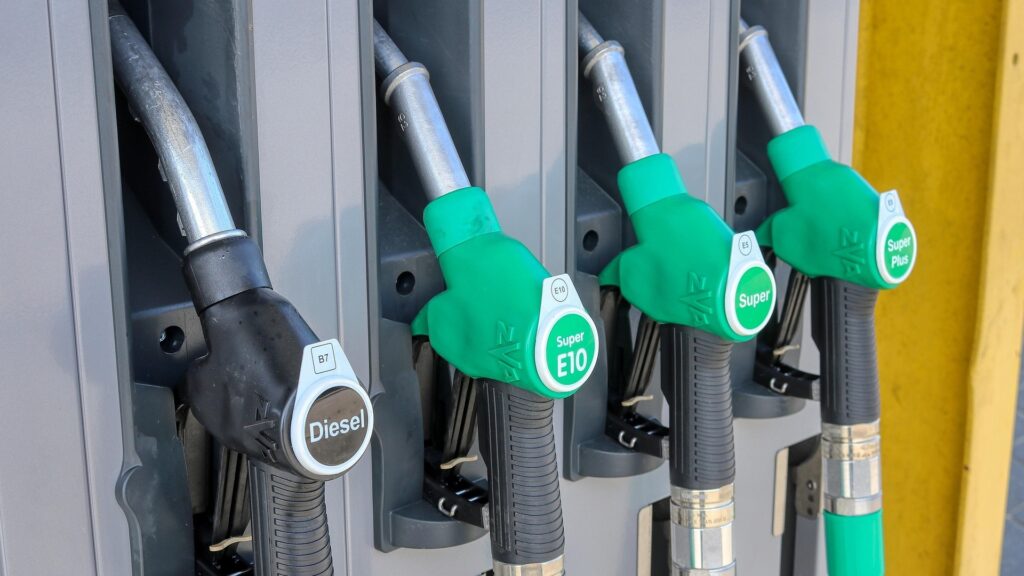
India Proposes Rules to Allow 85% to Nearly 100% Ethanol Fuels in Vehicles
Centre has proposed amendments “to formally incorporate higher ethanol-blended fuels”, Reuters reported, including provisions for “E85 fuel, a blend of 85% ethanol with petrol, and E100, which would allow vehicles to run on nearly pure ethanol”. It adds that in 2025, India ”achieved its target” of 20% ethanol blending and is “now looking to increase blending further to reduce costly imports of petroleum products.” The draft is now open for public comments, per the newswire.
India Weighs Induction Cooktops Subsidy Amid Iran War Energy Crisis
Economic Times reported that the government is “weighing a plan” to subsidise electric cooktops, “aiming to move at least some households from LPG to solar-powered electricity usage” amid energy market disruptions.
Centre is planning incentives for induction cooktops under the PM Suryaghar Muft Bijli Yojana. This initiative seeks to boost the adoption of electric cooking. Tax cuts and reduced import duties are also being considered to make these appliances more affordable and increase local production.
West Asia War to Trigger Biggest Energy Price Surge in Four Years as UAE Exits OPEC
The World Bank warned that the US-Israel war on Iran is set to trigger the biggest energy price hike in four years as the United Arab Emirates exited the OPEC and OPEC+, a heavy blow to oil exporting groups, reported Down to Earth.
The bank forecast energy prices to jump 24% in 2026, while overall commodity prices are expected to rise 16%, driven by soaring fuel and fertilizer prices and record-high prices for several industrial and precious metals.
India Boosts Fossil Output as Power Demand Hit Record Peak in Heatwave
India boosted coal and gas output as peak demand hit 256.1 GW over the weekend amid a heatwave. The Grid India data showed that India operated about 9.6 GW of gas-fired capacity and ramped up coal-fired generation to around 187 GW, reported Reuters.
A report by Bloomberg noted that rapid addition of solar capacity over the past decade, and the recent growth in coal-fired power, has enabled the nation to handle such demand surges, especially during the day. While the evening hours, when solar plants idle, remain a pressure point, just as the war curbed gas supplies that help meet night-time shortfalls. This is prompting the nation to double down on coal, promote hydropower and nuclear as alternative base load sources, and accelerate energy storage deployment.
Oil Prices Rise As No End to Iran War Seems in Sight
Oil prices rose about 3% on Tuesday as efforts to end the US-Israel war on Iran continues without any end in sight. This extended the previous sessions gain, with the crucial Strait of Hormuz waterway remaining shut, starving the markets of key Middle East energy supply, reported Reuters.
Brent crude futures for June jumped 2.76% to $111.22 a barrel by 0758 GMT, after gaining 2.8% to close the previous session at its highest since April 7.
EU to Ease Energy Blow With Tax Cuts and Gas Coordination
The European Commission has set out plans to cut electricity taxes and coordinate gas storage refill to ease the impact from the US-Israel War on Iran, reported Reuters. The Commission said it would amend EU rules to ensure electricity is taxed less than gas, and make it easier for governments to cut industries’ and vulnerable households’ electricity taxes to zero, to curb their bills.
The EU for now will avoid taking measures such as capping gas prices or taxing energy companies’ windfall profits, measures it used in 2022 when Russia cut gas supplies and prices hit record highs.
EU Reconsiders Objection to Arctic Oil and Gas Drilling
The European Union is reconsidering its opposition to new oil and gas drilling in the Arctic, Financial Times reported. The EU has been pushing for an international ban on new oil and gas drilling on environmental grounds since 2021, but is now weighing abandoning the proposal.
Russian Oil Imports Dip 20% in April Due to Ukrainian Attack on Terminals
India’s import of Russian crude fell 20% in April due to loading disruptions at a key Russian terminal after a Ukrainian Terminal and a tempering of the surge in March, which was marked by floating cargoes amid the Iran war and a temporary US sanctions waiver, reported ET Energyworld.
According to Kepler Data, Indian Oil Corp remained the largest buyer of Russian crude in last two months, with average imports of 670,000 barrels a day between April 1 and 26, accounting for about 42% India’s total Russian purchases and about 2.5 times Reliance Industries’ intake of 263,000 barrels per day.
BP Profits More Than Doubled This Quarter Driven by West Asia War Trading Boon
BP’s first quarter profit more than doubled year-on-year reaching $3.2 billion, its highest since 2023, according to the British oil major’s report on Tuesday. This beat expectations by 20% thanks to a boost in oil trading results following the West Asia war, reported Reuters.
The company reported underlying net income of $3.2 billion, exceeding expectations of $2.67 billion in a company-provided poll of analysts and rising sharply from $1.38 billion in the same quarter a year earlier.